Blog

  • Today I Feel…

    Th

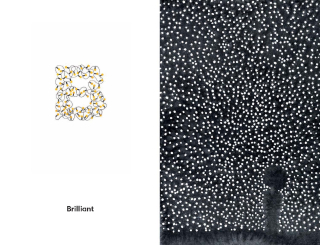
    We have come a long way since my childhood in the 70s, in terms of books and curriculum about social-emotional ideas and learning. However, few picture books exist to offer language and images for young ones. Today I would like to recommend the 2017 English translation of the book Today I Feel: An Alphabet of Feelings by Madalena Moniz.

    Use this book with a variety of age groups – from preschool through 3rd grade. The book can inspire an improvisational activity, mirroring activity, or group dance. 

    The words include:

    adored

    brilliant

    curious

    daring

    excited 

    free

    There's lots of potential with facial expressions, body parts/whole body movement, dynamic changes, and axial/traveling movement. Seasoned dance teachers could make a playlist and change the music with each new word to further explore the varying qualities and speeds for each idea.

    Some of my favorite words in the book are free, grumpy, light, patient, and strong.

    I am adding this to my ongoing alphabet book list as well as book list for emotions/feelings.

    Image

    ———-

  • Plants Can’t Sit Still by Rebecca E. Hirsch

    Unknown-1

    Yes, I can get very excited about picture books and the many possibilities for dance explorations and projects. The other week at the library, I stumbled upon a find that might be one of my top 5 favorite books for dancing, of all time! Really.

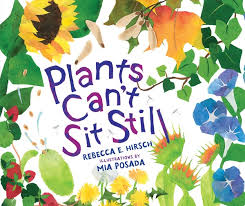
    The book published in 2016 is Plants Can't Sit Still by Rebecca E. Hirsch and illustrator Mia Posada.

    Every page inspires movement, level changes, and traveling. The book begins with:

    Plants don't have feet or fins or wings, 

    yet they can move in many ways.

    Look closely and you'll discover that plants can't sit still

    Plants can wiggle.

    As seedlings start to grow

    they squirm out of spring soil, unfold their leaves,

    and reach for the warmth and the light.

    Similarly done just here, the book highlights in different colored inks the action words per page.

    Rich possibilities are here to explore this long list of verbs from the book, as well as making a group dance using the entire text. Consider using the book in preschool, kindergarten, and first grade classes.

      Unknown-2

  • Dancing Off the Page: Leap, Frog, Leap by Douglas Florian

    IMG_0989 (1)

    Leap, Frog, Leap! is the third book in a board book series by Douglas Florian and illustrator Barbara Bakos. The words are simple, playful, and instantly lead to an improvisational exercise in parent/child and preschool dance classes.

    Leap, frog, leap!

    Creep, caterpillar, creep!

    Race, rabbit, race!

    Chase, cheetah, chase!

    Students will have the opportunity to explore 16 different actions – which will inspire level changes, varying qualities, and locomotor/stationary movement.

    For music, try out the instrumental/electronic piece "Circling" by Four Tet.

    —-

    Related posts:

    Dancing Off the Page: Bears are Big by Douglas Florian

    Dancing Off the Page: Flamingos Fly by Douglas Florian

    Blog Series: Parent/Child Classes

    ———————


  • What Color Makes Your Heart Sing? (For K-3 dance classes)

    61jQABVuemL._SX497_BO1 204 203 200_

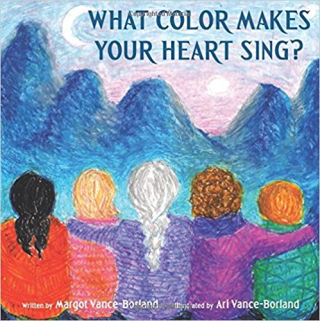
    I am always on the lookout for books for dance classes – to explore colors, emotions, and also poetic text to narrate a group dance. What Color Makes Your Heart Sing? (Margot Vance-Borland and Ari Vance-Borland) is reminiscent of an older book, Caretakers of Wonder. Check out this 2016 book if you work with K-3 students. 

    The text lends itself to small group work, students selecting their favorite sections, props, and more. 

    Some people come on the blue wave. They love oceans and sky and blueberries in the summer. They like to lie on their backs and look up at the blue, blue sky.

    Some people come on the green wave….nourished and fed by the green hillsides and trees. Standing in the forest with bright green sprouts poking out of the ground.

    Some people come on the pink ray…they love roses and little pink flowers that line the path where they dance. When they see pink, they feel happy inside…

    Very quickly – you get a sense of the text and its tone and movement potential. 

    I also envision a beginning section of a group dance and a similar ending section. Students can have long pieces of fabric or scarves, and they travel across the space color by color. We see a wash and wave of red….blue….green…etc. Shape their traveling phrases to include locomotor and axial movements. 

    Music ideas include:

    • "Toufoula" by Ballaké Sissoko, Driss El Maloumi, and Rajery (3MA album)
    • "So Long Lonesome" by Explosions in the Sky
    • "Walk in the Sky (Instrumental)" by Bonobo
    • "Clocks" by Vitamin String Quartet (cover of the Coldplay song)

    Other books with a similar tone and movement potential include:

    ————


  • Dancing Off the Page: Bears Are Big by Douglas Florian

    Th

    The other day I shared about Florian's book Flamingos Fly. Today I write about another book in the series, Bears Are Big. I am always on the lookout for books exploring opposites.

    Bears Are Big is a great new option to use with parent/child and preschool dance classes. Illustrator Barbara Bakos shares playful images of a variety of creatures. Use the ideas to create a warm up for your classes.

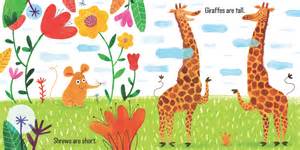
    Bears are big.

    Bees are small.

    Shrews are short.

    Giraffes are tall.

    I would like to offer two options with this particular text. 

    Option 1 – use the text from the beginning until the 12th page….ending with the idea, "Tree frogs stick." I think you can create a playful warm up that can be repeated for several weeks in a row.

    Option 2 – using the entire text – you will need some fabric. I have been exploring how to use the final set of words in the book, "Ravens are black. Doves are white." My solution is this: use the whole book, and then when you get to the last two pages about the birds, have your class come over to you and get black and white fabric. This can transition into an improvisational activity exploring the fabric and the bird inspiration of flying, flapping, soaring, opening, and closing. My top suggestion would be to head to the local fabric store to buy cheap tulle fabric in both black and white. 

    Th-1

    ———

  • Dancing Off the Page: Flamingos Fly by Douglas Florian

    61rnvNyLtgL._SY498_BO1 204 203 200_

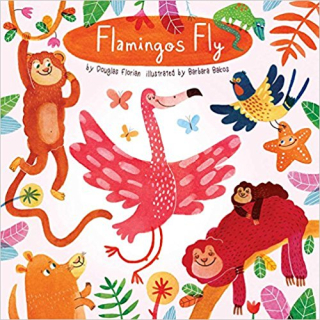
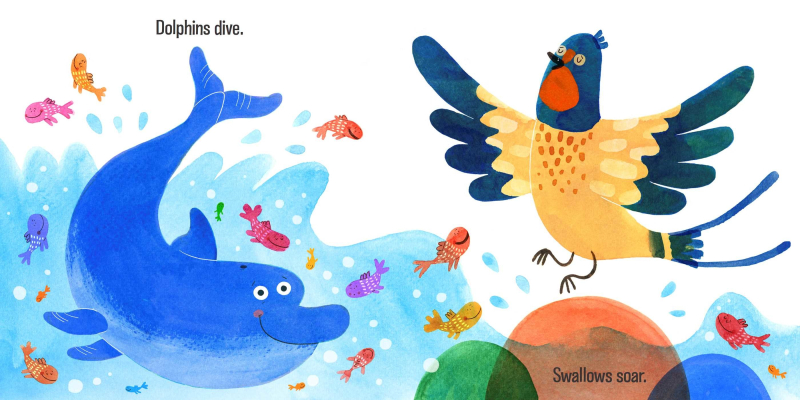
    Douglas Florian and Barbara Bakos have created four delightful board books to use in parent/child, preschool, and kindergarten classes. Use the ideas for improvisational activities or group dances. Today let's explore Flamingos Fly.

    "Flamingos fly. Sailfish swim. Monkeys swing in a jungle gym." Twelve ideas/actions are in this book:

    • Fly
    • Swim
    • Swing
    • Dive
    • Soar
    • Creep
    • Dig
    • Lunge
    • Plunge
    • Jump
    • Leap
    • Sleep

    Simple, clear, poetic, and varied. The students will explore a variety of traveling and stationary movements and level changes. Encourage the group to consider the timing and tempo for each kind of movement as well. For music, try out the instrumental piece "Biei (Ethereal Flow)" by Kodo.

    Image

    ——


  • Animal Improv with 4-7 Year Olds

    Unknown

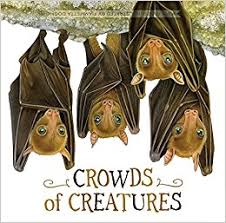
    I love books about those quirky collective nouns we use to describe groups of animals (a smack of jellyfish, a troop of kangaroos, a colony of ants…). Today I highlight a board book for young ones to add to our collections. The book is Crowds of Creatures by Kate Riggs and Fiammetta Dogi.

    This short book features 6 groups of animals:

    Flock of geese

    Colony of ants

    Troops of monkeys

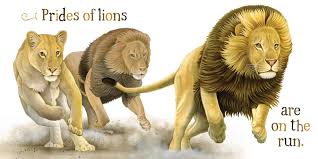
    Prides of lions

    Cloud of bats

    Pod of dolphins

    The 6-part structure and clear text can jump off the page and lead to a great structured improv with students in preschool, Pre-K, Kindergarten, and 1st Grades. With each change of the page and each new animal, the students' movements can change. They can explore flying, soaring, crawling, swinging, running, galloping, folding, going upside-down, swimming, and diving. I also think with each turn of the page, you could have a student leader for the improv (and the rest of the group follows). Six students can take turns leading; try the improv for a few classes so each student gets a chance to lead.

    "A flock of geese flies to nest….A colony of ants works without rest…."

    The book concludes with a "recap" of all of the animals in the book and the text, "Families go by many names." To conclude your improv – each student can select one animal from the book and move like that animal.

    As for music, I am inspired to use Bonobo's electronic piece "Animals."

    Unknown-2

    —-

    Related posts:

    More books with collective nouns

    Blog Series: Animals

    ————–

  • Love is a Tutu

    Th-1

    I love this little book, published in 2016. Made with special textured paper, the colors used are bright pink, black, and white. Amy Novesky and illustrator Sara Gillingham strike just the right notes to capture the attention of 2, 3, 4, and 5 year old dancers.

    Love is a tutu,

    tulley and new.

    A leotard

    and tights,

    a pair of toe shoes.

    Love is leg warmers to wear to the barre.

    Sous-sus,

    tendu.

    One, two, three, four.

    Use this book to start a dance class or enjoy it at home with your young dancer. Purchase Love is a Tutu today here.

    ——–


  • The Wonder Garden and “Habitats” Dances with 3rd Graders

    IMG_0941
    I love the big book The Wonder Garden, as it reminds me of one of my favorite 3rd grade dance projects from about 15 years ago.

    Years ago, I was teaching dance at Thousand Oaks Elementary School in Berkeley, California. I was teaching in Jennifer Stinson's class. Jennifer shared that the students were exploring rain forest habitats, and we created a magical group dance based on the subject. Here is my memory of the basic format — beginning, middle, and end. Rain forests are amazing with their layers, levels, animals, and plants. And, how does the temperature affect movement and tempo? Lots of dancing potential.

    Part A of our group dance was an opening tableaux/group picture/group shape with all of the students. We played with levels, size, and shape. Then everyone dispersed from our stage space.

    Part B – small group sections. The students were divided into small groups of about 5-6 students. Each group had an animal – such as spider monkeys or macaws. Over the course of a few classes, each group created a short movement phrase of about 6 ideas in it to show what each animal does and how it moves. One group at a time came out into the performance area, danced, and then exited. We made a basic list of notes for each group, to help remember their phrases (ex. swinging, eating fruit, grabbing a vine).

    Part C – Last, we ended as we began. All creatures re-emerged and finished in a group shape.

    As for music, I believe we selected a piece of jazz (possibly Art Blakey and the Afro-Drum Ensemble). We selected a piece based on feel and flow.

    IMG_0943
    Now, back to the book I first mentioned! If you also like the idea of a group dance about habitats, please check out The Wonder Garden! Kristjana Williams is a magical and talented graphic artist, and Jenny Broom's writing offers students key descriptors about each habitat and its plants and animals. This book can be a perfect springboard for a habitats project. The book features 5 habitats: Chihuahuan Desert, Amazon Rain Forest, Black Forest, Himalayan Mountains, and Great Barrier Reef.

    Also, as students read and research for the group dance, consider also checking out the following excellent animal books:

    Animalium by Katie Scott and Jenny Broom

    Zoo-ology by Joelle Jolivet

    Panorama by Joelle Jolivet and Fani Marceau

    The Animal Book by Steve Jenkins

    ———————

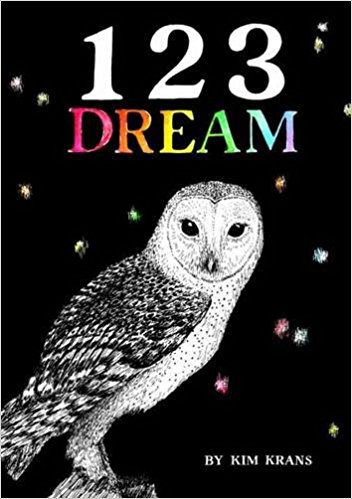
  • 123 Dream by Kim Krans – A Playful Book for K/1 Dance Classes

    51oddWVCBNL._SX350_BO1 204 203 200_

    This year, I am loving the idea of using a counting book to inspire a dance with different sections and roles for your students. Try out books like this one with kindergarten and 1st grade classes. Each student will be able to be in a few of the sections.

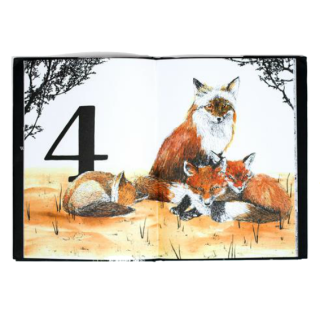
    Author/illustrator Kim Krans counts to 20 in 123 Dream, with a variety of creatures and plants. The 20 different ideas will naturally lead to movement with varying qualities, tempos, shapes, and level changes. The illustrations with ink and watercolor evoke a tone of calm and fluid change. I am inspired to use some electronic music without lyrics; try out Bonobo or Mike Wall (Mike's website is http://www.soundformovement.com).

    1 owl

    2 turtles

    3 thistle

    4 foxes

    5 fish

    6 snakes

    7 starfish

    8 ears (rabbit ears)

    9 narwhal

    10 trees

    11 elephants

    12 toads

    13 thorns (rose thorns)

    14 feathers

    15 fireflies

    16 strawberries

    17 salamanders

    18 eggs

    19 nuts (acorns)

    20 toes

    123Dream2567

    —–

    Related posts:

    The Ghosts Go Scaring

    Numbers on the Move

    ——————-