Blog

  • A Theme for Fall Dance Classes: Wind

    As we are planning for the coming school year, let's explore the theme of wind.

    There are numerous books to explore the concept, to inspire students to move "like the wind" – exploring the qualities of lightness and strong force, fast and slow,and over/under/towards/away. In your classes your students can explore being the wind or being moved by the wind.

    Images-3

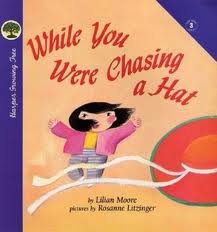
    While You Were Chasing a Hat by Lilian Moore can be an easy introduction to the concept of wind and all that it moves in our world. Students in preschool and kindergarten will identify with the text, and the text can inspire a simple improvisation of being moved "by the wind."

    Images-1

    When the Wind Bears Go Dancing by Phoebe Stone is a playful book about the "wind bears in the sky." Again, children ages 4-7 will delight in hearing this story and creating a dance with you in class as you become the magical bears in the sky that make things move.

    Images   DownloadedFile

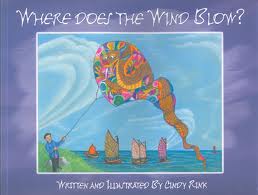
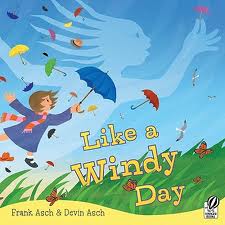
    For students in K-2, there are two books with poetic text that could lead to beautiful group dances with a windy theme. I recommend both Where Does the Wind Blow? (Cindy Rink) and Like a Windy Day (Frank Asch and Devin Asch).

    Wind can be a beautiful theme to explore along side, or instead of, your usual theme of the season of fall and leaves. 

  • Advice for PreK-8 Dance Teaching Artists: Creatively Funding Your Bookshelf

    How can dance teaching artists have a robust collection of dance books to use in their classes? Let me offer a few ideas.


    School Librarian

     If you teach in a K-8 school and haven’t already done so, get to know your librarian. Find out what dance books your school already has. Start a conversation about how you use dance books in your classes. If appropriate, offer the librarian a “wish list” of books you would love to see the library obtain. Some librarians will even let teachers “check out” a particular book for months at a time, so that you can have easy access in your classes.


    Local Library

    Teach at multiple sites around town? Your local library might become your best resource. Find out more about your closest branch, and introduce yourself to the children’s librarian. Offer a window into your work for him/her. Start a dialogue, and you most likely will gain a great ally for your work. Also find out about other library information that can support your projects. For example, my local library system has a great online catalog so I can search anytime for books. I can reserve books online and have them transferred from one branch to my closest one.


    Ask for Funding

    If you teach at a preschool, elementary school, or middle school, there might be some possible funding sources that can get you some books (funding sources outside of the typical “arts ed” realm). Talk to your principal or school director about how you are connecting to language arts/literacy in your dance classes; talk about how you are creating environments for multimodal learning and “language rich environments.” Most schools eagerly say yes to support any kind of language arts and literacy project.

    You could also approach the PTA for funding as well.

    Many communities also have education foundations, where district employees can apply for small grants to support specific projects. You could write a grant for $200-400 to build a dance book collection.


    Used Books on amazon.com

    Teach at various sites? Then you most likely will want to consider investing some of your own dollars into a dance book collection. Setting aside $200 can be a great start. If you file a Schedule C as an independent contractor, keep your receipts and write off the books as your teaching materials.

    The best way to stretch your money is to search for used books on amazon.com.


    Many dance books go out of print quickly, so I recommend buying books when they are on your radar and peak your interest. I know firsthand that many books have lasting value and can easily become a mainstay in your classes for many years.
     

  • Alphabet Movers

    Images

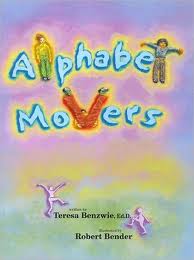
    Today I would like to share about Alphabet Movers by Teresa Benzwie.  I used it for my opening activity in a preschool creative dance class this morning, with 4 and 5 year old children. 

    Benzwie's book goes through the alphabet, highlighting various action words to inspire young ones to stretch, reach, leap, and dance. For example, the text on the R page is:

    "R is for rolling reaching and running a race

    Are you ready? 

    Get in place"

    Robert Bender's illustrations are a great complement to the text – illustrations of both boys and girls in regular attire moving and dancing.

    For my opening activity, with a group of 8 kids sitting near by, each student got highlighted. I greeted each child and asked the first letter of his/her name. We then read the accompanying page, and then got up on our feet and moved. 

    I did not read the book from start to finish, but simply used it as a springboard for a warm up. The students loved it and eagerly waited for "their turn."

    I purchased this book years ago through the NDEO website (www.ndeo.org), but I also noticed today that Powell's Books sells it as well. 


  • Kitchen Dances

    Today I would like to highlight two playful picture books for young ones in preschool, kindergarten, and first grade. These books are fun for parents, librarians, and teachers to share with students.

    DownloadedFile

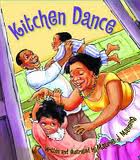
    The theme is dancing at home. Kitchen Dance by Maurie J. Manning is a story of a mom and dad dancing in their kitchen. Their two young children hear sounds from their room, and sneak out to find their parents joyfully dancing together in the kitchen one night. In the end, all four of them are dancing.

    DownloadedFile-1

    Dancin' in the Kitchen (Wendy Gelsanliter and Frank Christian) is also a whimsical tale of a family cooking, dancing, and celebrating together. Marjorie Priceman's illustrations are one of the highlights of this picture book. 

    These are great books to share with young kids who simply love dancing informally at home.

    Both books can be found used on amazon.com.

  • Lines that Wiggle

    Images

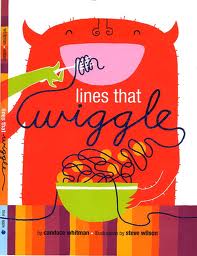
    "Lines that wiggle…..lines that bend….wavy lines, from end to end."

    These are the first few lines from Candace Whitman's playful picture book. The book is poetically written, and the text can be your "script" for a dance with many sections for students in grade 1, 2, and 3. Use the book to explore lines and pathways.

    Have fun!


  • Tap Dancing!

    DownloadedFile

    While vacationing on the big island of Hawaii, we like to stop into the library to load up on books for my two young sons. Of course, I couldn't resist checking out their dance collection while there.

    I found a book on tap dancing that I would like to share with you today. Tap is an amazing percussive dance form, and there are few books on the form. Tap by Lisa Dillman is part of the "Get Going! Hobbies" series that Heinemann publishes. This informative book is ideal for school libraries and is geared towards students in 2nd-5th grades. 

    The text includes history, alignment and balance, safety tips, and how to produce "single sounds" and "multiple sounds." Throughout the book there are great photos of famous tappers over the years – Sammy Davis Jr., Fred Astaire, and Gregory Hines. (Photos of some more female tap dancers would have balanced out the book more….)

    For lovers of tap, I would also recommend the joyful picture book about Bill "Bojangles" Robinson, Rap a Tap Tap: Here's Bojangles – Think of That!. There is also the autobiography of Savion Glover, Savion!: My Life in Tap


  • Ribbon Dances

    Today I would like to share two books that work nicely with a prop – ribbons. 

    I have done these lessons with students in preschool, kindergarten, and first grades. My students have always loved lessons with props – ribbons, hula hoops, fabric, elastic loops, and such.

    Images

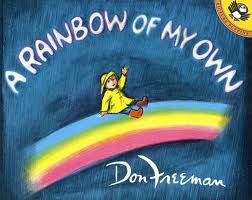
    A Rainbow of My Own by Don Freeman is an older book, but still holds its magic. I first heard of this book while co-facilitating a workshop many years ago with Carol Flanagan at Saint Mary's College. In the story, a little boy imagines playing with a rainbow. In my preschool classes, I have first read this book, and then provided the students with silk ribbons in rainbow colors, about 1.5 yards long. (I purchased this beautiful ribbon at Stonemountain and Daughter in Berkeley, CA. You can also purchase individual ribbons on sticks through many catalogues, including Nova Natural.) With the students, they can improvise and play with the rainbows or you can create a dance together as a class – deciding how the rainbow moves (over, under, around, through, etc).

    DownloadedFile

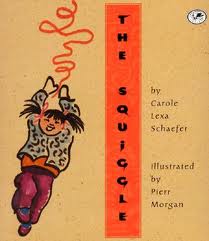
    The Squiggle by author Carole Lexa Schaefer and illustrator Pierr Morgan is also a playful book to inspire ribbon dances. In the squiggle, a red string/ribbon becomes many things in a child's imagination. I love to read this to students and then create a dance together, where each student contributes one idea for the dance. Our red ribbons can be snakes, ocean waves, rainbows, and much more. I have used a variety of red ribbons over the years, but in particular love organdy ribbon. I purchased mine at Stonemountain and Daughter in Berkeley,CA, and here is a link to purchase some on the internet.

    Images-1   


  • What’s on My Shelf: Art Books (Part 3)

    In part 3 of this series, I want to share about two books I love to use when my middle school students explore symmetry. 

    Images-2

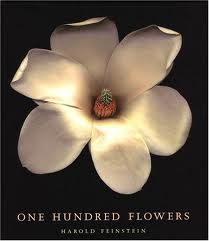
    One Hundred Flowers by Harold Feinstein is a gorgeous photography book of flowers up close. The images are bold, elegant, and eye catching. The students eagerly work together to create group shapes. The images inspire the students to think about symmetry, line, shape, and inner/outer.

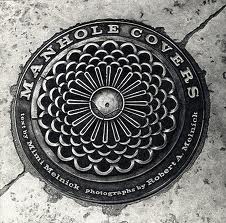
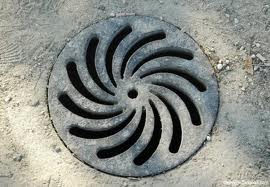
    With a totally different feel and look, I also love exploring symmetry with the images in the photography book Manhole Covers by Mimi Melnick and Robert A. Melnick. I am an explorer in the world for inspiration, and I love finding details in nature and in the city that I can bring into our dance classes. The students find the manhole covers to be fun and quirky; the images again inspire the students to explore and play with symmetry, line, shape, and group work.

    Images-1   DownloadedFile

    I found both books used on amazon.com at great prices. Looking today, I see that you can get One Hundred Flowers for around $19 and Manhole Covers for only $12. 


  • What’s on My Shelf: Art Books (Part 2)

    Images

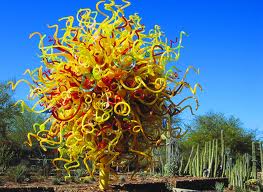
    Following up on my previous post, today I want to share about the fabulous glass artist Dale Chihuly. My middle school students love looking at his work and using the images as inspiration for group shapes. 

    I will place several books are the room and put the students in small groups. They will browse the books, select about 4-6 images, and mark the selected images with Post-It Notes on the pages. As a group they create a shape to represent each sculpture, and then must also choreograph the transitions between each one. 

    Exploring these sculptures in the body encourages students to experiment with group shapes, lines, pathways, levels, size, and varied qualities.

    I saw an exhibit of Chihuly's work about ten years ago, and one phrase sticks in my mind from that exhibit. Chihuly strives to strike a balance "between fluid and fixed" in his work. I love that description. 

    Images-1

    I encourage dance teachers of students in 4th-8th grades to explore the work of glass artist Dale Chihuly.

    On my shelf I have:

    Fire

    Chihuly: 365 Days

    There are great prices on used books on amazon.com. Whenever possible, having 4-5 different books on hand will allow for small group work. Check out your local library as well.


  • What’s On My Shelf: Art Books (Part 1)

    DownloadedFile

    At work the other day, I was browsing through my books and thought that I would share some of my tried and true art books I use with middle school dance students. I have also used these books with students in 4th and 5th grades.

    Sculptures are great springboards as students explore shape, level, size, and lines in their own bodies. 

    Images

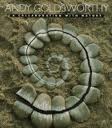
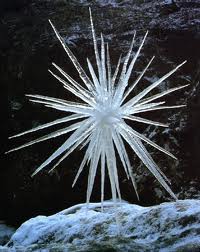
    Andy Goldsworthy's works of art are simply magical, elegant, and inspirational. I love having a few books on hand to allow for small group explorations. The two on my shelf are:

    A Collaboration with Nature

    Stone

    Looking at amazon.com today, I see that you can find many of his art books at great prices used (in the $15-$20 range).

    Check out your local library as well to have 3-4 books on hand for a lesson.