Blog

  • How to Two

    IMG_4182

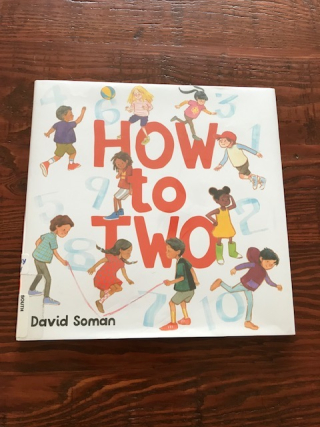
    Oh, I love the new books section at the library and stumbling upon new titles. Today I scooped up How to Two by David Soman. Do you work with preschool-first grade age children? This is a great book to explore groupings, taking turns, entrances/exits, and choreographing sections of a dance. Let's go!

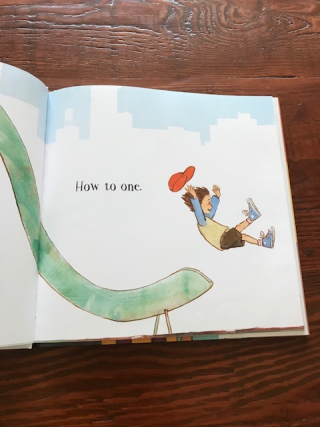
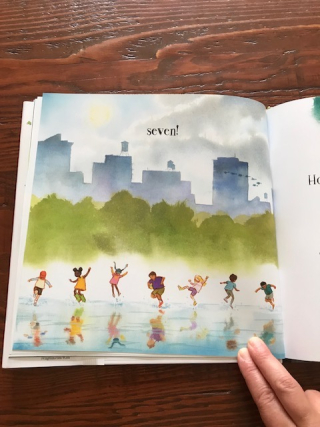
    The text is super simple, but poetic and inspirational to lead us into a dance project. First start off with a read of the book to the group. How to one….how to two…how to three… The illustrations are of joyful, moving children.

    Each section of the dance can be one simple movement that the students repeat. For example, "How to one" could be one student skipping in the space. Then the dancer exits to the side. "How to two" could be two students in the middle of the room doing several criss cross jumps. You can cue them with your hand when it is time to exit. 

    Of course you can creatively alter the text, but the text goes to "How to ten." This means you need ten or more students in your class. If you have 10+, then several students can have more than one part in the dance. Even with a class of 20, students can be in an least 2 sections. 
    IMG_4183

    Co-create the ten sections together. Write them on big chart paper. Here is an example of how this might go:

    1 = skipping in a circle

    2 = criss cross jumps

    3 = swaying back and forth

    4 = sit spins

    5 = jumping jacks

    Students can move freely in the space when it is their turn to dance, or you can place blue tape to help with spacing:

    X

    X     X

    X     X     X 

    X     X     X     X

    Some music selections to try out include:

    • "Sky Full of Stars" by the Vitamin String Quartet
    • "Bambo Koyo Ganda" by Bonobo
    • Various versions of the jazz standard "Sweet Georgia Brown"

    Have fun! Please leave a comment below if you tried it out with your students and have more ideas and versions to share. Thank you!
    IMG_4184

  • Zoogie Boogie Fever!

    Book cover

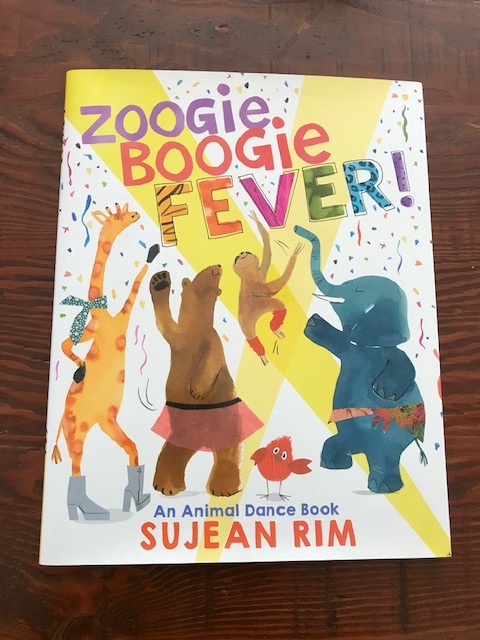
    This book was made for our dance classes! It works so magically with preschoolers' and kindergarteners' love of animal dances, imaginative play involving sneaking out and dancing at night, freeze dance games, and more. The words literally will narrate your group dance or structured improv for your class.

    The story will inspire swinging, swaying, jumping, and wiggling. We will move slowly and quickly. We will FREEZE when we don't want to get caught at the zoo….

    Musical selections can include bright jazz tunes like "Watermelon Man" by Herbie Hancock, "Seven Come Eleven" by Oscar Peterson, or "Salt Peanuts" by Dizzy Gillespie.

    Dance teachers – become the narrator of the book and let the words lead the sections of the dance (whether a culminating project or a recurring structured improv you repeat several times throughout the semester).

    Tease out the concepts of the book over several lessons:

    • Shapes/body positions
    • Various animals and how they locomote, plus the levels they move on (high/middle/low)
    • Fast and slow movement
    • Improvised movement/set steps
    • Naming steps/trying out new movement of your own that does not have a name
    • Dancing 2 by 2 across the space

    Purchase your copy of Sujean Rim's Zoogie Boogie Fever today!

    Boogie page

  • Blue by Laura Vaccaro Seeger

    Screen Shot 2019-01-06 at 4.24.04 PM

    Colors are an ever popular theme in dance classes. I was excited to see Laura Vaccaro Seeger's latest creation, Blue. You might be familiar with her book Green already.

    Explore this book with elementary age students. Start off with a group brainstorm – what do you think of that is blue? Capture ideas on chart paper. Then, pull out a variety of scarves, pieces of fabric, and ribbons of varying shades of blue. Improvise, trade, and dance some more. 

    Screen Shot 2019-01-06 at 4.32.09 PM

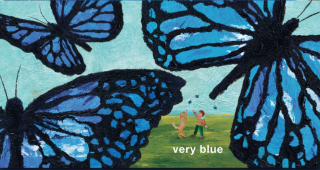
    The book Blue offers delightful text to try out through small group sections, taking inspiration from the words and the images. "Very blue" relates to blue butterflies…."midnight blue" refers to nighttime…."new blue" shows the ebb and flow of the ocean. Consider using the props within your dance as well.

    For music, check out "Into the Sea" or "Broken Arrow" by The Album Leaf. And, to find more dancing books about colors, click here.

    ————-

  • I am the Rain

    Screen Shot 2019-01-06 at 4.09.15 PM

    I am writing today's post on a very rainy day in the SF Bay Area.

    Rain, water, forms of water, and the water cycle – these are all favorite springboards in my dance classes. Whether we are talking about a 1st grade dance class or a 6th grade science project, I find that there is endless movement potential here.

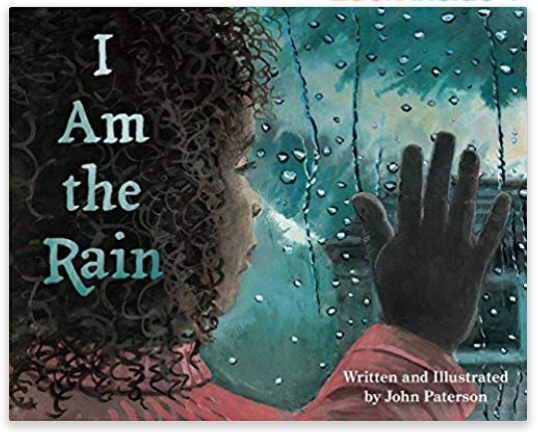
    I was delighted to find a new book to add to my list the other day at the library – I am the Rain, written and illustrated by John Paterson. It just came out in 2018.

    Sometimes I'm the rain cloud

    and sometimes I'm the rain.

    Sometimes I'm a roadside rapid

    roaring down a drain. 

    I can show you rainbows

    in mist or morning dew. 

    I can be a muddy flood

    or a pool of aqua blue.

    This is just some of the opening text for this picture book. 

    The beautiful text inspires us to change shape, speed, level, and quality multiple times throughout the book. Use it for a structured improv in your class or compose a whole dance. Use the book with a wide range of students – from preschoolers through second graders.

    As for music, consider using the piano sound of "Hope" by Michael Wall. You can download it from Michael's site here.

    And, find more books for water dances here on the site. Let's dance!

    ———

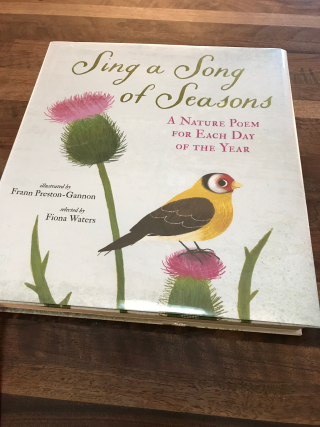
  • Sing a Song of Seasons: A Nature Poem for Each Day of the Year

    IMG_2842

    Are you a poetry lover, and love incorporating poems into your dance classes and projects with students in grades K-8? Consider adding this hefty book to your shelf. So many great options and springboards. So many poems!

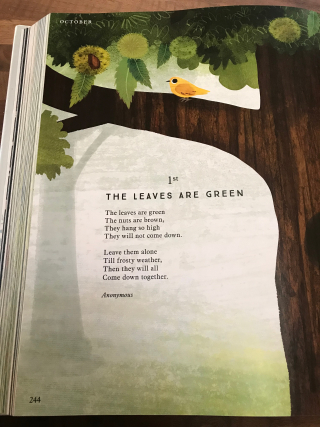
    Sing a Song of Seasons is 319 pages of poetry – one poem for every day of the year. 

    IMG_2840

    If looking to have a small collection of nature based poems for future classes, consider this book alongside:

    Water Sings Blue: Ocean Poems by Kate Coombs

    The Tree That Time Built: A Celebration of Nature, Science, and Imagination edited by Mary Ann Hoberman and Linda Winston

    Firefly July: A Year of Very Short Poems selected by Paul Janeczko


  • Book of Bones

    IMG_2833

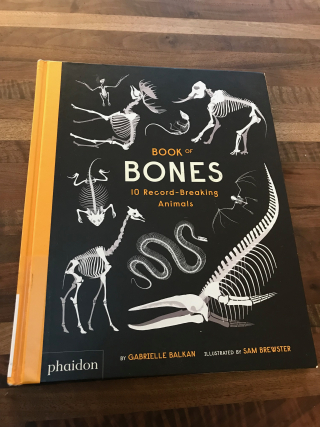
    Do you work with students in grades 1, 2, and 3? I am in love with this book – Book of Bones by Gabrielle Balkan and illustrator Sam Brewster.

    The content and format of the book calls for us to make a group dance with the book. Check out the table of contents, and the words that so relate to our dance work – small, big, long, heavy, light, fast….

    IMG_2839

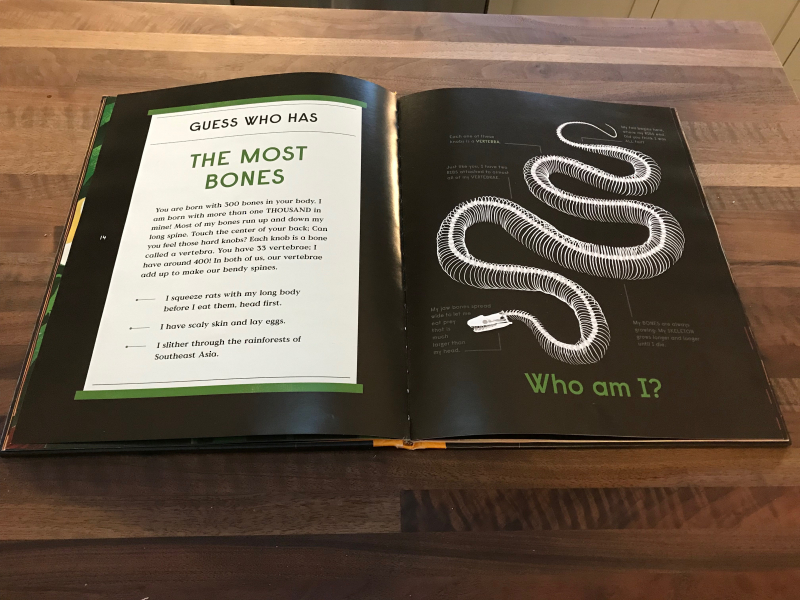
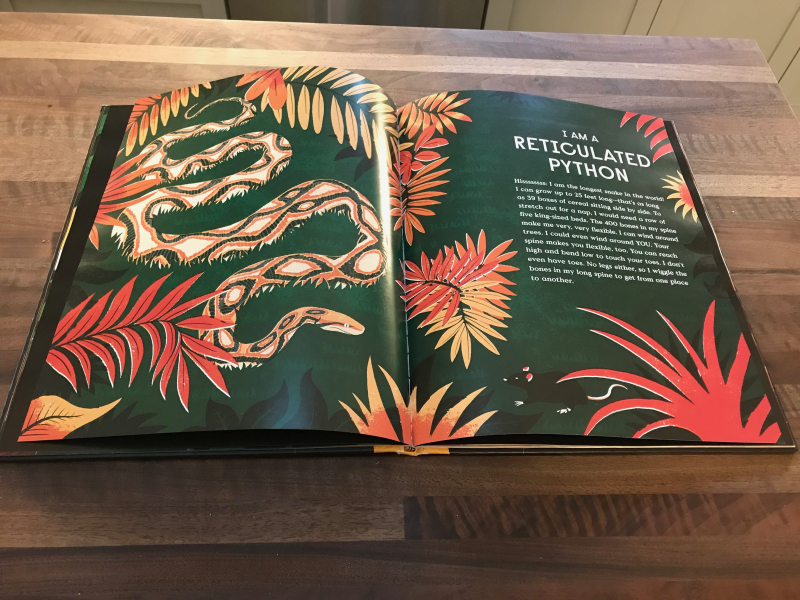
    "Guess who has the biggest bone? Huge. Gigantic. Tremendous: That's ME. Inside my massive body, I have the world's biggest bone…" So reads the text. Each of the 10 animals explored in the book has opening text, an image of the bony structure, and then a colorful two page spread with more text. 

    I imagine that you could be the narrator and literally read the text as each group dances their section – the blue whale, the Etruscan shrew, the reticulated python, and 7 more. Break your class into small groups to explore each animal in terms of shape, size, speed, and common actions. 

    IMG_2834

    IMG_2835

    The Book of Bones will be a delightful new class exploration this winter. The students will love the variety, the 10 animals highlighted in the book, and a culminating project with lots of small group sections. Select 10 different music options to support the different movements of each creature. Here are a few options. Use the first 1-2 minutes of each song:

    Biggest bone: Blue whale ("Magic Hours" by Explosions in the Sky)

    Smallest bones: Etruscan shrew ("Grace" by Bobby McFerrin and Yo-Yo Ma)

    Most bones: Reticulated python ("The Harder We Work" by My Dad Vs. Yours)

    Longest neck bone: Reticulated giraffe ("See" by Tycho)

    Heaviest bone: African bush elephant ("Kiara" by Bonobo)

    Lightest bones: Peregrine falcon ("Particle" by Pantha du Prince and The Bell Laboratory)

    Thinnest bones: Bumblebee bat ("Glass: In the Upper Room – Dance 1" by Philip Glass)

    Fastest-growing bone: Alaska Moose ("Electric Daisy Violin" by Lindsey Stirling)

    Spikiest bone: Regal horned lizard ("Vanilla Minus" by Gold Panda)

    Fewest bones: Great hammerhead shark ("Irene's Good Night" by Slammin All-Body-Band)

    ———————–

  • This is It – By Daria Peoples-Riley

    Th

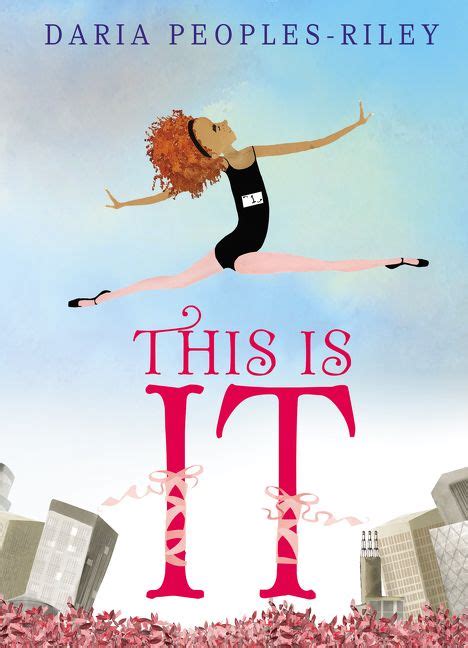
    This is It is a wonderful new addition to your dance book collection for children in preschool and grades K-2. The story, with gorgeous illustrations, is a "self pep talk" for a little girl. Words like brave, strong, and warrior fill the pages. "Dance with all your might. Dance like you belong in the spotlight!"

    While the basic storyline is about a pending ballet audition, the heart of the book is a rare gem within children's books on dance. It is about feelings and confidence. It is about bravery.

    Check it out!

    IMG_2585


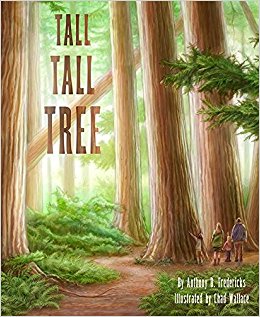
  • Tall Tall Tree by Anthony D. Fredericks

    51KXVcN53cL._SX258_BO1 204 203 200_-1

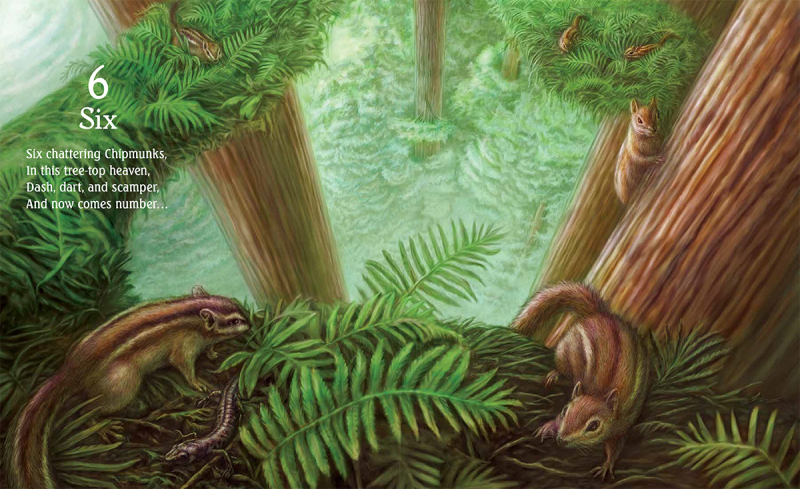
    The 2017 publication of Tall Tall Tree (author Anthony D. Fredericks and illustrator Chad Wallace) is a delightful new book to try out with preschool, kindergarten, and first grade students. The book offers a variety of animal movements and also is a counting book – 1 eagle, 2 owls, 3 salamanders…. Tall Tall Tree explores the many different creatures that live within giant redwood trees.

    Counting books like this one so nicely lend themselves to "parts" for a group dance. So if you have 20 or more students in a class, everyone can get one or two parts to the dance.

    1 eagle (soaring, searching)

    2 owls (carrying food, sharing, nesting)

    3 salamanders (climbing, hunting)

    4 woodpeckers (quick movements, pecking, storing food)

    5 woodrats (darting, eating)

    6 chipmunks (dashing, darting, scampering)

    7 bumblebees (quickly zigging and zagging)

    8 bats (sleeping, waiting, hanging)

    9 banana slugs (sliding, sliming)

    10 ladybugs (crawling, flying)

    Tall Tall Tree is nicely bookended with clear beginning and ending text to help shape your dance. Teachers – you can be the narrator for the dance and literally read the whole story aloud to help shape and pace the dance.

    As for music selections, try out "Brace Brace" by Bonobo, or "Blind Man, Blind Man" by Herbie Hancock.

    TALL_B2

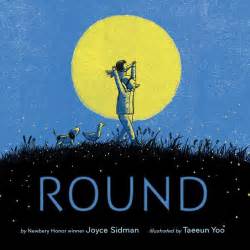
  • Round by Joyce Sidman

    Today we are excited to have SF Bay Area teaching artist Juliana Monin writing for Dancing Words.

    Th-1

    My daughter received Round as a gift, and it’s filled with great images and ideas for dance. Written by Joyce Sidman and illustrated by Taeeun Yoo, Round is lyrical and dreamy, delighting in some of the ways we enjoy round things. It could be an excellent way to introduce a study of shape for preschool through 3rd grade.

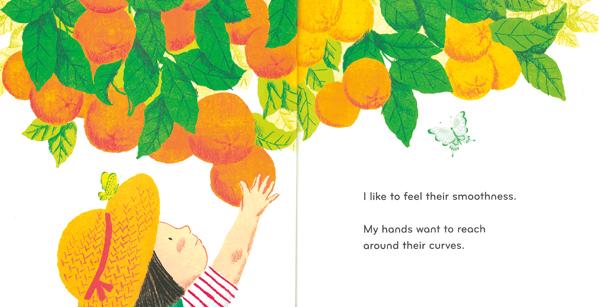
    Some inspirational images include: curving around round juicy oranges, round seeds quiet and still, swelling mushrooms, concentric rings of a tree stump, round ripples from rain drops onto water, and bubbles bursting.

    Image

    One favorite page depicting dung beetles says, "I love to watch round things move. They are so good at it! Rolling, spinning, bouncing. I always wonder where they’re headed.” Students can practice rolling on pathways with varying speeds, being “rolled” by someone, or rolling singular body parts.

    Another nice idea comes from two pages showing how water smooths out the edges of rocks over time. Students can practice several ways of transforming from angular shapes to curved ones.

    Other pages about friends linking together to make round circles, or hugging a loved one, lend to partnering explorations about round – loose and round, low and round…How big a round shape can you make? How small? How are you connecting?

    Round is sweet and serene, helping to remind us of the magic in our simple, natural, round world. I’ve been having fun dancing out some of these pages and think you will too.

    ——–

  • Lives of Dancers/Biographies in Picture Books

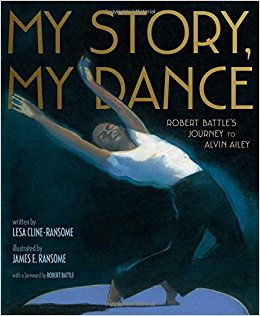
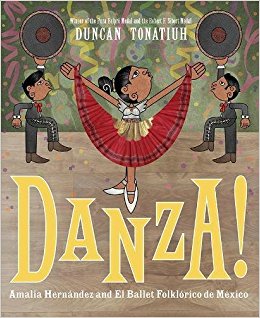
    Today I want to share about two great additions to add to your collection, especially if you teach in a K-5 elementary school. These books share the stories of Robert Battle (now the Artistic Director of Alvin Ailey American Dance Theater) and Amalia Hernández (Founder of El Ballet Folklórico de México).

    51nVZa1l3cL._SX258_BO1 204 203 200_

    The 2015 book My Story, My Dance shares the story of Robert Battle's early childhood in Florida, finding his passion for dance, moving to New York, building his career, and landing as the Artistic Director of Alvin Ailey. I personally learned a lot of new details reading the book. Author Lesa Cline-Ransome did an excellent job documenting Battle's career path in a way that students in elementary schools will understand and grasp. The book is a perfect introduction before students head to an Ailey show this school year. James E. Ransome's illustrations are detailed drawings to capture movement as well as facial expressions and emotions within the story.

    5117VKjHQ8L._SX258_BO1 204 203 200_

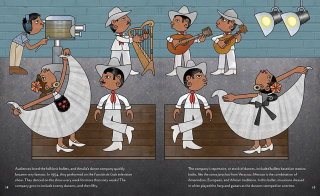
    Second, check out the 2017 publication of Danza! by Duncan Tonatiuh. I learned so much about the development of one of the most famous ballet folklorico companies in the world. Tonatiuh also follows the dancer's path from early childhood to discovering dance to building a career in dance. The distinctive artwork beautifully captures the swirling of the folklorico skirts, the partner dances, the costumes, and the musicians.

    71WtuQn3EkL

    Please consider adding both books to your personal collection or asking your school's librarian to purchase copies for the school.

    ——–