Category: Water

  • This is the Rain

    DownloadedFile
    I love the theme of water and have explored it in many ways over the past 16 years in dance classes varying from preschool through 7th grade. Students explore the actions of water, the water cycle, forms of water, and more.

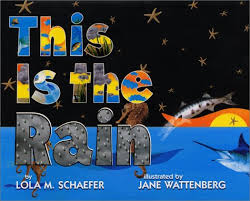
    This summer at the library, I found the book This is the Rain by Lola M. Schaefer and illustrator Jane Wattenberg. This is the Rain is a cumulative story, like The House That Jack Built, where the story gets built upon. 

    As for movement inspiration, the book talks about the water cycle and the many forms/states of water. The use of repetition in the text is a great way to explore repetition in your dance class.

    I encourage dance teaching artists, classroom teachers, and science teachers working with students in grades K-3 to check out this book. You can purchase used copies on amazon.com

    *Also, please note, I added the category of "water" in the column to the right here. There are numerous books on the theme to explore in elementary dance classes.
  • Poetry Series: Water Sings Blue

    Images-1
    For many of us, we are heading into winter and a time of cold, dark, and snow. But, I still want to suggest this beautiful book to remind us of warmth, summer, and the ocean. 

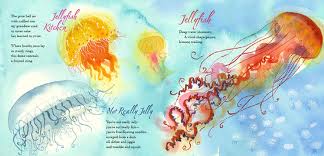
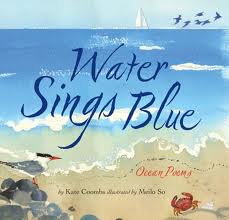
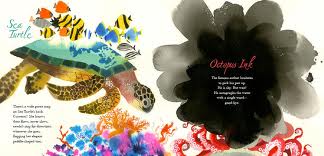
    I have eagerly awaited a copy of this book in our local library system, and I finally checked it out today. To my delight, Water Sings Blue: Ocean Poems, might be one of my new favorite children's poetry books to use in dance classes. The poetry is by Kate Coombs, with illustrations by Meilo So. Both text and paintings are full of magic, whimsy, and imagery to inspire movement with students ages 5-10. I suggest using this within an ocean unit with students in grades 2 and 3, as well as in creative dance classes in after school settings with students in K-3. 

    Unknown-1
    From start to finish, the poems take you on a journey along the shore and in the water. Topics include: sand, tide pools, waves, jellyfish, squid, and coral. The poems lend themselves to a variety of projects for both small groups (solos and duets) and whole group vignettes. You could easily use all or most poems in the book to create a beautiful performance with your class. 

    Here is an example of one of the beautiful poems to inspire choreographing and dancing:

    Coral

    We are busy.

    We are growing.

    We don't care where

    you are going.


    We are cousins.

    We're a throng.

    We are wide

    and we are strong.


    We are reaching, 

    stretching high.

    Pretty soon

    we'll own the sky.


    We are golden.

    We are pretty.

    We are coral.

    We are city.

    Unknown

  • Water Dance…Cloud Dance…Mountain Dance…

    Images
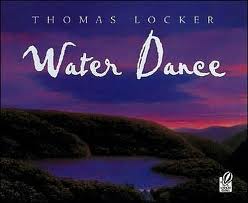
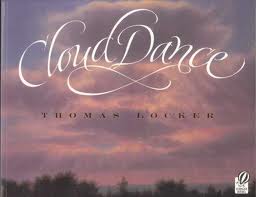
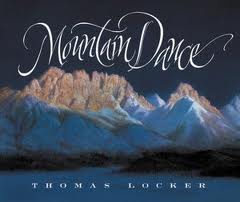
    Thomas Locker's three picture books – Water Dance, Cloud Dance, and Mountain Dance - are great springboards for group dances with students in 3rd, 4th, and 5th grades.

    The use of the word "dance" refers to the changing of states, forms, and rises and falls within the natural world.

    Water Dance is a book with poetic language. Each page describes a different form of water:

    I wind through broad, golden valley

    joined by streams,

    joined by creeks.

    I grow ever wider,

    broader and deeper.

    I am the river.

    Images-1
    Cloud Dance also describes different forms – this time not water but clouds – with descriptive language. Students in small groups, trios, or duets can create phrases for each page.

    Fluffy summer clouds

    march 

    in the blue sky.


    Gray clouds 

    with golden fringes

    block the streaming sunlight.

    Images-2

    Last, Mountain Dance explores the land and volcanoes, folded mountains, mountain ranges, types of erosion, and more.

    All three books are a beautiful blend of art and science. The books could be a great starting point for a collaboration between dance teachers and science teachers. 


  • Moving with the Waves

    DownloadedFile-1

    This week I referenced the wordless book Wave by Suzy Lee. It inspired me to think more about ocean waves and how you can develop several dance lessons on this topic this summer.

    Ocean waves are a creative way to explore up/down, calm/chaotic, forward/back, wavy pathways, and more.

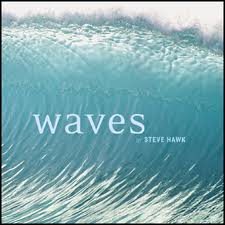
    I would recommend buying or borrowing photography books of ocean waves to explore with your students, such as:

    Swell: A Year of Waves

    Waves

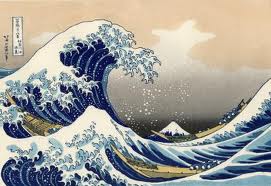
    I also encourage you to show the students the famous Japanese painting The Great Wave off Kanagawa. Search the library for books on Japanese art.

    Images

    Studying ocean waves and the movement of water is a great summertime exploration with students in 1st grade through 5th grade.

  • The Power of Lending

    Images-1

    Today's blog post is a sharing of thoughts for dance teaching artists. 

    While it is always great to suggest at your school sites book titles, the simple power of a lending a book can go a long way.

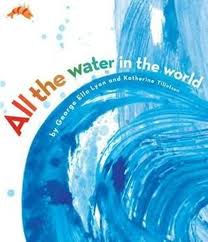
    Recently, I taught a special class at my school for kindergarteners and my regular 8th grade students. We explored the theme of water/rain. As the Ks left the room, I passed on two books to the kindergarten teacher – optional reading to "extend" our lesson. (I passed on All the Water in the World and Water Dance.) I saw the teacher in passing a week later, and she mentioned that they are trying to make a dance about one of the books, to show me. That is the borrow of directly handing a book to a teacher – making it easy for him/her to further explore with a classroom.

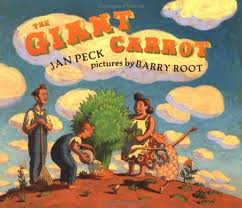
    At my son's preschool (age 4), I recently lent them a stack of dance books. What a pleasure to find out how many they have read as a class already, including The Giant Carrot, a fun version of The Giant Turnip that involves a little girl dancing in a garden to make the giant carrot grow. 

    Images

    For years, I happily created book lists for schools, classroom teachers, and librarians. The lists are appreciated, but if you have the time to lend a book or get it out of the library, all the better. Life is busy,and helping with the first step can be a big help for busy classroom teachers.