Category: Science

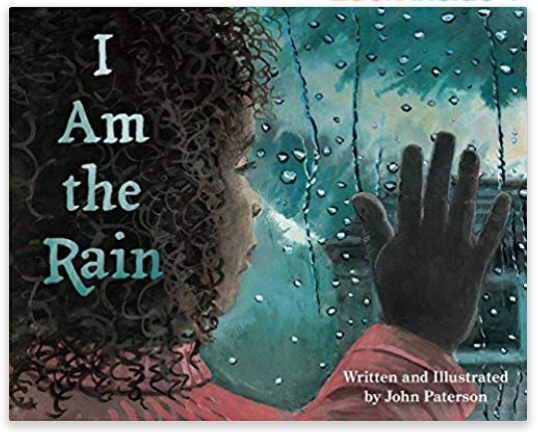
  • I am the Rain

    Screen Shot 2019-01-06 at 4.09.15 PM

    I am writing today's post on a very rainy day in the SF Bay Area.

    Rain, water, forms of water, and the water cycle – these are all favorite springboards in my dance classes. Whether we are talking about a 1st grade dance class or a 6th grade science project, I find that there is endless movement potential here.

    I was delighted to find a new book to add to my list the other day at the library – I am the Rain, written and illustrated by John Paterson. It just came out in 2018.

    Sometimes I'm the rain cloud

    and sometimes I'm the rain.

    Sometimes I'm a roadside rapid

    roaring down a drain. 

    I can show you rainbows

    in mist or morning dew. 

    I can be a muddy flood

    or a pool of aqua blue.

    This is just some of the opening text for this picture book. 

    The beautiful text inspires us to change shape, speed, level, and quality multiple times throughout the book. Use it for a structured improv in your class or compose a whole dance. Use the book with a wide range of students – from preschoolers through second graders.

    As for music, consider using the piano sound of "Hope" by Michael Wall. You can download it from Michael's site here.

    And, find more books for water dances here on the site. Let's dance!

    ———

  • Book of Bones

    IMG_2833

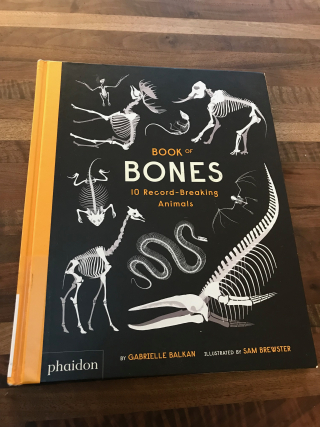
    Do you work with students in grades 1, 2, and 3? I am in love with this book – Book of Bones by Gabrielle Balkan and illustrator Sam Brewster.

    The content and format of the book calls for us to make a group dance with the book. Check out the table of contents, and the words that so relate to our dance work – small, big, long, heavy, light, fast….

    IMG_2839

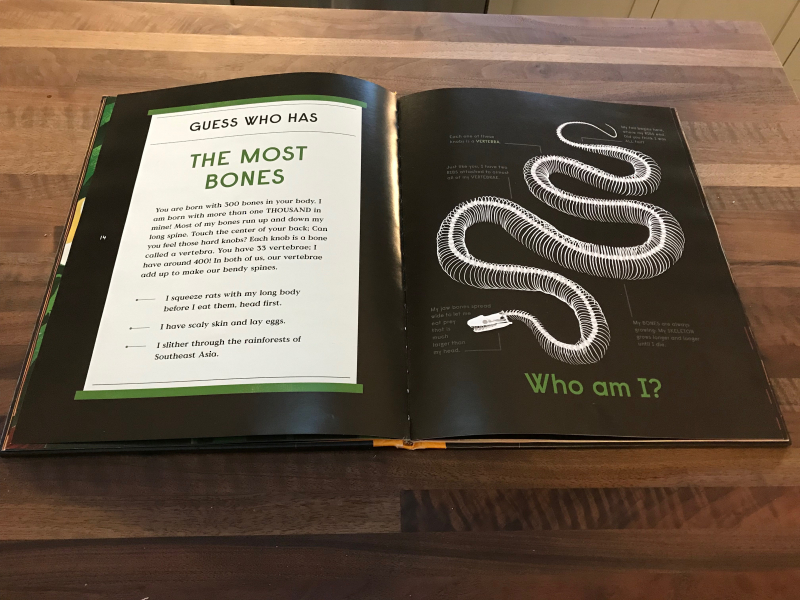
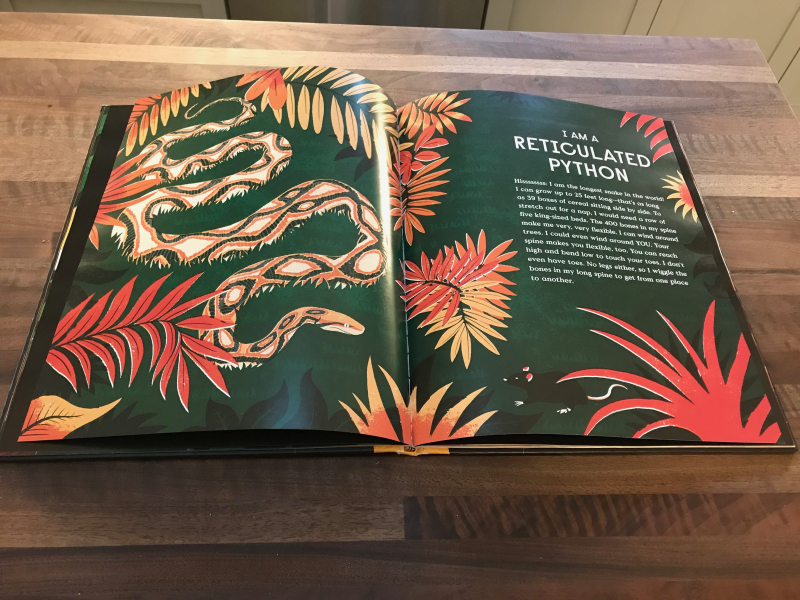
    "Guess who has the biggest bone? Huge. Gigantic. Tremendous: That's ME. Inside my massive body, I have the world's biggest bone…" So reads the text. Each of the 10 animals explored in the book has opening text, an image of the bony structure, and then a colorful two page spread with more text. 

    I imagine that you could be the narrator and literally read the text as each group dances their section – the blue whale, the Etruscan shrew, the reticulated python, and 7 more. Break your class into small groups to explore each animal in terms of shape, size, speed, and common actions. 

    IMG_2834

    IMG_2835

    The Book of Bones will be a delightful new class exploration this winter. The students will love the variety, the 10 animals highlighted in the book, and a culminating project with lots of small group sections. Select 10 different music options to support the different movements of each creature. Here are a few options. Use the first 1-2 minutes of each song:

    Biggest bone: Blue whale ("Magic Hours" by Explosions in the Sky)

    Smallest bones: Etruscan shrew ("Grace" by Bobby McFerrin and Yo-Yo Ma)

    Most bones: Reticulated python ("The Harder We Work" by My Dad Vs. Yours)

    Longest neck bone: Reticulated giraffe ("See" by Tycho)

    Heaviest bone: African bush elephant ("Kiara" by Bonobo)

    Lightest bones: Peregrine falcon ("Particle" by Pantha du Prince and The Bell Laboratory)

    Thinnest bones: Bumblebee bat ("Glass: In the Upper Room – Dance 1" by Philip Glass)

    Fastest-growing bone: Alaska Moose ("Electric Daisy Violin" by Lindsey Stirling)

    Spikiest bone: Regal horned lizard ("Vanilla Minus" by Gold Panda)

    Fewest bones: Great hammerhead shark ("Irene's Good Night" by Slammin All-Body-Band)

    ———————–

  • Tall Tall Tree by Anthony D. Fredericks

    51KXVcN53cL._SX258_BO1 204 203 200_-1

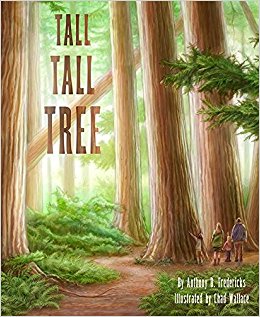
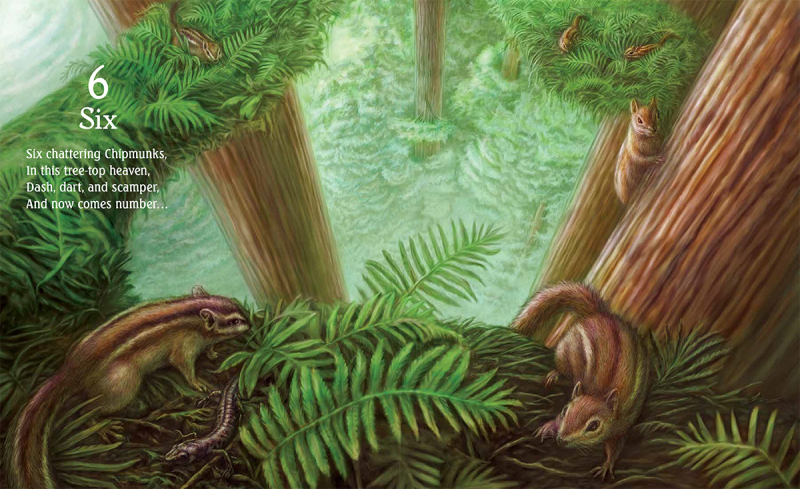
    The 2017 publication of Tall Tall Tree (author Anthony D. Fredericks and illustrator Chad Wallace) is a delightful new book to try out with preschool, kindergarten, and first grade students. The book offers a variety of animal movements and also is a counting book – 1 eagle, 2 owls, 3 salamanders…. Tall Tall Tree explores the many different creatures that live within giant redwood trees.

    Counting books like this one so nicely lend themselves to "parts" for a group dance. So if you have 20 or more students in a class, everyone can get one or two parts to the dance.

    1 eagle (soaring, searching)

    2 owls (carrying food, sharing, nesting)

    3 salamanders (climbing, hunting)

    4 woodpeckers (quick movements, pecking, storing food)

    5 woodrats (darting, eating)

    6 chipmunks (dashing, darting, scampering)

    7 bumblebees (quickly zigging and zagging)

    8 bats (sleeping, waiting, hanging)

    9 banana slugs (sliding, sliming)

    10 ladybugs (crawling, flying)

    Tall Tall Tree is nicely bookended with clear beginning and ending text to help shape your dance. Teachers – you can be the narrator for the dance and literally read the whole story aloud to help shape and pace the dance.

    As for music selections, try out "Brace Brace" by Bonobo, or "Blind Man, Blind Man" by Herbie Hancock.

    TALL_B2

  • Plants Can’t Sit Still by Rebecca E. Hirsch

    Unknown-1

    Yes, I can get very excited about picture books and the many possibilities for dance explorations and projects. The other week at the library, I stumbled upon a find that might be one of my top 5 favorite books for dancing, of all time! Really.

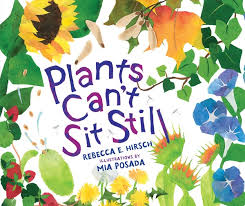
    The book published in 2016 is Plants Can't Sit Still by Rebecca E. Hirsch and illustrator Mia Posada.

    Every page inspires movement, level changes, and traveling. The book begins with:

    Plants don't have feet or fins or wings, 

    yet they can move in many ways.

    Look closely and you'll discover that plants can't sit still

    Plants can wiggle.

    As seedlings start to grow

    they squirm out of spring soil, unfold their leaves,

    and reach for the warmth and the light.

    Similarly done just here, the book highlights in different colored inks the action words per page.

    Rich possibilities are here to explore this long list of verbs from the book, as well as making a group dance using the entire text. Consider using the book in preschool, kindergarten, and first grade classes.

      Unknown-2

  • The Wonder Garden and “Habitats” Dances with 3rd Graders

    IMG_0941
    I love the big book The Wonder Garden, as it reminds me of one of my favorite 3rd grade dance projects from about 15 years ago.

    Years ago, I was teaching dance at Thousand Oaks Elementary School in Berkeley, California. I was teaching in Jennifer Stinson's class. Jennifer shared that the students were exploring rain forest habitats, and we created a magical group dance based on the subject. Here is my memory of the basic format — beginning, middle, and end. Rain forests are amazing with their layers, levels, animals, and plants. And, how does the temperature affect movement and tempo? Lots of dancing potential.

    Part A of our group dance was an opening tableaux/group picture/group shape with all of the students. We played with levels, size, and shape. Then everyone dispersed from our stage space.

    Part B – small group sections. The students were divided into small groups of about 5-6 students. Each group had an animal – such as spider monkeys or macaws. Over the course of a few classes, each group created a short movement phrase of about 6 ideas in it to show what each animal does and how it moves. One group at a time came out into the performance area, danced, and then exited. We made a basic list of notes for each group, to help remember their phrases (ex. swinging, eating fruit, grabbing a vine).

    Part C – Last, we ended as we began. All creatures re-emerged and finished in a group shape.

    As for music, I believe we selected a piece of jazz (possibly Art Blakey and the Afro-Drum Ensemble). We selected a piece based on feel and flow.

    IMG_0943
    Now, back to the book I first mentioned! If you also like the idea of a group dance about habitats, please check out The Wonder Garden! Kristjana Williams is a magical and talented graphic artist, and Jenny Broom's writing offers students key descriptors about each habitat and its plants and animals. This book can be a perfect springboard for a habitats project. The book features 5 habitats: Chihuahuan Desert, Amazon Rain Forest, Black Forest, Himalayan Mountains, and Great Barrier Reef.

    Also, as students read and research for the group dance, consider also checking out the following excellent animal books:

    Animalium by Katie Scott and Jenny Broom

    Zoo-ology by Joelle Jolivet

    Panorama by Joelle Jolivet and Fani Marceau

    The Animal Book by Steve Jenkins

    ———————

  • Sets of Books, with Lots of Options

    As dance educators, we have our favorite themes for classes and projects – the seasons, Halloween, locomotor steps, prepositions, and animals (to name a few). This week I was revisiting my bookshelf and thinking about some prolific children's authors, and how these sets of books would be great to explore in preschool, kindergarten, and first grade classes. The commonalities between the books will be fun to explore with the kids and a playful link from week to week.
    Images

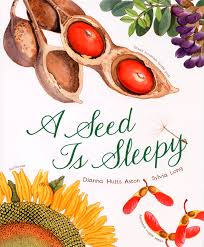
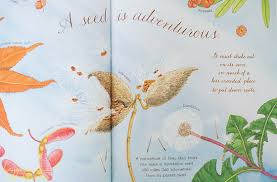
    The excellent duo of author Dianna Hutts Aston and illustrator Sylvia Long now have SIX titles in their series. Titles include A Butterfly is Patient and An Egg is Quiet. The complete list is:

    A Nest is Noisy

    An Egg is Quiet

    A Seed is Sleepy

    A Rock is Lively

    A Butterfly is Patient

    A Beetle is Shy

    Each book has a similar feel in terms of illustrations and the structure of each page; each page has one large sentence in cursive and then more scientific details in smaller print on each page.
    Images-1

    The cursive sentences are written in such a way to inspire movement for each new idea. The books can be used for structured improvisation with the students or as a basic structure to create a dance.

    Some text from A Butterfly is Patient:

    A butterfly is patient.

    A butterfly is creative.

    A butterfly is helpful.

    A butterfly is protective.

    A butterfly is poisonous.

    A butterfly is spectacular!

    The images and descriptions on each page will provide further inspiration for dancers to express the ideas. See the images, hear the descriptions, and explore in our own bodies…..
    51XqfmkM38L._SX331_BO1 204 203 200_
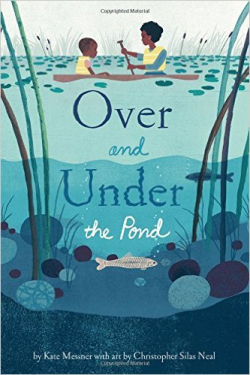
    In a similar way, author Kate Messner and illustrator Christopher Silas Neal now have 3 titles to their names – which explore up and down and above and below in a garden, a pond, and in snow. The titles are:

    Over and Under in the Snow

    Over and Under the Pond

    Up in the Garden and Down in the Dirt

    Prepositions – and relationality – are favorite concepts within creative dance. I love these books to explore high/low, up/down, and over/under. The books explore animals, birds, bugs, and weather. From Over and Under the Pond:

    Over the pond, the wind gives us a push and stirs the light-dappled leaves on shore. There on a branch, a new goldfinch teeters, finally ready to fly.

    Under the pond, tadpoles are changing, learning to hop. They're losing tails, growing legs, growing up.

    Over the pond, there at the shore, tall and silent and still, a great blue heron stares down into the deep. It tenses….takes one long-legged step…..

    and strikes! It catches a wiggling, quicksilver minnow from where it was hiding, under the pond.
     

  • Flowers are Calling

    Download

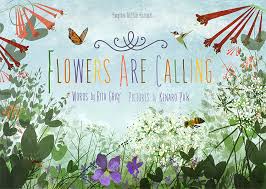
    Attention seasoned dance teaching artists! Flowers are Calling, by Rita Gray and illustrator Kenard Pak, offers some magical inspiration — leading towards a group dance with many "parts" for your whole class. Preschoolers, kindergarteners, and first graders will love the many roles to play as animals, insects, and beautiful flowers. 

    The recurring structure of the book is that a "flower is calling" to an animal. The animal emerges – such as a bear, frog, porcupine, or blue jay – but then something else is really interested in the flower, such as a honeybee. 

    Flowers are calling a little black bear

    No, not a bear! He doesn't care.

    They're calling a butterfly 

    to dip from the air.

    Flowers are calling a wet green frog.

    No, not a frog! She likes her soggy bogy.

    They're calling a bumblebee

    to look near their log.

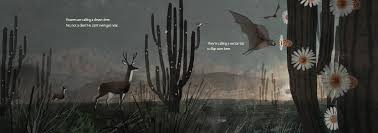
    Ten different animals/birds appear in the story as well as 9 different bugs and birds that go to the flowers. The book also highlights a variety of flowers in different shapes and sizes.

    Begin your exploration by reading the whole book to the group. Then, try out different body shapes/poses inspired by the numerous flower illustrations.

    Next, you can choreograph the dance with the students having one or more roles in the dance as an animal, insect, or flower. 

    Possible extensions to the lesson include:

    Images

    —————-


  • The Dance of the Raindrops

    Unknown-1

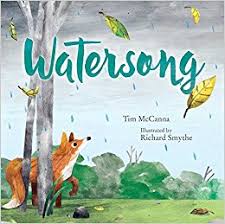
    One of my favorite themes for creative dance projects – spanning preschool through 6th grade – is the subject of water. I love the actions of water, the states of water, and the water cycle. Watersong by Tim McCanna and illustrator Richard Smythe is a great new addition to my collection, ideal to use with preschool, kindergarten, and first grade students.

    This picture book is filled with playful words to describe the sounds, speed, and qualities of water. 

    Drip drop plip plop

    pitter patter pat. 

    Twinkle sprinkle splatter splutter

    spitter spatter splat.

    The text can lead to an improvisational activity or a choreographic project with the group. Explore tempo, level, and quality changes. Use the words and your narration of the story to support the movement phrasing and slow, medium, and fast tempos. Water can move in so many different and playful ways.

    Unknown

    ——–

  • Volcano Wakes Up!

    Imgres-2

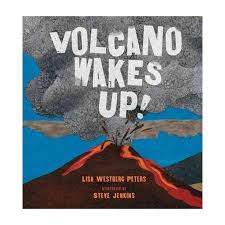
    Volcanoes move and dance. We too can take inspiration from their movement – brewing, exploding, pouring, oozing, and spreading. Explore this concept with students in 1st-4th grades.

    I love the book Volcano Wakes Up! by Lisa Westberg Peters and illustrator Steve Jenkins. Through a series of poems, a story of a brewing volcano is shared. Through five different perspectives – such as a cricket nearby and the sun and  moon – you learn about a Hawaiian volcano. 

    I suggest reading the whole book to your group. This can become your research and brainstorming. Write down words and images that come to mind. In small groups, can your students list 6-8 ideas from the book and make a vignette based on it? How can the students explore dynamic qualities, pathway, direction, and tempo? Or, take some of the short poems from the book, divide into groups, and create vignettes based on the poems. 

    You could also select several of the illustrations, in the same manner (about 6-8), to create a movement phrase. There is lots of potential within this single book.

    Have fun!

    ————

  • Raindrops Roll

    Unknown

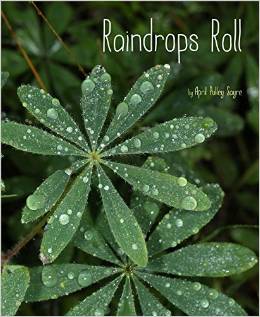
    Rain is coming. You can feel it in the air.

    So begins the new picture book Raindrops Roll by April Pulley Sayre. 

    With clear photographs and poetic text, this is an example of a book where the words literally dance off the page and inspire students to move.

    Most of the text can be directly used to create actions and movement phrases. Verbs include: plop, drop, patter, spatter, wash, weigh down, and thud. 

    This book can be used with students in preschool and also K-2 classes. Try out the instrumental song "Halinkata Djoubé" by Ballaké Sissoko and Vincent Siegel for your project.

    ————————