Category: Resources for Dance Teaching Artists

  • Creative Dance for All Ages – A Great Resource for Teachers

    Imgres

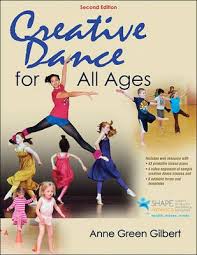
    Creative Dance for All Ages – By Anne Green Gilbert

    One of the classic and timeless books on teaching dance to children and teens is now available in an updated version. This is one of the top three books I always recommend to dancers and classroom teachers. It is a great resource for ideas around unit plans, the trajectory of a lesson plan, and activity ideas. I keep the classic "Dance Concepts" chart on my wall, even after 18 years of teaching. (It still serves as inspiration to me.) You can pre-order a copy now on www.amazon.com.

    ———————————–

  • New Resource for Dance Teaching Artists

    DownloadedFile-2

    From Blog Director Jill Randall:

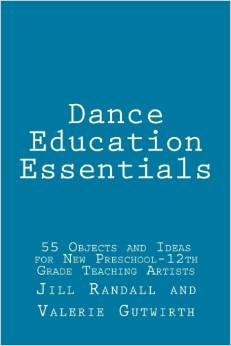
    I am excited to announce my new book, with co-author Valerie Gutwirth,

    Dance Education Essentials: 55 Objects and Ideas for New Preschool-12th Grade Teaching Artists.

    This pocket guide provides valuable information and tips for new dance teaching artists. Subjects include: getting work, caring for your body, supplies for teaching, scheduling, and much more. The book can be purchased online at amazon.com.

    ———————


  • Resources for Teaching Dance

    Images
    Find out more at: Luna Dance Institute

    Occasionally I will highlight on this blog resources for dance teaching artists, and resources helpful for anyone who wants to incorporate movement into your classroom. The children's books recommended on this site are to supplement, enhance, enrich, and inspire your dance curriculum. 

    Visual and Performing Arts Standards for PreK-12

    There are national, and state specific, sequential dance standards. Here are links to standards from the National Dance Education Organization and the State of California:

    NDEO Standards

    California VAPA Standards


    Books on Teaching Dance

    There are only a handful of books on teaching dance, and many I have read, used, referenced, and recommended year after year over the past 16 years. I highly recommend purchasing some of these for your own bookshelf.

    Creative Dance for All Ages by Anne Green Gilbert

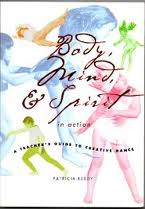
    Body, Mind, and Spirit: A Teacher's Guide to Creative Dance by Patricia Reedy

    Dance for Young Children: Finding the Magic in Movement by Sue Stinson

    Step by Step: A Complete Movement Education Curriculum by Sheila Kogan

    Wonderplay by Fretta Reitzes and Beth Teitelman

    Wonderplay, Too by Fretta Reitzes and Beth Teitelman


    Books on Arts Education

    Framing Education as Art: The Octopus Has a Good Day by Jessica Hoffmann Davis

    Why Our Schools Need the Arts by Jessica Hoffmann Davis

    Variations on a Blue Guitar: The Lincoln Center Institute Lectures on Aesthetic Education by Maxine Greene


    Here's to a great start of the new school year, and more dancing!

  • My Other Blog

    This week I launched another dance-related blog, Life as a Modern Dancer.

    Please check it out!

    Life as a Modern Dancer


  • Advice for PreK-8 Dance Teaching Artists: Creatively Funding Your Bookshelf

    How can dance teaching artists have a robust collection of dance books to use in their classes? Let me offer a few ideas.


    School Librarian

     If you teach in a K-8 school and haven’t already done so, get to know your librarian. Find out what dance books your school already has. Start a conversation about how you use dance books in your classes. If appropriate, offer the librarian a “wish list” of books you would love to see the library obtain. Some librarians will even let teachers “check out” a particular book for months at a time, so that you can have easy access in your classes.


    Local Library

    Teach at multiple sites around town? Your local library might become your best resource. Find out more about your closest branch, and introduce yourself to the children’s librarian. Offer a window into your work for him/her. Start a dialogue, and you most likely will gain a great ally for your work. Also find out about other library information that can support your projects. For example, my local library system has a great online catalog so I can search anytime for books. I can reserve books online and have them transferred from one branch to my closest one.


    Ask for Funding

    If you teach at a preschool, elementary school, or middle school, there might be some possible funding sources that can get you some books (funding sources outside of the typical “arts ed” realm). Talk to your principal or school director about how you are connecting to language arts/literacy in your dance classes; talk about how you are creating environments for multimodal learning and “language rich environments.” Most schools eagerly say yes to support any kind of language arts and literacy project.

    You could also approach the PTA for funding as well.

    Many communities also have education foundations, where district employees can apply for small grants to support specific projects. You could write a grant for $200-400 to build a dance book collection.


    Used Books on amazon.com

    Teach at various sites? Then you most likely will want to consider investing some of your own dollars into a dance book collection. Setting aside $200 can be a great start. If you file a Schedule C as an independent contractor, keep your receipts and write off the books as your teaching materials.

    The best way to stretch your money is to search for used books on amazon.com.


    Many dance books go out of print quickly, so I recommend buying books when they are on your radar and peak your interest. I know firsthand that many books have lasting value and can easily become a mainstay in your classes for many years.
     

  • The Power of Lending

    Images-1

    Today's blog post is a sharing of thoughts for dance teaching artists. 

    While it is always great to suggest at your school sites book titles, the simple power of a lending a book can go a long way.

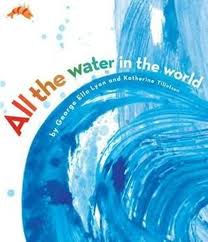
    Recently, I taught a special class at my school for kindergarteners and my regular 8th grade students. We explored the theme of water/rain. As the Ks left the room, I passed on two books to the kindergarten teacher – optional reading to "extend" our lesson. (I passed on All the Water in the World and Water Dance.) I saw the teacher in passing a week later, and she mentioned that they are trying to make a dance about one of the books, to show me. That is the borrow of directly handing a book to a teacher – making it easy for him/her to further explore with a classroom.

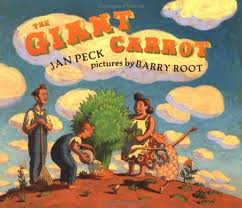
    At my son's preschool (age 4), I recently lent them a stack of dance books. What a pleasure to find out how many they have read as a class already, including The Giant Carrot, a fun version of The Giant Turnip that involves a little girl dancing in a garden to make the giant carrot grow. 

    Images

    For years, I happily created book lists for schools, classroom teachers, and librarians. The lists are appreciated, but if you have the time to lend a book or get it out of the library, all the better. Life is busy,and helping with the first step can be a big help for busy classroom teachers. 


  • For Teachers and Teaching Artists: Mother Goose

    Unknown

    Yesterday I taught a special class at my school that brought together 8th graders and kindergarteners. It was a fun lesson.

    The kindergarteners are exploring "rain" so that was our central theme for the day. For one warm up, I used the nursery rhyme "Rain on the Green Grass."

    I am a huge fan of incorporating nursery rhymes into preschool and kindergarten dance classes. They are important cultural references – both the language and the rhythm of the rhymes. They are fun, joyful, and silly too – which children love. I also recommend the article How to Choose a Goose by Joanna Rudge Long that appeared in the Horn Book Magazine in 2008. The article does a great job describing the value and importance of nursery rhymes.

    Listed below are three books I use as references myself and keep on my teaching bookshelf:

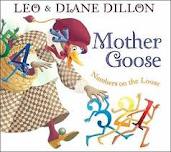
    Mother Goose Numbers on the Loose - Leo and Diane Dillon

    The Neighborhood Mother Goose - Nina Crews

    My Very First Mother Goose - Iona Opie and Rosemary Wells