Category: Preschool Dance Books

  • New Book for the Little Ones

    -=

    Images

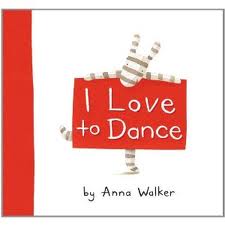
    Today I would like to recommend the new book I Love to Dance by Anna Walker. This book is a great read for a parent and child. The language and images are perfect for 1-2 year olds who love to move.

    Ollie is a zebra-like creature. He loves to dance in various ways – quietly, loudly, twirling, and jumping. 

    Families can read the book aloud and then try some of the movements themselves.

  • 2 is for Dancing

    Images

    I just recently pulled off of my bookshelf 2 is for Dancing: A 1 2 3 of Actions by Woodleigh Hubbard.

    While this picture book is over a decade old, the text is still fun and joyful to use with preschool and kindergarten classes. It reminds me of an activity I once observed with master teacher Mary Ann Lee leading a dance class at Lincoln Elementary in Salt Lake City.

    I could see this developing into a short dance or warm up that can easily be repeated over the course of a week.

    The book is out of print, but used copies can be found on amazon.com. For teachers and teaching artists in the Bay Area, I see that the Rockridge Library has a copy of it.

    "1 is for dreaming….2 is for dancing….3 is for jumping….4 is for floating…"

  • For Teachers and Teaching Artists: Mother Goose

    Unknown

    Yesterday I taught a special class at my school that brought together 8th graders and kindergarteners. It was a fun lesson.

    The kindergarteners are exploring "rain" so that was our central theme for the day. For one warm up, I used the nursery rhyme "Rain on the Green Grass."

    I am a huge fan of incorporating nursery rhymes into preschool and kindergarten dance classes. They are important cultural references – both the language and the rhythm of the rhymes. They are fun, joyful, and silly too – which children love. I also recommend the article How to Choose a Goose by Joanna Rudge Long that appeared in the Horn Book Magazine in 2008. The article does a great job describing the value and importance of nursery rhymes.

    Listed below are three books I use as references myself and keep on my teaching bookshelf:

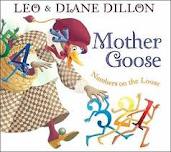
    Mother Goose Numbers on the Loose - Leo and Diane Dillon

    The Neighborhood Mother Goose - Nina Crews

    My Very First Mother Goose - Iona Opie and Rosemary Wells


  • Guest Post: The Runaway Bunny

    Today's post is by my friend and colleague Amanda Whitehead, who teaches at Shawl-Anderson Dance Center in Berkeley, CA:
    Images
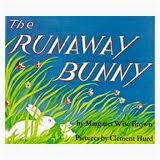
    I use Margaret Wise Brown's The Runaway Bunny in ballet class for improvisation time at the end of class.  Though Bunny may not be an obvious first choice for movement, the transformational imagery in it is irresistably rich.  The little bunny who wishes to run away becomes a fish, then a rock, a bird, a flower, a sailboat, and a trapeze artist.  Students dancing the story can explore slippery, solid, and ethereal textures; still, wavy, and swinging motions; and quick, slow, heavy, and light dynamics, to name just a few possibilities.  A different music selection for each transformation really brings out the changes; for example, my Runaway Bunny is scored with Britten, Holst, Vaughan Williams, Dvorak, Copland, and others.

    There are two added bonuses to using this book:  First, it is already familiar to many children, so adding movement and music just lets them enjoy a favorite story on new levels.  They discover how something they already know can offer new, unexpected levels of experience.  Secondly, the story acts out an important early childhood developmental milestone: separation from parents.  Dance class can be right up there with preschool as a first activity undertaken without parents.  So the theme of testing limits, whether by swimming, flying, climbing, or swinging, will be something the students easily engage with.

    Now that I think about it, there is a third added bonus to The Runaway Bunny: it will be an old favorite to teachers, who probably first read it when they were children!  And the more invested teachers are in the material we present, the more invested our students will become.  I wish you great fun transforming along with the children you teach.
  • Super Easy Books to Use in Preschool Dance Classes

    Images

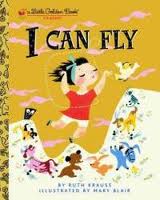
    I just stumpled upon another book, to add to my list of books that you can read in a dance class, and the words get you right up on your feet and moving. I Can Fly  is a Little Golden Book from the 1950s; new copies are easily available.

    Just like books such as From Head to Toe and Quick as a Cricket, the words get students up on their feet dancing around the room. 

    Not every page will work for movement exploration, but many indeed will. I recommend this book for teachers of parent/child dance classes and creative dance classes for 3 and 4 year olds. Have on hand for an easy warm up activity.

  • Back-To-School List #1: For Preschools and Daycare Centers

    Images

    It is that time of year again, to get ready for the coming school year and to gather supplies, develop curriculum, and seek some inspiration. I hope that this list of 12 books will inspire preschool directors and teachers to purchase books for your school or your room. Even books no longer in print can easily be found used on amazon.com.

    12 Great Books for Preschools and Daycare Centers

    1. Watch Me Dance – Andrea and Brian Pinkney

    2. Mabel Dancing – Amy Hest and Christine Davenier

    3. I am a Dancer – Pat Lowery Collins and Mark Graham

    4. On Your Toes: A Ballet ABC – Rachel Isadora

    5. From Head to Toe – Eric Carle

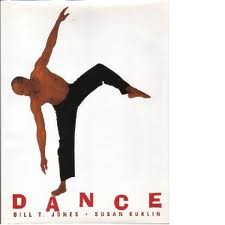
    6. Dance – Bill T. Jones and Susan Kuklin

    7. Star Climbing – Lou Fancher

    8. A Child's Day: An Alphabet of Play – Ida Pearle

    9. Move! – Steve Jenkins and Robin Page

    10, 11, 12. Kid Moves – Michelle Wing and Jennifer Cue (3 book set)

  • Skipping

    DownloadedFile

    I love dance lessons that focus on the basic locomotor steps: walking, running, jumping, hopping, skipping, galloping, and leaping.

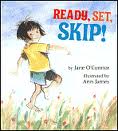
    Ready, Set, Skip! is a joyful picture book for students in preschool, kindergarten, and first grade. The main character struggles with skipping, but with a little encouragement from her mother, she tries and learns how to skip.

    This book (by Jane O'Connor with illustrations by Ann James) can be a great introduction in a dance class or a fun book for parents and children to enjoy together.


  • Alphabet Books

    I love alphabet books and the many ways young children can engage with these concept books. Today I would like to highlight four (and please note that one additional one was highlighted in my last post.)

    Images-2

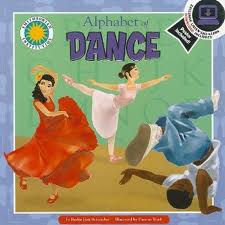
    Let's start with the Smithsonian Institution's Alphabet of Dance by Barbie Heit Schwaeber. This 2010 publication offers a great variety of images of dance styles from around the world. I especially love the number of images of male dancers. While the examples bounce around from dance vocabulary to a variety of dance styles, the strength lies in the pictures. This book is a great addition to libraries for children in preschool-second grade. 

    DownloadedFile

    Don't be fooled by the title of the next book, A Dictionary of Dance. Liz Murphy's 2007 book is a wonderful alphabet book with a rich vocabulary of dance words for both young boys and girls: breakdancing, folk dance, improvisation, stage, and more.

    Images-1

    Alphabet Movers by Teresa Benzwie (2002) is filled with beautiful action words to inspire warm up activities, improvisations, or words to create a dance with students ages 4-7. 

    Images

    Last, I would like to mention A Child's Day: An Alphabet of Play by Ida Pearle. The artwork is simply wonderful and joyful. The words are of simple actions, such as eat, feed, grow, hide, and jump. I have used this as a starting activity in preschool classes, and each student could "dance" his/her favorite page. This book can be a great springboard with preschool, kindergarten, and first grade students, exploring how to take everyday actions to create a dance.

    Alphabet books on movement and dance are multi-functional for young children, to articulate the language of dance as well as starting points for movement explorations.


  • Young Thoughts of Ballet

    It is fascinating to me – now as an adult, a teacher, and a parent – to see when the "dream of a ballerina" fills a young child's daydreams, especially young girls. I was indeed that child. 

    At the K-8 school in which I teach dance full-time, the head librarian recently mentioned to me that Jill Krementz's book A Very Young Dancer still gets checked out. The copyright on this book is 1979. I love that it has held up all of these years, but I am also surprised at how few good, accurate, and inspiring books are available to young ones swept up in the idea of ballet.

    Today I would like to highlight two ballet books.

    Images

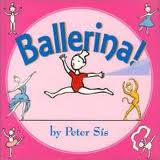
    Ballerina!  by Peter Sis is available as a board book and hardback/paperback. It is perfect for children 2-6 years old. What makes this a good ballet book is two-fold. The action words are lovely: twirl, leap, tiptoe, reach, dip, flutter, and float. Second, Sis nicely references the major ballets in the book: Cinderella, Sleeping Beauty, Nutcracker, etc. 

    DownloadedFile

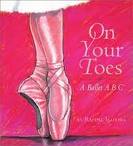
    Second, I love Rachel Isadora's On Your Toes: A Ballet ABC.  This book is a more unique alphabet book with illustrations of young boys and girls. The language of the book references dance steps (develope, arabesque, etc) as well as elements used in ballet (music, costumes, etc.) Students ages 4-7 will enjoy this book. While out of print, you can easily find used copies  on the internet. 

    Ballet books can so easily fall into stereotypes, and I encourage you to check out these two book suggestions for a fresh take on ballet. 

  • Mermaids

    9781934706473_norm

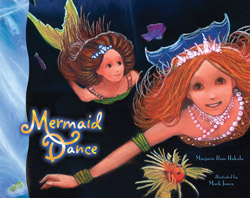
    I recently came across the book Mermaid Dance while browsing at Chronicle Books in San Francisco. Over the years, I have had "requests" for mermaid dances (by 3-5 year old children). This book could be a nice springboard for a class.

    The text is simple and not filled with a lot of movement inspiring action words, but the book can still serve as your starting point for a dance with young preschool age children. As a teacher, my mind goes to ideas of swimming, diving, special attire, crowns, circling motions, and quiet dancing. 

    You can purchase the book directly through Chronicle Books:

    purchase here