Category: Prepositions

  • Sets of Books, with Lots of Options

    As dance educators, we have our favorite themes for classes and projects – the seasons, Halloween, locomotor steps, prepositions, and animals (to name a few). This week I was revisiting my bookshelf and thinking about some prolific children's authors, and how these sets of books would be great to explore in preschool, kindergarten, and first grade classes. The commonalities between the books will be fun to explore with the kids and a playful link from week to week.
    Images

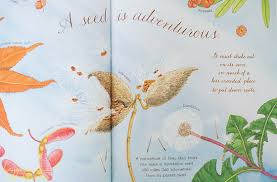
    The excellent duo of author Dianna Hutts Aston and illustrator Sylvia Long now have SIX titles in their series. Titles include A Butterfly is Patient and An Egg is Quiet. The complete list is:

    A Nest is Noisy

    An Egg is Quiet

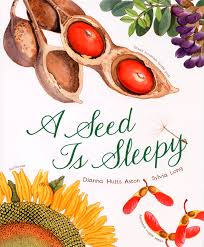
    A Seed is Sleepy

    A Rock is Lively

    A Butterfly is Patient

    A Beetle is Shy

    Each book has a similar feel in terms of illustrations and the structure of each page; each page has one large sentence in cursive and then more scientific details in smaller print on each page.
    Images-1

    The cursive sentences are written in such a way to inspire movement for each new idea. The books can be used for structured improvisation with the students or as a basic structure to create a dance.

    Some text from A Butterfly is Patient:

    A butterfly is patient.

    A butterfly is creative.

    A butterfly is helpful.

    A butterfly is protective.

    A butterfly is poisonous.

    A butterfly is spectacular!

    The images and descriptions on each page will provide further inspiration for dancers to express the ideas. See the images, hear the descriptions, and explore in our own bodies…..
    51XqfmkM38L._SX331_BO1 204 203 200_
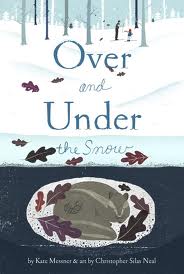
    In a similar way, author Kate Messner and illustrator Christopher Silas Neal now have 3 titles to their names – which explore up and down and above and below in a garden, a pond, and in snow. The titles are:

    Over and Under in the Snow

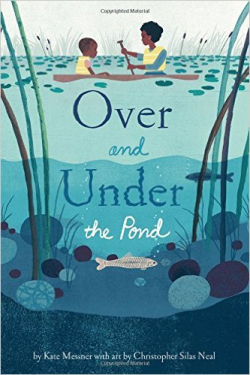
    Over and Under the Pond

    Up in the Garden and Down in the Dirt

    Prepositions – and relationality – are favorite concepts within creative dance. I love these books to explore high/low, up/down, and over/under. The books explore animals, birds, bugs, and weather. From Over and Under the Pond:

    Over the pond, the wind gives us a push and stirs the light-dappled leaves on shore. There on a branch, a new goldfinch teeters, finally ready to fly.

    Under the pond, tadpoles are changing, learning to hop. They're losing tails, growing legs, growing up.

    Over the pond, there at the shore, tall and silent and still, a great blue heron stares down into the deep. It tenses….takes one long-legged step…..

    and strikes! It catches a wiggling, quicksilver minnow from where it was hiding, under the pond.
     

  • Alphabet Series: The Letter P

    When you and your students explore the letter P, these books can be springboards and inspiration for improvisations and dance projects. 

    P is for Prepositions

    I am always on the lookout for picture books with prepositions. Prepositions are so fun to explore in movement with students in preschool, kindergarten, and 1st grades. You can explore relationships – over, under, around, and through – whether it is students dancing with a prop (hula hoop), students dancing together, or using imagery to inspire movement (ex. crawling through a tunnel). 

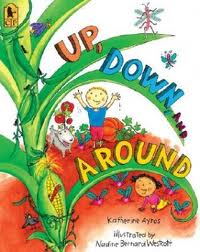
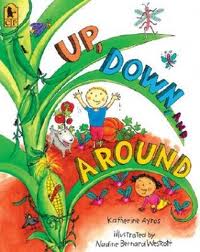
    Tana Hoban's classic picture book Over, Under, and Through is a great starting off point. Up, Down, and Around (Katherine Ayres and illustrator Nadine Bernard Westcott) is also a great exploration of prepositions as well as plants. 

    DownloadedFile-5

    You might play with different parts, dividing the class into two to explore the "above ground" and "under the ground" ideas (such as in Over and Under the Snow by Kate Messner). 

     Images

    P is for Penguin

    Imgres-1

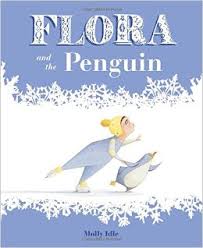
    Fun, play, skating, gliding, and conversation. This is the beautiful "dance" of Flora with a penguin in Molly Idle's latest wordless picture book, Flora and the Penguin. If you loved Flora and the Flamingo, check out this new book! 

    The artwork literally dances off the page. The book is a great springboard as you explore partner work, working together, mirroring, and shaping. 

    You can use the book for inspiration, the images for actual movement ideas, or the storyline to create a group dance. As for music, the classical skating piece "Les Patineurs" is a great option.

    P is for Pond

    Imgres-3

    Denise Fleming's book In the Small, Small Pond explores the actions of creatures in a pond – diving, swimming, wiggling, etc. Students will love improvising the various movements or having their own "part" as you read the entire book and make a group dance.

    P is for Pathway

    7f224844013211e3b1ed22000ae801e7_7
    Here are four books to inspire moving in straight lines, zig zags, curving pathways, and much more.

    1. Little Green by Keith Baker 

    A hummingbird – making various pathways in space (zig zag, curlycue, etc)

    2. Jonathan and His Mommy by Irene Smalls and Michael Hays

    A son and mother taking a walk and exploring all different ways to walk – big steps, small steps, zig zag pathways

    3. Lines that Wiggle by Candace Whitman and Steve Wilson

    An artistic exploration of lines that wiggle, bend, spiral, curve, etc.

    4. Harold and the Purple Crayon by Crockett Johnson

    An imaginative tale of a little boy drawing his world around him – the path he takes, the moon in the air, and much more to create an adventure

    P is for Purple

    Unknown

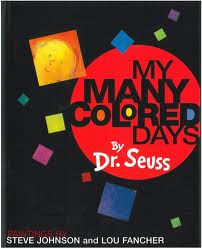
    To explore the color purple, you can pull out all of your books about colors. Four examples include: My Many Colored DaysColourLiving Color, and The Rainbow Book. What are our associations with purple? How can we translate these ideas into movement? Ideally, see if you can pull out 3-5 books on color. Look at the purple pages, and then explore movement ideas related to these pages. You can even string the 3-5 ideas together.

    Using Your Book Bin of Alphabet Books

    6a015431f12312970c01901e687323970b-320wi

    As I suggested in the first post of this alphabet series, creating a book bin of alphabet books is a great idea. For example with the letter P, look at all of the "P pages" in your bin. Have students pair up, and give each pair one alphabet book. Ask them to find the P page. What movement or shape can they create related to that page? Give each pair a chance to share in front of the class. Again, you can string all of the ideas together to create a "P Dance."

    —————-


  • Alphabet Series: The Letter D

    When you and your students explore the letter D, some of these books can be springboards and inspiration for improvisations and dance projects. 

    D is for Dancing!!

    DownloadedFile-4
    Exploring the letter D is the perfect time to gather up all of the wonderful picture books about the art form of dance. Check these out from your local library and find great deals on used books on amazon.com. 

    • Dance - Bill T. Jones and Susan Kuklin
    • Dance! – Elisha Cooper
    • Let's Dance - George Ancona
    • I am a Dancer - Pat Lowery Collins and illustrator Mark Graham
    • Dance with Me – Charles R. Smith Jr. and Noah Z. Jones
    • Dictionary of Dance – Liz Murphy
    • Alphabet of Dance – Barbie Heit Schwaeber and illustrator Damian Ward (Smithsonian Institution) 
    • Mabel Dancing – Amy Hest and illustrator Christine Davenier
    • Dancin' in the Kitchen – Wendy Gelsenliter

    D is for Down

    DownloadedFile-5
    I am always on the lookout for books about prepositions. Up, Down, and Around (Katherine Ayres and illustrator Nadine Bernard Westcott) is a great exploration of prepositions as well as plants. 

    D is for Digging

    DownloadedFile-6
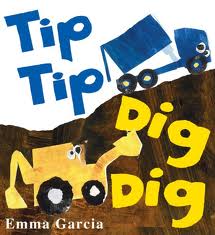
    I recently wrote a blog post for the Book to Boogie Blog about Emma Garcia's book Tip Tip Dig Dig. This playful picture book explores the actions of construction vehicles. Find out more here

    D is for Day

    DownloadedFile
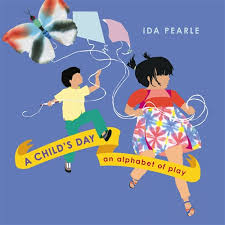
    One of my favorite alphabet books is Ida Pearle's A Child's Day: An Alphabet of Play. The actions in the book include: catch, jump, open, and view. Use the book as an opening warm up with your students, exploring our everyday movements. Then, how can you string several of these together, add music, and make a dance? 

    ———————————-