Category: PreK-5 Dance Books

  • Jazz Age Josephine

    Images-8

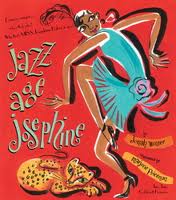
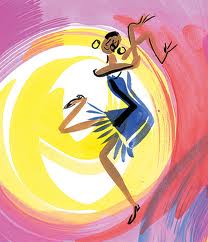
    I was excited to find out about the new book, Jazz Age Josephine, in a recent NY Times Sunday book review. Accomplished author Jonah Winter and illustrator Marjorie Priceman share the life story of dancer Josephine Baker, who lived from 1906 until 1975. As mentioned on Wikipedia, "Baker was the first African American female to star in a major motion picture, to integrate an American concert hall, and to become a world-famous entertainer."

    While the rhyming text feels forced at times, the book is still a valuable addition to American dance history and more specifically African American dance history. 
    Images-7

  • The 1970s and 1980s

    Images DownloadedFile

    While most of the focus of this blog is on new books on dance, I would like to highlight today three of my favorites that are from the 1970s and 1980s. 

    The images clearly are of another time, but the charm of the images and the continued power of children reading about children, still hold strong.

    While these books are out of print, many larger libraries still have them in their collections. If you are a used bookstore browser, keep an eye out for these three.

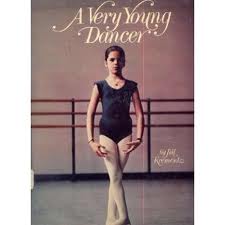
    A Very Young Dancer by Jill Krementz is a beautiful look into the life of a young girl in ballet. The large format book is always fun for a young person.

    At Every Turn! It's Ballet, by Stephanie Riva Sorine with photos by Daniel S. Sorine, is a photo book pairing a photo from a ballet class with a photo out in the world (both doing the same action, such as reaching, balancing, and kneeling.) Amazon.com has used copies of this for sale.

    Last, I want to mention the Tana Hoban book Over, Under, & Through. While not specifically about dance, this book still works nicely in preschool and kindergarten classes to introduce spatial concepts that you can then explore in a dance class. 

  • Twelve Dancing Princesses

    Images-4

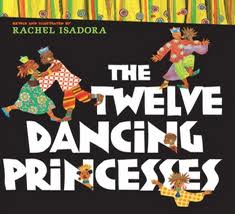
    For classroom teachers and dance teachers alike, the classic Brothers Grimm tale of The Twelve Dancing Princesses can be a springboard for a creating dance or for a class discussion on versions of folktales.

    I love Rachel Isadora's 2007 version set in Africa. The artwork is beautiful, employing an Eric Carle-esque use of paper and color. I am always on the look out for books with dancers from diverse cultural backgrounds.

    (I have also blogged on the Debbie Allen and Kadir Nelson variation on the tale, Brothers of the Knight, another great book.)

    For Bay Area teachers, the following libraries have The Twelve Dancing Princesses:

    Berkeley Public Library

    Oakland Public Library

    San Francisco Public Library


    Images-5

  • Dance Teachers and Librarians Working Together

    93e78149e7a05a40e452d110.L._AA300_

    Today was my first experiment working with the librarian at my K-8 school. (I regularly work in the middle school, but do special projects with the K-5 students.)

    To celebrate National Dance Week, the librarians pulled and then displayed their whole collection of dance books.

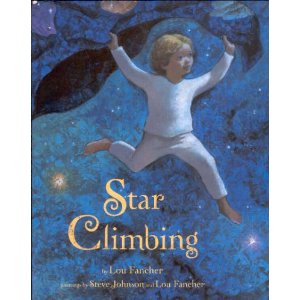
    Today, we started one of the 1st grade library sessions in the dance studio. The librarian started the lesson, framed the activity, and then read Star Climbing to the class. I then put on some music and we danced the story. This book is one of the easiest picture books to use in preschool, kindergarten, and 1st grade classes. The words beautifully create a simple dance.

    This part of the lesson took about 15 minutes, and then we headed upstairs to the library. The students browsed the dance books on display, and each student selected one to borrow for the week.

    This was a simple and fun lesson, sharing the concepts of books on dance and books that can inspire dancing.

    Happy National Dance Week!


  • African Animals ABC

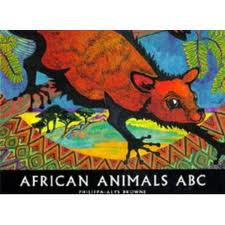
    I just rediscovered this book this week on my shelf, African Animals ABC by Philippa-Alys Browne.

    Images

    What I really like about this book is the variety of action words used over the 26 pages (snap, dive, quiver, scuttle, etc). There are also quite a few verbs that could nicely "pause" the students so that improvising with each page isn't too chaotic – words like nap, blink, graze. It is a nice balance of action words that will travel in space, as well as slower, more stationary movements.

    This book can easily be used in K-2 classes for an improvisation, or you could create a dance using all or some of the text as inspiration.

    The book is out of print, but used copies can be found online at amazon.com. For Bay Area teaching artists and teachers, the Oakland Public Library has 2 copies.

  • Planting Seeds

    Images-1   Images

    The season of spring provides many themes and topics for inspiration in dance classes.

    Here I would like to recommend two books about seeds/plants to use for springboards for improvising with students or for creating a dance (preschool, kindergarten, and first grade).

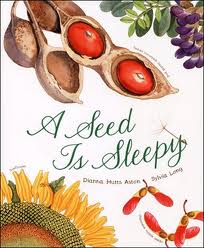
    A Seed is Sleepy by Dianna Hutts Aston and illustrator Sylvia Long is a gorgeous picture book with beautiful, poetic language to inspire movement (slow movement, traveling movement, unfolding movement). The text is "dense" for younger children, but each page includes some larger text that can become your key words for your lesson.

    Up, Down, and Around is a favorite of mine. I seek out picture books that use prepositional and relational words. With repetitive, playful text the books talks about plants and roots moving up and down (and around).

  • 2 is for Dancing

    Images

    I just recently pulled off of my bookshelf 2 is for Dancing: A 1 2 3 of Actions by Woodleigh Hubbard.

    While this picture book is over a decade old, the text is still fun and joyful to use with preschool and kindergarten classes. It reminds me of an activity I once observed with master teacher Mary Ann Lee leading a dance class at Lincoln Elementary in Salt Lake City.

    I could see this developing into a short dance or warm up that can easily be repeated over the course of a week.

    The book is out of print, but used copies can be found on amazon.com. For teachers and teaching artists in the Bay Area, I see that the Rockridge Library has a copy of it.

    "1 is for dreaming….2 is for dancing….3 is for jumping….4 is for floating…"

  • Skip through the Seasons

    Images

    Happy Spring! 

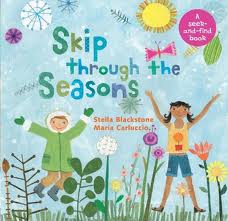
    Stella Blackstone and Maria Carluccio created a fun, colorful, movement-filled book called Skip through the Seasons. "Jump into January….Fly into February….Race into June…." You can use the text to inspire a dance with students in K-2 classrooms. 

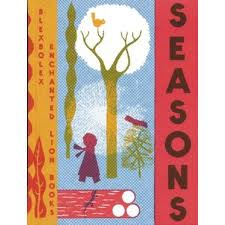
    For seasonal inspiration in grades 3-5, I would recommend a book I previously blogged about, Seasons by Blexbolex.

    Images-1

  • For Teachers and Teaching Artists: Mother Goose

    Unknown

    Yesterday I taught a special class at my school that brought together 8th graders and kindergarteners. It was a fun lesson.

    The kindergarteners are exploring "rain" so that was our central theme for the day. For one warm up, I used the nursery rhyme "Rain on the Green Grass."

    I am a huge fan of incorporating nursery rhymes into preschool and kindergarten dance classes. They are important cultural references – both the language and the rhythm of the rhymes. They are fun, joyful, and silly too – which children love. I also recommend the article How to Choose a Goose by Joanna Rudge Long that appeared in the Horn Book Magazine in 2008. The article does a great job describing the value and importance of nursery rhymes.

    Listed below are three books I use as references myself and keep on my teaching bookshelf:

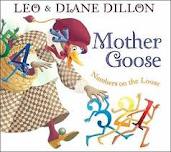
    Mother Goose Numbers on the Loose - Leo and Diane Dillon

    The Neighborhood Mother Goose - Nina Crews

    My Very First Mother Goose - Iona Opie and Rosemary Wells


  • Animal Inspiration for 3rd and 4th Graders

    Images

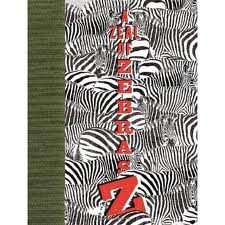
    A Zeal of Zebras is a beautiful new book by Woop Studios. Chronicle Books is one of the leaders for publishing imaginative, graphically interesting kids books. A Zeal of Zebras goes through the alphabet and describes groups of animals using collective nouns (an ostentation of peacocks, a leap of leopards, etc).

    In third and fourth grade classrooms, the book can be fun inspiration for an animal dance project. Students can get into small groups of about 3-5 students. They can each select one page from the book.

    Each small group can use the artwork and text to create a short group dance with a beginning shape, inspired by the artwork. The students can then create a dance with about 6-8 actions for their animals. The students might need to do some research beyond this book for more information on their animals.