Category: PreK-5 Dance Books

  • Ribbon Dances

    Today I would like to share two books that work nicely with a prop – ribbons. 

    I have done these lessons with students in preschool, kindergarten, and first grades. My students have always loved lessons with props – ribbons, hula hoops, fabric, elastic loops, and such.
    Images

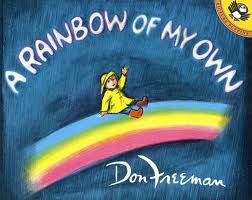
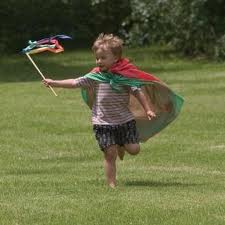
    A Rainbow of My Own by Don Freeman is an older book, but still holds its magic. I first heard of this book while co-facilitating a workshop many years ago with Carol Flanagan at Saint Mary's College. In the story, a little boy imagines playing with a rainbow. In my preschool classes, I have first read this book, and then provided the students with silk ribbons in rainbow colors, about 1.5 yards long. (I purchased this beautiful ribbon at Stonemountain and Daughter in Berkeley, CA. You can also purchase individual ribbons on sticks through many catalogues, including Nova Natural.) With the students, they can improvise and play with the rainbows or you can create a dance together as a class – deciding how the rainbow moves (over, under, around, through, etc).
    DownloadedFile

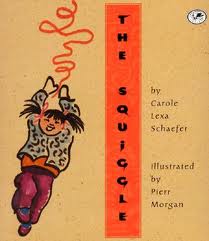
    The Squiggle by author Carole Lexa Schaefer and illustrator Pierr Morgan is also a playful book to inspire ribbon dances. In the squiggle, a red string/ribbon becomes many things in a child's imagination. I love to read this to students and then create a dance together, where each student contributes one idea for the dance. Our red ribbons can be snakes, ocean waves, rainbows, and much more. I have used a variety of red ribbons over the years, but in particular love organdy ribbon. I purchased mine at Stonemountain and Daughter in Berkeley,CA, and here is a link to purchase some on the internet.
    Images-1   


  • What’s on My Shelf: Art Books (Part 3)

    In part 3 of this series, I want to share about two books I love to use when my middle school students explore symmetry. 

    Images-2

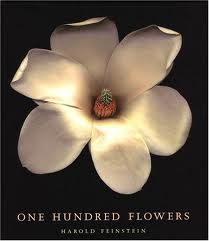
    One Hundred Flowers by Harold Feinstein is a gorgeous photography book of flowers up close. The images are bold, elegant, and eye catching. The students eagerly work together to create group shapes. The images inspire the students to think about symmetry, line, shape, and inner/outer.

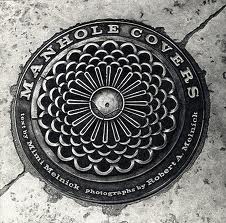
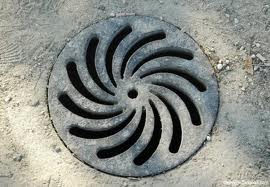
    With a totally different feel and look, I also love exploring symmetry with the images in the photography book Manhole Covers by Mimi Melnick and Robert A. Melnick. I am an explorer in the world for inspiration, and I love finding details in nature and in the city that I can bring into our dance classes. The students find the manhole covers to be fun and quirky; the images again inspire the students to explore and play with symmetry, line, shape, and group work.

    Images-1   DownloadedFile

    I found both books used on amazon.com at great prices. Looking today, I see that you can get One Hundred Flowers for around $19 and Manhole Covers for only $12. 


  • What’s on My Shelf: Art Books (Part 2)

    Images

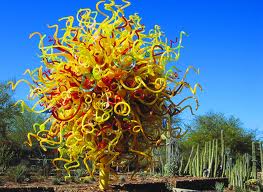
    Following up on my previous post, today I want to share about the fabulous glass artist Dale Chihuly. My middle school students love looking at his work and using the images as inspiration for group shapes. 

    I will place several books are the room and put the students in small groups. They will browse the books, select about 4-6 images, and mark the selected images with Post-It Notes on the pages. As a group they create a shape to represent each sculpture, and then must also choreograph the transitions between each one. 

    Exploring these sculptures in the body encourages students to experiment with group shapes, lines, pathways, levels, size, and varied qualities.

    I saw an exhibit of Chihuly's work about ten years ago, and one phrase sticks in my mind from that exhibit. Chihuly strives to strike a balance "between fluid and fixed" in his work. I love that description. 

    Images-1

    I encourage dance teachers of students in 4th-8th grades to explore the work of glass artist Dale Chihuly.

    On my shelf I have:

    Fire

    Chihuly: 365 Days

    There are great prices on used books on amazon.com. Whenever possible, having 4-5 different books on hand will allow for small group work. Check out your local library as well.


  • What’s On My Shelf: Art Books (Part 1)

    DownloadedFile

    At work the other day, I was browsing through my books and thought that I would share some of my tried and true art books I use with middle school dance students. I have also used these books with students in 4th and 5th grades.

    Sculptures are great springboards as students explore shape, level, size, and lines in their own bodies. 

    Images

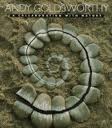
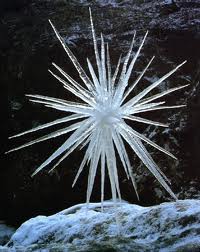
    Andy Goldsworthy's works of art are simply magical, elegant, and inspirational. I love having a few books on hand to allow for small group explorations. The two on my shelf are:

    A Collaboration with Nature

    Stone

    Looking at amazon.com today, I see that you can find many of his art books at great prices used (in the $15-$20 range).

    Check out your local library as well to have 3-4 books on hand for a lesson.

  • Moving with the Waves

    DownloadedFile-1

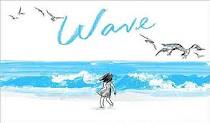
    This week I referenced the wordless book Wave by Suzy Lee. It inspired me to think more about ocean waves and how you can develop several dance lessons on this topic this summer.

    Ocean waves are a creative way to explore up/down, calm/chaotic, forward/back, wavy pathways, and more.

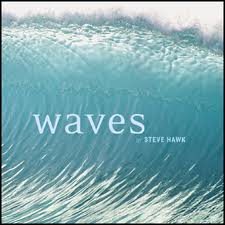
    I would recommend buying or borrowing photography books of ocean waves to explore with your students, such as:

    Swell: A Year of Waves

    Waves

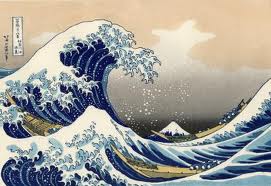
    I also encourage you to show the students the famous Japanese painting The Great Wave off Kanagawa. Search the library for books on Japanese art.

    Images

    Studying ocean waves and the movement of water is a great summertime exploration with students in 1st grade through 5th grade.

  • Summer Idea For a Dance Class with 3rd, 4th, and 5th Grade Students

    DownloadedFile

    I have always been curious about wordless books. Today I am proposing an idea to try within a sweet summertime modern dance class (maybe with 4-10 kids enrolled).

    I would head to your local library and gather some great wordless books. Give each student one to read and experiment with. How can this book be a springboard for a dance? What story does each student see in each book? 

    I tend to find that wordless books frequently have a nice sense of whimsy. I pulled off of my shelf today:

    Wave by Suzy Lee

    Dreams by Peter Spier

    Little Star by Antonin Louchard

    Yellow Umbrella by Jae Soo Liu

    I hope that this idea is a fun springboard for the summertime.


  • Denise Fleming Books for Dancing

    Images-3   Images-2

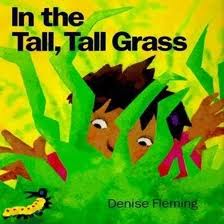
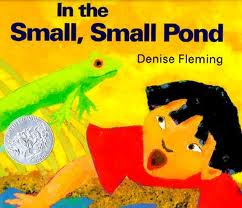
    I love Denise Fleming's two books, In the Tall, Tall Grass and In the Small, Small Pond. These two books work beautifully with kids ages 4-7 (preschool, kindergarten, and first grade).

    The books are filled with action words describing a variety of animals. There are many options with the books. (Both books are structured in the same way.) In a smaller class of 10 students or so, each student can have his/her own "solo" improvising on one of the pages. Another option would be to read the book from start to finish and have the whole class improvise with each page. Or, you could pull from the text to make a list of about 8 action words to create a short dance together.

    I bet these two books will be easy to find at your local library, or use the hyperlinks above to purchase copies through Powell's Books.

    Happy summer!


  • How To….Ballet

    Images

    While browsing the children's dance section this weekend at the library, I found a new book on ballet. I am quite selective about children's ballet books, as way too may perpetuate stereotypes about ballet and only little girls dancing.

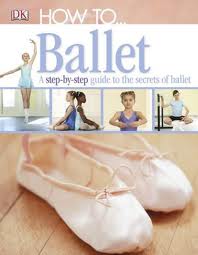
    Today I would like to recommend the 2011 DK book How To…Ballet. In the common DK aesthetic, the book contains clear photos of young children (both boys and girls) dancing. The titles are clear and interesting. The book covers "ballet basics" – hair, shoes, posture, positions of the feet, barre work, and more. 

    This book is a nice gift for a young person curious about ballet, and a good book to keep on your bookshelf at your dance center for students to enjoy before classes. It could also be a quick reference book in a ballet class, to show a visual to students when talking about steps such as passé, développé, and pas de chat. 


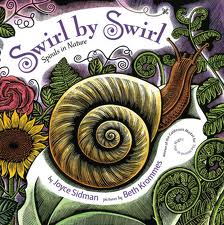
  • Swirl by Swirl: Spirals in Nature

    DownloadedFile

    I am excited to try out this new book. For creative dance and modern dance teachers, the idea of "a spiral" is an important concept in the body and moving in space. 

    Joyce Sidman's book Swirl by Swirl: Spirals in Nature is a beautiful book of poetic language and rich artwork to inspire multiple explorations of spirals in our own bodies, with a partner, and pathways in space. From the book….."A spiral is a growing shape. It starts small and gets bigger, swirl by swirl."

    I would recommend this book for students in 1st, 2nd, and 3rd grade. 

    For Bay Area dance teachers, the following public libraries have a copy.

    Berkeley

    Oakland

    Alameda

    San Francisco

  • Remembering Maurice Sendak

     Almost a year ago Gigi Arrington wrote a post about using Where the Wild Things Are in dance classes. I thought today would be a perfect day to repost it, as we think of Maurice Sendak when hearing of his passing. Sendak is considered one of the most important children's authors and illustrators of the twentieth century. 

    ———————————

    DownloadedFile

    I first met Gigi Arrington in 1997 when I was teaching at her daughters' elementary school in Salt Lake City. Gigi has been the Educator Director for the Ririe-Woodbury Dance Company for many years. That year, she created a dance with her daughter's third grade class based on the story of Sadako and the thousand paper cranes. I believe it was based on the book Sadako by Eleanor Coerr and Ed Young. Fourteen years later, this dance sticks with me – its story and the beauty and elegance of seeing young people dance this tale.

    I invited Gigi to write a post here on books in her dance classes over the years:

    I've used many books in my 34 years of teaching dance to children. My teaching mentor was Dee Winterton who was a master of inspiring children to move.  I watched him teach two books — Giant John and Where the Wild Things Are and those experiences helped set my own teaching philosophy.Where the Wild Things Are is my favorite children's book to use in teaching. I learned something quickly when using books to teach dance; just because it says "dance" in the title doesn't mean it is a good book to use to teach dance. Dee taught me to look for a book with movement potential —words that generate and inspire children to explore with their bodies. I love challenging children to show me what "mischief" looks like in their eyes, their fingers, their elbows, their knees. How does mischief move? Max goes through night and day and in and out of weeks and almost a year–great space words for children to experience through movement. And who wouldn't want to roar and gnash and roll? And finally–THE WILD RUMPUS!! The pictures for the rumpus are the inspiration; not a word is needed. I love this book. I think it is important for children to know that being "wild" is part of growing up; and that you are still loved after you make mistakes . . . "he found his supper waiting for him  and it was still hot!"