Category: PreK-5 Dance Books

  • Apples?!

    DownloadedFile-2

    I am a big Nikki McClure fan. I love her paper cut based artwork.

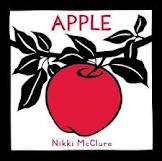
    I purchased the new book Apple last week. It is a great book to use in preschool, kindergarten, and 1st grade classes. The text is not in sentences – simply single words like "fall….find….sneak."

    Read the story and select some of the action words to make a dance. I also encourage you to use a prop – apples actually – for a fun, autumn dance. Head to your local craft store like Michael's or AC Moore to buy some faux apples for your students. Play with holding them, hiding them, moving with them.

    This book is not your typical "dance book." For seasoned dance teaching artists who love using books, try this one out.

    DownloadedFile-1

  • More Spooky Inspiration

    DownloadedFile

    I stumbled upon this book at Toy Go Round, a used toy and children's books store in Albany, CA. 

    Pumpkin Moon by Tim Preston (with illustrations by Simon Bartram) is another great Halloween themed book to use with 2nd, 3rd, and 4th grade classes.

    In the story, at nighttime pumpkins come alive and go about town. The book can easily inspire spooky, sneaky, quiet movement. I love the use of prepositions in the book – "through the woods….over the highway…..into the city." I envision creating a stealthy group dance with a whole class of children. 

    The text is somewhat sparse, but rich enough to easily be a springboard for choreography.

    The book is also out of print. Look online to purchase used copies or search your local library.

    Have fun!


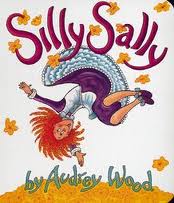
  • Silly Sally

    DownloadedFile

    "Silly Sally went to town, walking backwards, upside down." So begins this playful picture book by well-known children's author Audrey Wood. 

    The main character encounters different animals, and does a certain action with each one (a jig with a pig and leapfrog with a dog).

    One idea would be to create a whole dance using the entire text, for students in 1st, 2nd, and 3rd grades.

    Another idea would be to read the book to your students and then play with some of the key concepts, especially ways of moving backwards and upside down. Use the book as a starting to point to explore many ways of moving backwards and upside down (or the concept of "direction" in general).

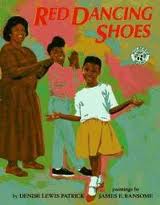
  • Red Dancing Shoes

    Images

    I was thinking about this book today and got it out of the library again. Red Dancing Shoes by Denise Lewis Patrick is a good read with students in kindergarten, first, and second grade.

    The main character, a little girl, is about 7 or 8 years old. She receives a gift of a new, shiny pair of red shoes – which she calls "dancing shoes." She goes around town to show off her shoes, but gets them a little dirty in the meantime. All ends well.

    Many students have a special pair of shoes, a skirt, a cape, etc. that they associate with dancing. Read this story with a class and talk about their special dancing items. Maybe even have them bring them in for a dance class or a dance party in your classroom! This topic could also be a great starting point for 1st and 2nd graders for a writing activity about their special item and when/where they like to dance (parties, at home, etc).


  • More Autumn Leaves

    I was browsing again at the library for inspring books about fall. Here are two to use in preschool, kindergarten, and first grade classes.

    DownloadedFile

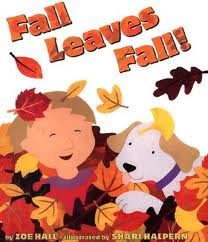
    Fall Leaves Fall! can be a springboard for improvisation or creating a dance with preschoolers and kindergarteners. You can read the book and use the actions described in the book – changing colors, falling, stomping, kicking, blowing, and catching. The book also describes the shapes and textures of leaves (pointy, smooth, small, large). These words can also be a starting point for movement explorations.

    When doing activities like this, I also like to use "fall music" such as Scott Joplin's "Maple Leaf Rag," the jazz standard "Autumn Leaves," and the fall section of Vivaldi's Four Seasons.

    Images
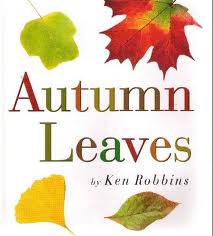
    With kindergarten and first grade students, you can also explore the book Autumn Leaves by Ken Robbins. This is a more "factual" book on leaves, with nice, clear photos of leaves with a white backdrop on the pages. I would suggest using the book as part of a warm up activity, exploring shape. I like how the book describes various kinds of leaves (gingko, hickory, sweet gum, etc). The book talks about the size of the various leaves and their particular shapes – like stars, like fans, curled, and pointed.

    Have fun this fall!


  • Getting Ready for Halloween: Pumpkins and Skeletons

    I know – Halloween is 1.5 months away. I am recommending a few titles now, so that you can grab them early from the library or order them now.

    Images
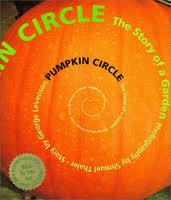
    Over the years, I have frequently come back to the book Pumpkin Circle as a springboard in preschool, kindergarten, and first grade classes. Through photos and text, the book shares the story of pumpkins from seed to pumpkin (and even back into the garden, decomposing). I love having the students explore size changes, growth and expansion, twisty tendrils, and more. If you have a gardening program at your school, consider teaming up with the instructor on a small project together.

    Images-1
    Around Halloween time, I also love using the book Dem Bones by Bob Barner ("foot bone connected to the ankle bone"). "Dem Bones" is one of the most well-known African American spirituals. I love to read the book to the class, and then create a warm up based on the lyrics. 

    Images-2
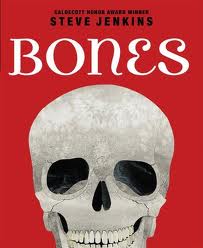
    You can create a whole "skeleton" dance study – using Dem BonesBones: Skeletons and How They Work by Steve Jenkins, and the "Fossils" music from The Carnival of the Animals. Dem Bones can be used as a warm up activity. Bones: Skeletons and How They Work can introduce some basic information to the students. You can lead improvisation activities with the students focusing on and isolating different bones/body parts. As a class, you can create a simple "bone dance" and use the music from The Carnival of the Animals.


  • Poetry Series for Dance Classes: The Tree That Time Built

    Images

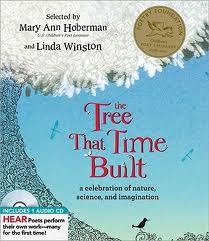
    I just pulled off the bookshelf the lovely poetry collection The Tree That Time Built: A Celebration of Nature, Science, and Imagination by Mary Ann Hoberman and Linda Winston. I used several poems for an Earth Day dance project a few years back. 

    The poems can be used in 3rd-5th grade classes but also 6th/7th grade classes. Sharing the book with your school's science teacher can be a great way to start a conversation, and possibly do a joint project between dance and science (one of my favorite things to do).

    The collection includes poems about trees, the Earth, ocean, animals, "hurt no living thing," and more. It is a well-selected, elegant group of poems. My favorite is the poem "Think Like a Tree."

    The Tree That Time Built is one of my favorite collections of nature poetry to use for dance projects.


  • Magic and Whimsy Series: The Conductor

    9781452104911_norm

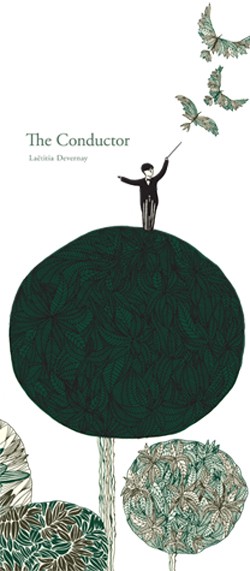
    Chronicle Books is known as a publisher of beautiful books – beautiful in content and the quality of the images, paper, and binding of the books. Today let's talk about The Conductor by Laeticia Devernay. This is a magical book for dance teaching artists who love creating new projects with their 3rd-5th graders.

    On this blog, I rarely quote book covers and jackets, but the description on the back of this book describes it so well:

    Pairing two seemingly disparate elements – an orchestra conductor and a grove of trees - award-winning artist and children's book author Laeticia Devernay has created a beautiful and compelling wordless narrative. Her spare yet intricate illustrations take flight as the conductor prompts the tree's leaves to rustle, whirl, and swirl into soaring, unexpected life. A celebration of creativity, imagination, storytelling, and the renewing power of nature, this is a volume for readers and art lovers of all ages to treasure.

    Yes, indeed!

    From the very first presentation of this beautifully designed book to your students, you are heading on a magical journey. "Read" the book with your students. What is the story? Who is the conductor? What kind of music do you hear to accompany this tale? To me, the book is a great inspiration, to explore in movement, shape shifting, part/whole, ensemble work, flocking, following a leader, and the actions of floating, soaring, traveling, flocking, and gliding. 
     

  • Poetry Series for Dance Classes: Autumnblings

    Images

    I am a big fan of author/illustrator Douglas Florian. Many of his poetry books are great for dance classes.

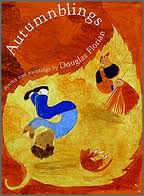
    Today I want to highlight Autumnblings. The poems can be used in a variety of ways in PreK-2nd grade dance classes. Teachers can use the poems to create new warm ups. Multiple poems talk about the "colors of autumn" – so bring out a variety of scarves for dancing. Improvise and explore the action of falling through multiple poems and imagery in the book. Other poems are about baseball, pumpkins, the wind, weather, animals, and what we love and hate about fall. Autumnblings can be a great new way to explore the season in your classes. I find it to be a fresh take on the theme.

    What to Do with Autumn Leaves

    By Douglas Florian


    Kick them.

    Catch them.

    Pick them.

    Snatch them.

    Romp them.

    Stomp them.

    Hurl them.

    Heave them.

    If you want to,

    Even leave them.


  • Poetry Series for Dance Classes: Falling Down the Page

    DownloadedFile

    I love the libary! I just found another great poetry book this morning.

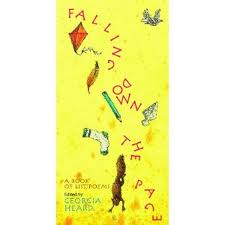
    Falling Down the Page, edited by Georgia Heard, is a fun compilation of "list poems." As a dance teacher who loves using word lists as starting points for shorter creative projects, I was excited to find this book.

    The poems vary in subject matter – school, stars in the sky, hands, and good-byes. I think this book is ideal for use in 2nd, 3rd, and 4th grade dance classes.

    And, as we also explore the theme of autumn, here's a playful poem to try out. I love the imagery and the measurements used (which could translate into groups of varying sizes):

    Recipe for Writing an Autumn Poem

    By Georgia Heard


    One teaspoon wild geese.

    One tablespoon red kite.

    One cup wind song.

    One pint trembling leaves.

    One quart darkening sky.

    One gallon north wind.


    ——-