Category: Poetry

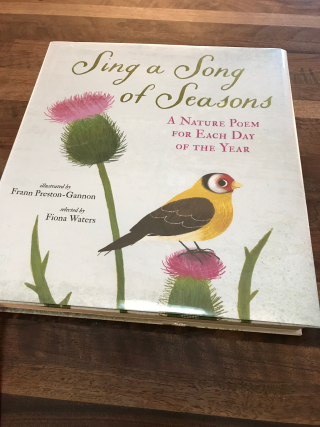
  • Sing a Song of Seasons: A Nature Poem for Each Day of the Year

    IMG_2842

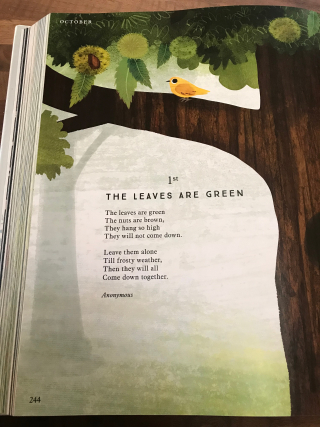
    Are you a poetry lover, and love incorporating poems into your dance classes and projects with students in grades K-8? Consider adding this hefty book to your shelf. So many great options and springboards. So many poems!

    Sing a Song of Seasons is 319 pages of poetry – one poem for every day of the year. 

    IMG_2840

    If looking to have a small collection of nature based poems for future classes, consider this book alongside:

    Water Sings Blue: Ocean Poems by Kate Coombs

    The Tree That Time Built: A Celebration of Nature, Science, and Imagination edited by Mary Ann Hoberman and Linda Winston

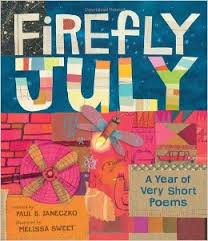
    Firefly July: A Year of Very Short Poems selected by Paul Janeczko


  • Projects about the Four Seasons

    51EBZylmP6L._SX258_BO1,204,203,200_

    Quiet and still

    long enough

    for birds to make nests?

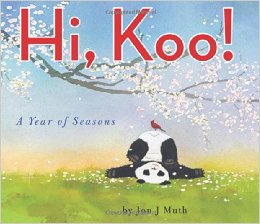
    This is one of the haiku poems we selected about spring, from the book Hi, Koo!: A Year of Seasons.

    In December, 15 7th and 8th graders in my Dance Elective course created a wonderful 60 minute production about the four seasons. We had several dances related to each season. The school's two choruses also joined us for the production. It was a beautiful collage of dance, song, poetry, and film. 

    We included several poems within the performance, with one student reading and 1-6 students dancing for each poem. Even in middle school, picture books with poems can offer ideas and inspiration. We pulled poems from:

    Hi, Koo! A Year of Seasons by Jon J. Muth

    Firefly July: A Year of Very Short Poems selected by Paul B. Janeczko

    Seasons: Rhymes in Time by Michael DeWall and Peter Elman

    If looking for new inspiration for a project this winter, check out these books! We especially loved the haikus as short interludes within the show. I also used these short poems as opportunities for brave students to try out solos and duets for the first time.

    ——————–


  • Volcano Wakes Up!

    Imgres-2

    Volcanoes move and dance. We too can take inspiration from their movement – brewing, exploding, pouring, oozing, and spreading. Explore this concept with students in 1st-4th grades.

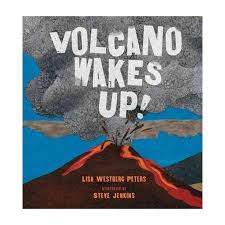
    I love the book Volcano Wakes Up! by Lisa Westberg Peters and illustrator Steve Jenkins. Through a series of poems, a story of a brewing volcano is shared. Through five different perspectives – such as a cricket nearby and the sun and  moon – you learn about a Hawaiian volcano. 

    I suggest reading the whole book to your group. This can become your research and brainstorming. Write down words and images that come to mind. In small groups, can your students list 6-8 ideas from the book and make a vignette based on it? How can the students explore dynamic qualities, pathway, direction, and tempo? Or, take some of the short poems from the book, divide into groups, and create vignettes based on the poems. 

    You could also select several of the illustrations, in the same manner (about 6-8), to create a movement phrase. There is lots of potential within this single book.

    Have fun!

    ————

  • A Full Moon is Rising

    Imgres

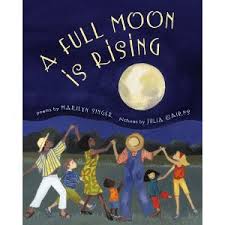
    I am a fan of poet/author Marilyn Singer, and her book A Full Moon is Rising will inspire magical and whimsical class projects this spring with students in 4th, 5th, and 6th grades.

    Marilyn Singer and illustrator Julia Cairns share stories, beliefs, customs, and celebrations from around the world related to the full moon. Each two-page fold includes a poem, art, and location in which this poem is located (New York City, Hong Kong, Australia, the Caribbean Sea). The book successfully conveys the idea that we all have this common link of a full moon. The book is a beautiful global study; in the back of the book there is an extra paragraph related to each region of the world to offer further details.

    I envision that you divide your class into several small groups of 1-4 students. Each group can create a vignette for one of the poems. String them all together. You can record your voice saying the poems or narrate them live. 

    This book pairs nicely with Rise the Moon.

    —————————-

  • New Poems for Wintery Days

    Imgres-2

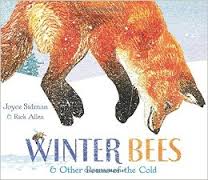
    I am always searching for books about the seasons. Winter Bees and Other Poems of the Cold is a great new addition with poems by Joyce Sidman and gorgeous illustrations by Rick Allen.

    The poems are suitable for students in grades 1-4. Sidman writes about the animals of winter, with unique poems about moose, tundra swans, and bees that can inspire dances in your classes. And, the poem "Snowflake Wakes" is a new favorite of mine – filled with moving words such as drifting down, settling, whirling, and "a pinwheel gathering glitter."

    Images

    ———————-

  • Alphabet Series: The Letter O

    When you and your students explore the letter O, these books can be springboards and inspiration for improvisations and dance projects. 

    O is for Opposites
    51fNiXB3HcL._AA160_

    Opposites are always a wonderful concept to explore in movement. I love the picture book A High, Low, Near, Far, Loud, Quiet Story by Nina Crews. (You can find used copies on amazon.com.) Use the words to create a simple warm up or improv activity, or create a dance with the entire text.

    O is for Ocean

    DownloadedFile-1
    I love finding pictures books that can easily create an improv structure.  

    Robert Neubecker's book has sparse text, but dense images of a day at the ocean. The main character, Izzy, heads to the beach one day. With each turn of the page, she explores another aspect of the beach and ocean world – tide pools, shells, fish, sting rays, and coral reefs. There is even a sunken ship.

    Images
    You could set up an improv that could be repeated several times in your dance classes. With each page, the students could be exploring that environment (ex. dancing through a coral reef) or be that environment or animal (ex. move like sharks). Each spread begins with the word "wow" ("Wow! Tide pool!…..Wow! Fish!"). The word "wow" could be the cue for students to pause to get ready to transition to the next idea. 
    Images-1

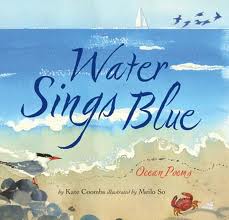
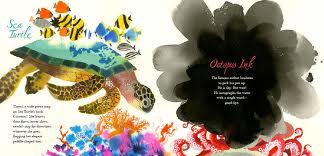
    Water Sings Blue: Ocean Poems is one of favorite children's poetry books to use in dance classes. The poetry is by Kate Coombs, with illustrations by Meilo So. Both text and paintings are full of magic, whimsy, and imagery to inspire movement with students. 
    Unknown-1
    From start to finish, the poems take you on a journey along the shore and in the water. Topics include: sand, tide pools, waves, jellyfish, squid, and coral. The poems lend themselves to a variety of projects for both small groups (solos and duets) and whole group vignettes. You could easily use all or most poems in the book to create a beautiful performance with your class. 

    O is for Orange

    Images

    To explore the color orange, you can pull out all of your books about colors. Four examples include: My Many Colored DaysColourLiving Color, and The Rainbow Book. What are our associations with orange? How can we translate these ideas into movement? Ideally, see if you can pull out 3-5 books on color. Look at the orange pages, and then explore movement ideas related to these pages. You can even string the 3-5 ideas together.

    Using Your Book Bin of Alphabet Books
    6a015431f12312970c01901e687323970b-320wi

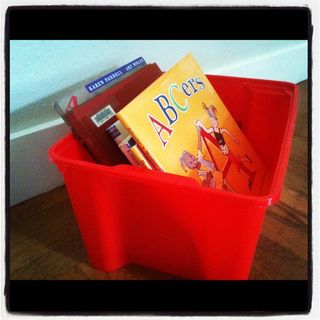
    As I suggested in the first post of this alphabet series, creating a book bin of alphabet books is a great idea. For example with the letter O, look at all of the "O pages" in your bin. Have students pair up, and give each pair one alphabet book. Ask them to find the O page. What movement or shape can they create related to that page? Give each pair a chance to share in front of the class. Again, you can string all of the ideas together to create an "O Dance."

    —————-
     

  • Dancing During Poetry Month: Firefly July

    DownloadedFile-2

    Yesterday I got to stop into one of my favorite independent bookstores in the US, The King's English Bookstore in Salt Lake City. The new poetry compilation, Firefly July: A Year of Very Short Poems, was on display. 

    The book jumped out at me for various reasons:

    • Melissa Sweet's artwork is colorful and whimsical. 
    • I am always looking for new poems to use within dance classes.
    • I love poetry books that are categorized by seasons.
    • Upon a quick browse, I knew the content evoked a sense of "magic and whimsy."

    Paul B. Janeczko has compiled a strong collection of very short poems, perfect for 3rd-6th grade dance students. Poets include: Eve Merriam, Robert Frost, Jim Harrison and Ted Kooser, and Joyce Sidman. The brevity of the poems will lead to movement studies as well as a series of vignettes within a larger class, that could be strung together for a performance. For example,

    Spring

    Rain beats down,

    roots stretch up.


    They'll meet

    in a flower.

    -Raymond Souster

    Melissa Sweet's  illustrations and color scheme can also easily inspire costume selections.

    ———————-

  • Alphabet Series: The Letter C

    When you and your students explore the letter C, some of these books can be springboards and inspiration for improvisations and dance projects. 

    C is for Clouds

    DownloadedFile
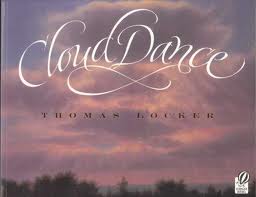
    There are three great books about clouds. Little Cloud by Eric Carle can easily turn into a dance exploration, with students shifting shapes and levels; pair this with Sora and the Cloud by Felicia Hoshino. Cloud Dance by Thomas Locker is a picture book for K-5 students about the varieties of cloud formations.

    C is for Color

    DownloadedFile-1
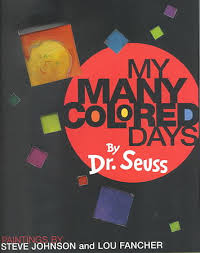
    My Many Colored Days by Dr. Seuss, with illustrations by Steven Johnson and Lou Fancher, is a fun exploration of colors and the emotions associated with each one. This book is a great example of a picture book that so easily "lends itself to movement."

    C is for Circle

    DownloadedFile-3
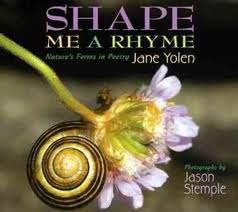
    There are numerous poetry books about shapes. Check out When a Line Bends….A Shape Begins (by Rhonda Gowler Greene and illustrator James Kaczman) and also Shape Me a Rhyme (by Jane Yolen and photographer Jason Stemple). Use the poems specifically about circles to make a new warm up activity with your students.

    C is for Carrot

    DownloadedFile-2
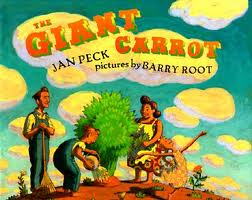
    Carrots and dance? Yes, indeed. Jan Peck wrote an amazing variation on the folktale The Giant Turnip. Sweet little Isabelle's dancing is what makes a giant carrot grow. This book is simply wonderful to read to students, to hear about dancing in a magical way. I also have a dance related to this story. Many years ago I made a giant carrot with fabric, about 5 feet high. My students' dancing makes this carrot "grow" as they circle around me and take turns dancing. Check out The Giant Carrot by Jan Peck and illustrator Barry Root. 

    —————————————-

  • Poetry Series: Shape Me a Rhyme

    Unknown
    If you liked the book When a Line Bends….A Shape Begins that I wrote about a few weeks ago, then check out Shape Me a Rhyme by poet Jane Yolen and photographer Jason Stemple. Both of these books are fun inspiration to explore geometric shapes and lines as a theme with students in grades 2-5.

    Shape Me a Rhyme looks at nature – and where we see circles, ovals, spirals, squares, and more. Each 2-page spread includes a whimsical poem as well as photos from nature. Another nice addition is that Yolen also included "key words" scattered on each spread. For example, the words to go with the poem "Arch" include: curve, U-turn, span, bow, and bend. I think all three components (poem, pictures, and words) will be fun inspiration for teaching artists and students for choreographic projects.

    The shapes/lines explored in the book are: 

    • Circle
    • Triangle
    • Coil
    • Star
    • Square
    • Heart
    • Arch
    • Wave
    • Oval
    • Fan
    • Rectangle
    • Crescent

    Circle – by Jane Yolen

    Round as a ball,

    Round as the sun,

    A circle goes round

    To where it's begun.


    Where it's begun

    Is where it will end.

    And then it starts circling

    Over again.


  • Poetry Series for Dance Classes: The Tree That Time Built

    Images

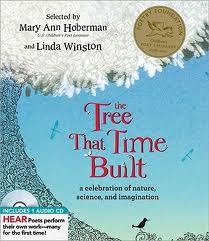
    I just pulled off the bookshelf the lovely poetry collection The Tree That Time Built: A Celebration of Nature, Science, and Imagination by Mary Ann Hoberman and Linda Winston. I used several poems for an Earth Day dance project a few years back. 

    The poems can be used in 3rd-5th grade classes but also 6th/7th grade classes. Sharing the book with your school's science teacher can be a great way to start a conversation, and possibly do a joint project between dance and science (one of my favorite things to do).

    The collection includes poems about trees, the Earth, ocean, animals, "hurt no living thing," and more. It is a well-selected, elegant group of poems. My favorite is the poem "Think Like a Tree."

    The Tree That Time Built is one of my favorite collections of nature poetry to use for dance projects.