Category: Opposites

  • Dancing Off the Page: Bears Are Big by Douglas Florian

    Th

    The other day I shared about Florian's book Flamingos Fly. Today I write about another book in the series, Bears Are Big. I am always on the lookout for books exploring opposites.

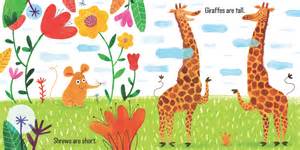
    Bears Are Big is a great new option to use with parent/child and preschool dance classes. Illustrator Barbara Bakos shares playful images of a variety of creatures. Use the ideas to create a warm up for your classes.

    Bears are big.

    Bees are small.

    Shrews are short.

    Giraffes are tall.

    I would like to offer two options with this particular text. 

    Option 1 – use the text from the beginning until the 12th page….ending with the idea, "Tree frogs stick." I think you can create a playful warm up that can be repeated for several weeks in a row.

    Option 2 – using the entire text – you will need some fabric. I have been exploring how to use the final set of words in the book, "Ravens are black. Doves are white." My solution is this: use the whole book, and then when you get to the last two pages about the birds, have your class come over to you and get black and white fabric. This can transition into an improvisational activity exploring the fabric and the bird inspiration of flying, flapping, soaring, opening, and closing. My top suggestion would be to head to the local fabric store to buy cheap tulle fabric in both black and white. 

    Th-1

    ———

  • Up & Down, Big & Small: Opposites Can Dance

    Screen Shot 2016-02-20 at 9.38.11 AM

    Several times a year, I share ideas on the "Book to Boogie" Blog. Here's my latest post, exploring several books with word pairs and opposites. Try out these books in a parent/child class or preschool age creative dance class.

    http://www.libraryasincubatorproject.org/?p=17884

    —————-

  • Alphabet Series: The Letter S

    When you and your students explore the letter S, these books can be springboards and inspiration for improvisation and dance projects.

    S is for Stomping

    DownloadedFile

    Stomp, Dinosaur, Stomp is full of playful action words to use with preschool, kindergarten, and first grade dancers. 

    "Mighty Tyrannosaurus loved stomp, stomp, stomping, gigantic legs striding, enormous jaws opening…."

    The book explores 11 different dinosaurs and a wonderful list of action words, including:

    • Stomping
    • Swishing
    • Gliding
    • Swooping
    • Soaring
    • Hunting
    • Pouncing
    • Zooming

    Use the book in a variety of ways to inspire improvisational activities, a "dino dance," or little vignettes about each animal in small groups.

    S is for "Someone Says"
    Imgres
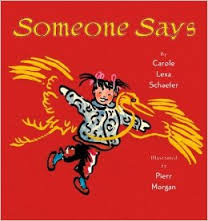
    I am a big fan of author Carole Lexa Schaefer and artist Pierr Morgan (listing two of their books here in this post). Someone Says is a delightful version of the simple game Simon Says. I like to read the book to the class and then make my own improv – a blend of freeze dance and Simon Says. I call it "Someone Says." We start to dance around the space to music. When the music stops, I call out a student's name and he/she decides how we will move next. "Olivia says, let's……" I give each student an opportunity to select a movement idea.

    S is for Squiggle
    Imgres-1

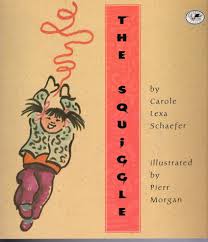
    Carole Lexa Schaefer and Pierr Morgan also created the book The Squiggle. In The Squiggle a red ribbon becomes many different things – ripples in water, a snake, and exploding fireworks. The book is easy inspiration for a dance with ribbons or scarves. How many different ways can we move? Can we move like _______? What animals and objects in our world can inspire us?

    S is for Skipping

    Imgres

    Skipping is one of the essential locomotor steps. Step hop, step hop, step hop….

    In Ready, Set, Skip! (by Jane O'Connor and illustrator Ann James), a girl shares all of the actions she can do, but skipping is currently not one of them. Then, her mother teaches her, and she is excited with this new action.

    Use the book as a lesson starter as you embark on skipping with your students.

    S is for Star Climbing
    Imgres-1

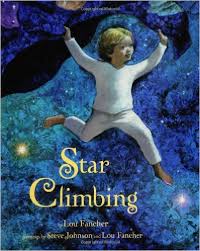
    Over the years, Star Climbing (Lou Fancher and Steve Johnson) is one of the picture books I have used most in dance classes. The words literally dance off the page and inspire a magical, whimsical project. A little boy dances amongst the stars:

    Tiptoe over low-lung clouds

    Leap from star to shining star

    Skip across bright silver stones.


    S is for "Silly Sally"
    DownloadedFile
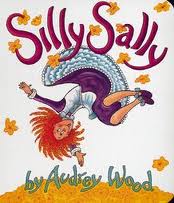
    "Silly Sally went to town, walking backwards, upside down." So begins this playful picture book by well-known children's author Audrey Wood. 

    The main character encounters different animals, and does a certain action with each one (a jig with a pig and leapfrog with a dog).

    One idea would be to create a whole dance using the entire text; another idea would be to read the book to your students and then play with some of the key concepts, especially ways of moving backwards and upside down. Use the book as a starting to point to explore many ways of moving backwards and upside down (or the concept of "direction" in general).

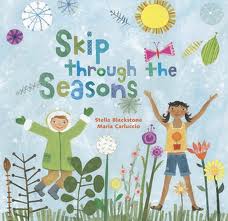
    S is for Seasons – Spring and Summer
    6a015431f12312970c019aff8b629e970c-800wi

    I love books and poetry that explore the seasons. Over the years, I have written about numerous books with a seasonal theme. Check them out here.

    S is for Snow
    DownloadedFile
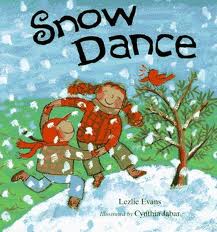
    Snow Dance, by Lezlie Evans with illustrations by Cynthia Jabar, is a great book for children in preschool through second grade. Can our dancing make it snow? What are all of the wonderful actions we do outside on cold days and snowy days?

    This book is simply a fun book to read during the winter months. You might also use this book as a springboard for a wintery dance. 

    Purchase a copy here.

    S is for Slow
    Imgres-2

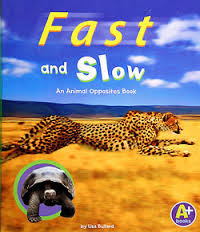
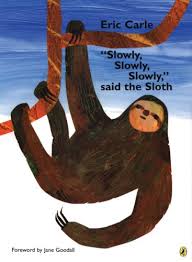
    The concept of fast and slow is always a source of play and joy with young ones. These two books can be read before you explore fast and slow with students. How can animals inspire us? 

    Fast and Slow: An Animal Opposites Book - Lisa Bullard

    "Slowly, Slowly, Slowly," said the Sloth - Eric Carle
    Imgres-3

    ——————–

  • Alphabet Series: The Letter O

    When you and your students explore the letter O, these books can be springboards and inspiration for improvisations and dance projects. 

    O is for Opposites

    51fNiXB3HcL._AA160_

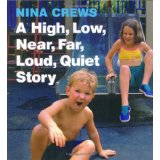
    Opposites are always a wonderful concept to explore in movement. I love the picture book A High, Low, Near, Far, Loud, Quiet Story by Nina Crews. (You can find used copies on amazon.com.) Use the words to create a simple warm up or improv activity, or create a dance with the entire text.

    O is for Ocean

    DownloadedFile-1
    I love finding pictures books that can easily create an improv structure.  

    Robert Neubecker's book has sparse text, but dense images of a day at the ocean. The main character, Izzy, heads to the beach one day. With each turn of the page, she explores another aspect of the beach and ocean world – tide pools, shells, fish, sting rays, and coral reefs. There is even a sunken ship.

    Images
    You could set up an improv that could be repeated several times in your dance classes. With each page, the students could be exploring that environment (ex. dancing through a coral reef) or be that environment or animal (ex. move like sharks). Each spread begins with the word "wow" ("Wow! Tide pool!…..Wow! Fish!"). The word "wow" could be the cue for students to pause to get ready to transition to the next idea. 

    Images-1

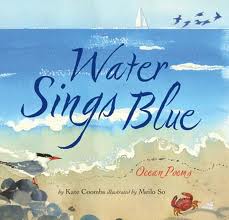
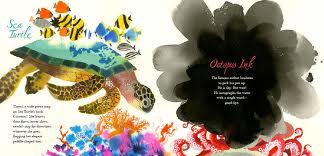
    Water Sings Blue: Ocean Poems is one of favorite children's poetry books to use in dance classes. The poetry is by Kate Coombs, with illustrations by Meilo So. Both text and paintings are full of magic, whimsy, and imagery to inspire movement with students. 

    Unknown-1
    From start to finish, the poems take you on a journey along the shore and in the water. Topics include: sand, tide pools, waves, jellyfish, squid, and coral. The poems lend themselves to a variety of projects for both small groups (solos and duets) and whole group vignettes. You could easily use all or most poems in the book to create a beautiful performance with your class. 

    O is for Orange

    Images

    To explore the color orange, you can pull out all of your books about colors. Four examples include: My Many Colored DaysColourLiving Color, and The Rainbow Book. What are our associations with orange? How can we translate these ideas into movement? Ideally, see if you can pull out 3-5 books on color. Look at the orange pages, and then explore movement ideas related to these pages. You can even string the 3-5 ideas together.

    Using Your Book Bin of Alphabet Books

    6a015431f12312970c01901e687323970b-320wi

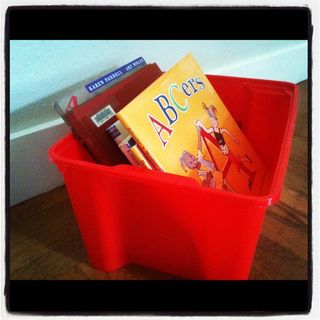
    As I suggested in the first post of this alphabet series, creating a book bin of alphabet books is a great idea. For example with the letter O, look at all of the "O pages" in your bin. Have students pair up, and give each pair one alphabet book. Ask them to find the O page. What movement or shape can they create related to that page? Give each pair a chance to share in front of the class. Again, you can string all of the ideas together to create an "O Dance."

    —————-


  • Alphabet Series: The Letter F

    When you and your students explore the letter F, some of these books can be springboards and inspiration for improvisations and dance projects. 

    F is for Feet

    DownloadedFile-2
    Exploring the letter F is the perfect time to study our feet  and the many actions they do. Check out the following books:

    Use the text to inspire a list of actions of feet – fast, slow, high, low, etc. Make a warm up or improv activity with these various actions.

    F is for Flowers

    DownloadedFile-1
    I love the alphabet book A Garden of Ordinary Miracles. This alphabet book of various flowers is fun inspiration for making different shapes in our body, or in a group. 

    F is for Flamingos

    DownloadedFile-3
    As I have written about on the blog previously, Flora and the Flamingo is pure inspiration and joy for dance classes. It is a great book to explore the concepts of following a leader and mirroring. 

    F is for Fast

    DownloadedFile
    Opposite words are great to explore in preschool, kindergarten, and first grade dance classes (fast/slow, high/low, up/down, etc). Explore the book Fast and Slow: An Animal Opposites Book by Lisa Bullard. This book can easily turn into a group dance. 


    F is for Flamenco

    DownloadedFile-4
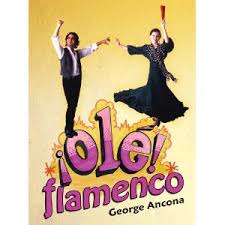
    George Ancona's book Olé Flamenco is a detailed book with classic Ancona photos as well as text about the dance style of flamenco and its costumes, music, and use of the hands.