Category: Middle School Dance Books

  • Guest Post: Dancers Among Us

    Images
    Today's post is from dance teaching artist Sheena Jeffers.

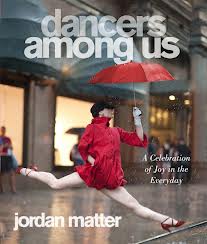
    Dancers Among Us, which has landed itself on the New York Times Best-Seller List, began as a project when photographer Jordan Matter observed his son playing with a toy bus. “I was trying to keep pace with this three-year-old mind as he got deeper and deeper into a fantasy involving nothing more than a yellow plastic box and armless figurines. At least that’s what I saw. He saw frantic commuters rushing to catch the 77 local bus to Australia.” 

    The book captures movement, dance technique and creativity and exhibits how those three qualities interact with our regular daily activity. 

    The book of photography, from photo shoots with professional dancers, is broken down into seven sections: Dreaming, Loving, Playing, Exploring, Grieving, Working, and Living. Each section contains quotes, stories and photographs of dancers interacting with the non-dancing world around them. 

    The book is a great conversation starter for young dance students because: 

    -The students can identify technique through the photograph: Are the legs extended? Toes pointed? What is their body placement? 
    -The students can discuss the visual representation of dance with the larger theme and idea: What atmosphere were they photographed in? What is going on? What is the connection to real life? What is the photographer trying to say?
    -The students can formulate their own opinions: What do they think of the image and the story? How does this relate to their personal lives? 

    There is a quote used in the book, that captures the energy running through each page: “I am a verb,” said by Ulysses S. Grant. The 229 page book, which also runs the reader through the development of each photograph, is fun and lighthearted even when tackling serious issues during the grief section. 

    Students, grades 6-12, will appreciate the photography, quotes and short stories as they see dance leap from the pages and into their personal lives. 

    Images-1

    Sheena Jeffers is a dance educator throughout Virginia. She is currently pursuing her Masters in Dance Education. She runs Ballet Shoes & Bobby Pins, a blog focused on initiating dance conversation and awareness for students, parents and dance admirers of all ages. Join the conversation; follow on Twitter: @BalletBobbyPins
  • Descriptionary: A Thematic Dictionary

    DownloadedFile
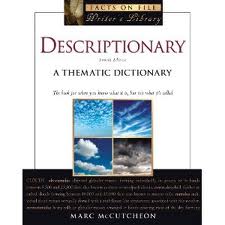
    Today's post is not a typical book listing on the Dancing Words Blog. But, for readers who are excited about the intersection of words and dance, check out this book. Descriptionary can be used as a springboard in dance classes with students in grades 3-12 as well as college.

    This "thematic" dictionary of over 600 pages is list upon list of words. There are lists of clouds, dinosaurs, cooking terms, and key words for sports such as basketball and boxing. There is lots of movement potential. Look up a category, review the list of words and definitions, and be creative with using the words as a starting point for a movement project. 

    Descriptionary is the kind of "reference book" to keep handy on your studio bookshelf.


  • Coffee Table Books in Middle School Dance Classes

    DownloadedFile

    Indeed, there is not a wealth of dance books for the middle school age range. But, I want to encourage all of us to use books (and magazines and articles) whenever possible. By middle school, students are so tech-savvy and do most research on the web. I believe that whenever possible let's still share resources in books.

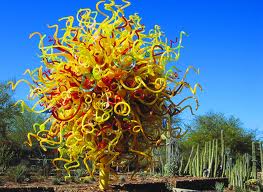
    Over the summer I highlighted several visual art books I use in dance classes as springboards. My students love looking at beautiful "coffee table" books with the artwork of Dale Chihuly, Andy Goldsworthy, and more.

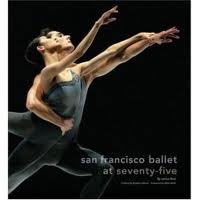
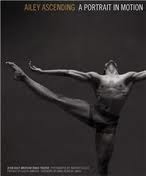
    To add to our unit this spring about Alvin Ailey, I just purchased the photography book Ailey Ascending: A Portrait in Motion. Many major dance companies have published large size coffee table books – Ailey, Mark Morris, San Francisco Ballet, New York City Ballet, etc. Whenever possible, I recommend purchasing and collecting these books.

    DownloadedFile-1
    Whether you actively reference a book in a class or have books on hand for students to browse in your studio, I find that teens still love looking at these kinds of books. I selectively display a few by my classroom's door, and I love seeing which of my student sits down and starts to explore. Invite the students in.

    Seek out dance specific books, but also consider coffee table/folio books at your library to use in dance classes – art, geography, photography, graphic art, and more. I love having a few books on hand at a time so that I can do group work, with each group having one book to explore. Another teaching tip – give the students Post-It Notes so they can "mark" the images they are exploring. 

  • Poetry Series for Dance Classes: Night Garden

    DownloadedFile-2

    Oh, I love the Berkeley Public Libraries. I especially love it when I find unfamiliar books on display that I can use in dance classes.

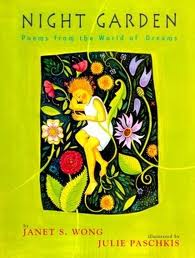
    Last week they had "night books" on display. I took out Night Garden: Poems from the World of Dreams by Janet S. Wong (with illustrations by Julie Paschkis). It is a beautiful set of poems, and I love the order of the poems in the book. 

    My teaching mind already goes to using this book with students in 4th, 5th, and 6th grades. I would encourage you to use all of the poems, in their order. I envision a set of beautiful solos for brave, young choreographers. This could turn into an elegant culminating performance at the end of your semester or session. 

    The poems are of night, dreams, magic, and whimsy. One of the poems from the book:

    Gently Down the Stream

    Like one fast fish

    I'm swimming free,


    water washing

    over me,


    seeing clear

    through eyes like glass,


    following

    a moonlight path,


    one fast fish,

    no breathing troubles,


    followed by

    a trail of bubbles,


    swimming long, 

    swimming lean,


    swimming gently

    down the stream.


    The poems can be your starting point for movement. In terms of reciting the text, you could record each student reading his/her own poem. You, the teacher, could be the narrator of the poems. Or, students can switch off and read for another student.

    I very much envision this project as a group of solos. 

  • What’s on My Shelf: Art Books (Part 3)

    In part 3 of this series, I want to share about two books I love to use when my middle school students explore symmetry. 

    Images-2

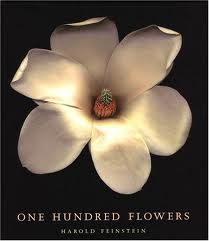
    One Hundred Flowers by Harold Feinstein is a gorgeous photography book of flowers up close. The images are bold, elegant, and eye catching. The students eagerly work together to create group shapes. The images inspire the students to think about symmetry, line, shape, and inner/outer.

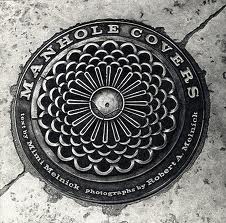
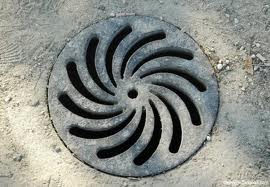
    With a totally different feel and look, I also love exploring symmetry with the images in the photography book Manhole Covers by Mimi Melnick and Robert A. Melnick. I am an explorer in the world for inspiration, and I love finding details in nature and in the city that I can bring into our dance classes. The students find the manhole covers to be fun and quirky; the images again inspire the students to explore and play with symmetry, line, shape, and group work.

    Images-1   DownloadedFile

    I found both books used on amazon.com at great prices. Looking today, I see that you can get One Hundred Flowers for around $19 and Manhole Covers for only $12. 


  • What’s on My Shelf: Art Books (Part 2)

    Images

    Following up on my previous post, today I want to share about the fabulous glass artist Dale Chihuly. My middle school students love looking at his work and using the images as inspiration for group shapes. 

    I will place several books are the room and put the students in small groups. They will browse the books, select about 4-6 images, and mark the selected images with Post-It Notes on the pages. As a group they create a shape to represent each sculpture, and then must also choreograph the transitions between each one. 

    Exploring these sculptures in the body encourages students to experiment with group shapes, lines, pathways, levels, size, and varied qualities.

    I saw an exhibit of Chihuly's work about ten years ago, and one phrase sticks in my mind from that exhibit. Chihuly strives to strike a balance "between fluid and fixed" in his work. I love that description. 

    Images-1

    I encourage dance teachers of students in 4th-8th grades to explore the work of glass artist Dale Chihuly.

    On my shelf I have:

    Fire

    Chihuly: 365 Days

    There are great prices on used books on amazon.com. Whenever possible, having 4-5 different books on hand will allow for small group work. Check out your local library as well.


  • What’s On My Shelf: Art Books (Part 1)

    DownloadedFile

    At work the other day, I was browsing through my books and thought that I would share some of my tried and true art books I use with middle school dance students. I have also used these books with students in 4th and 5th grades.

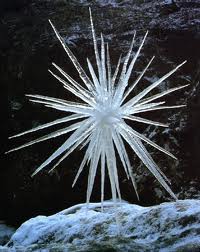
    Sculptures are great springboards as students explore shape, level, size, and lines in their own bodies. 

    Images

    Andy Goldsworthy's works of art are simply magical, elegant, and inspirational. I love having a few books on hand to allow for small group explorations. The two on my shelf are:

    A Collaboration with Nature

    Stone

    Looking at amazon.com today, I see that you can find many of his art books at great prices used (in the $15-$20 range).

    Check out your local library as well to have 3-4 books on hand for a lesson.

  • What IS Modern Dance?

    DownloadedFile   Images

    For many students in K-8 school based dance programs, the main style of dance they will be exploring is modern dance, or creative-based dance. In my teaching position, I teach 200 students a year in grades 5th-8th grade. My classes are primarily modern dance, with some exploration of hip hop and culturally based dance forms.

    Despite being a professional modern dancer myself, it remains tricky to explain clearly to students "what is modern dance." Two books for children attempt just that, and I must say, did a fine job at it.

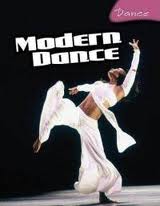
    Modern Dance by Wendy Garofoli (copyright 2008) is a book for your school library. For students in grades 3rd-5th, this book explains in basic terms the origins of modern dance, some history, the format of a dance class, and more. The photos in the book are of teens dancing as well as several photos of professional artists.

    Modern Dance by Andrew Solway (copyright 2009) is also a must for your school library. While similar to Garofoli's book, this book goes more in depth about the timeline of modern dance from the early 1900s until the present. There is content about dance outside of the United States, post-modern dance, and more. The visual structure of this book includes a wide variety of photos of professional level dance and text boxes with facts and short biographies. How can you not love a book that includes Trisha Brown, Pina Bausch, and Akram Khan? I would recommend this book for students in grades 3-6 (possibly as high as 7th grade).