Category: Middle School Dance Books

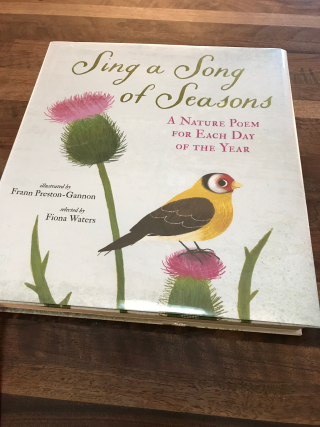
  • Sing a Song of Seasons: A Nature Poem for Each Day of the Year

    IMG_2842

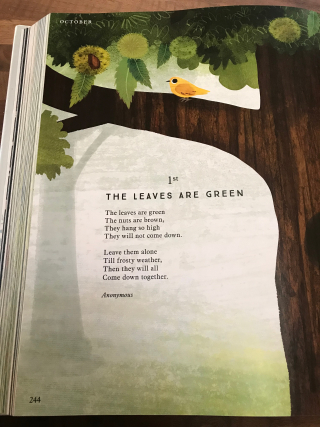
    Are you a poetry lover, and love incorporating poems into your dance classes and projects with students in grades K-8? Consider adding this hefty book to your shelf. So many great options and springboards. So many poems!

    Sing a Song of Seasons is 319 pages of poetry – one poem for every day of the year. 

    IMG_2840

    If looking to have a small collection of nature based poems for future classes, consider this book alongside:

    Water Sings Blue: Ocean Poems by Kate Coombs

    The Tree That Time Built: A Celebration of Nature, Science, and Imagination edited by Mary Ann Hoberman and Linda Winston

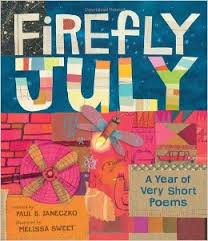
    Firefly July: A Year of Very Short Poems selected by Paul Janeczko


  • Transitions, Transformations, and Teamwork

    I have a growing collection of playful and quirky books about the transformation of objects. This theme has great potential in a dance class with students in 3rd-6th grades. Seasoned teaching artists – read on…..

    Imgres-2

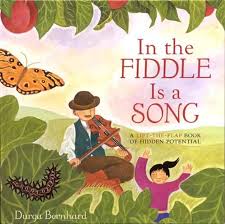
    Let me begin with Durga Bernhard's book In the Fiddle Is a Song. "In the acorn is a tree waiting to grow tall. In the clay is a pot waiting to be shaped." The poetic text, talking about 9 different items changing, can beautifully inspire a dance about transformation and transitions. Whether you have only one student at a time represent each page, or students work in small groups of 2 or 3, the project will challenge students to work on shapes, transitions, and changes in level, size, and quality.

    Imgres-3   Imgres-4   Imgres-5
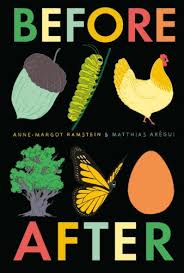
    Second, I love the wordless book Before After by Anne-Margot Ramstein and Matthias Arégui. Each spread shows two images – without text – challenging your imagination about the changes and transformations from A to B. Some are animals, and others are objects. Some examples include: a rocket ship/the moon, a deck of cards/a formation of cards, and a spider/a cobweb. If you have a group of students who improvise well together, you can use the book as a springboard for a group improv. Over the course of several classes, you could improvise with 6-10 of the pages.

    Imgres-1

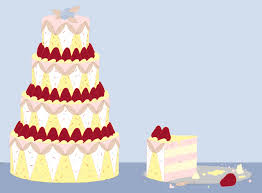
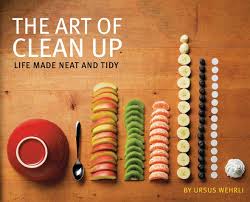
    Last, in a similar vein to Before After, there is the art book The Art of Clean Up by Ursus Wehrli. This photography book captures an item – such as a Christmas tree, sandbox at a park, or bouquet of flowers. Photo #1 is of the item; photo #2 is of the item taken apart and organized by shape, color, or size. Like Before After, this could lead to a group improv exercise exploring shapes. And, how do you transition from the first image into the second idea? It's a great exploration of re-organization.

    Imgres

    ——–

  • Projects about the Four Seasons

    51EBZylmP6L._SX258_BO1,204,203,200_

    Quiet and still

    long enough

    for birds to make nests?

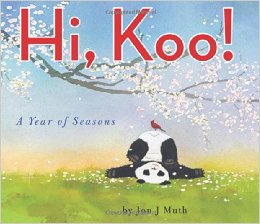
    This is one of the haiku poems we selected about spring, from the book Hi, Koo!: A Year of Seasons.

    In December, 15 7th and 8th graders in my Dance Elective course created a wonderful 60 minute production about the four seasons. We had several dances related to each season. The school's two choruses also joined us for the production. It was a beautiful collage of dance, song, poetry, and film. 

    We included several poems within the performance, with one student reading and 1-6 students dancing for each poem. Even in middle school, picture books with poems can offer ideas and inspiration. We pulled poems from:

    Hi, Koo! A Year of Seasons by Jon J. Muth

    Firefly July: A Year of Very Short Poems selected by Paul B. Janeczko

    Seasons: Rhymes in Time by Michael DeWall and Peter Elman

    If looking for new inspiration for a project this winter, check out these books! We especially loved the haikus as short interludes within the show. I also used these short poems as opportunities for brave students to try out solos and duets for the first time.

    ——————–


  • Dr. Seuss Books (Even With Middle School Students)

    Photo 2

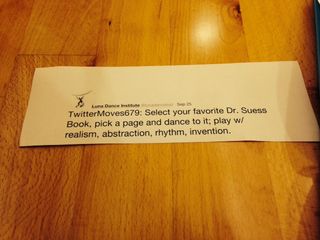
    I love the Luna Dance Institute's TwitterMoves project on Twitter - 140 characters to convey a movement idea or warm up. Over the past few years, I have used the tweets numerous times with students in grades 5-8. I encourage dance teaching artists working with middle school students, high schoolers, and even college students to follow the Luna Dance Institute on Twitter, and to explore these cool movement activities within your classes. These short posts can inspire a warm up, group exploration, or even a concept for a full dance.

    A post from last week was:

    TwitterMoves679: Select your favorite Dr. Suess Book, pick a page and dance to it; play w/ realism, abstraction, rhythm, invention.

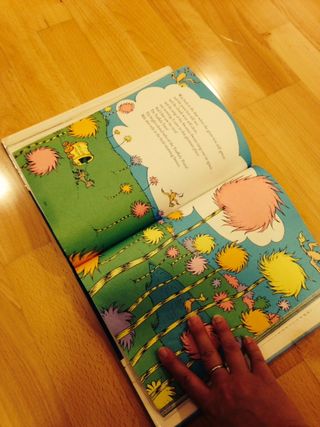
    This morning, I quickly gathered a stack of Seuss books at our school's library. In my 7th/8th grade Dance Elective course (which has a theme this fall of dance and technology), we explored "inspiration from the internet." I printed out the tweet for the students.  

    In small groups, the students selected a book and used the language of the Twitter post to make a short movement sketch. We worked for about 10-15 minutes and then shared.

    You can easily try this out with students in 4th/5th, middle school, or even high school. My middle school students dove right in.

    Check out the Luna Dance Institute on Twitter. This TwitterMoves post in particular was a perfect blend of language and movement.

    Photo 1

    ————————-

  • Dancing During Poetry Month: Firefly July

    DownloadedFile-2

    Yesterday I got to stop into one of my favorite independent bookstores in the US, The King's English Bookstore in Salt Lake City. The new poetry compilation, Firefly July: A Year of Very Short Poems, was on display. 

    The book jumped out at me for various reasons:

    • Melissa Sweet's artwork is colorful and whimsical. 
    • I am always looking for new poems to use within dance classes.
    • I love poetry books that are categorized by seasons.
    • Upon a quick browse, I knew the content evoked a sense of "magic and whimsy."

    Paul B. Janeczko has compiled a strong collection of very short poems, perfect for 3rd-6th grade dance students. Poets include: Eve Merriam, Robert Frost, Jim Harrison and Ted Kooser, and Joyce Sidman. The brevity of the poems will lead to movement studies as well as a series of vignettes within a larger class, that could be strung together for a performance. For example,

    Spring

    Rain beats down,

    roots stretch up.


    They'll meet

    in a flower.

    -Raymond Souster

    Melissa Sweet's  illustrations and color scheme can also easily inspire costume selections.

    ———————-

  • Snowflakes and Symmetry

    DownloadedFile-1

    One of my favorite books in my classes this fall (6th-8th grade) is the small photography book Snowflakes, featuring the incredible "micro-photography" of Kenneth Libbrecht. You can purchase new and used copies on amazon.com

    There are numerous uses for this book. The book is full of pictures and quotes, not a story with a beginning, middle, and end. Even in this digital age, my students always love having a book in hand and beautiful color images as inspiration. 

    DownloadedFile
    1. With my 6th grade students, we have an entire "water dance project" in conjunction with the 6th grade science curriculum. One component of the project includes states of water. This book is a great addition to my collection, to use as springboards.

    2. With all of my classes, the book is a great example of symmetry. I am always on the lookout for visual images to use when exploring symmetry and asymmetry in classes.

    3. In my 7th/8th grade dance elective course, we are creating an entire performance around the theme of Winter. We are using these images and embodying them as we make a stop motion film this trimester.

    This book can easily be used in elementary dance classes as well. 

    Images

  • The Art of M.C. Escher

    DownloadedFile-1
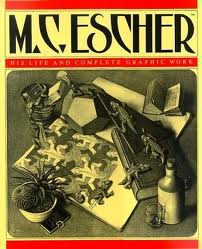
    Yesterday I borrowed from the library a thick book with great color images of the art of M.C. Escher. The book is M.C. Escher: His Life and Complete Graphic Work by F.H. Bool et al. 

    My middle school students still love using books and images as springboards for warm ups and projects. 

    Escher's work is a great way to explore symmetry, connected shapes, patterns, and variation.

    On amazon.com, you can find reasonably priced used copies of this book.

    Images-1

  • New Superguide on Dance by DK Publishing

    Books by DK Publishing have a certain look, and they have published quite a few books on dance. The books are jam-packed with photos. The latest general guide to dance is wonderful.

    Look beyond the gold, and somewhat silly, cover to the inside pages of Dance by Lorrie Mack. Inside, students in grades K-6 will find page after page of beautiful and varied photos and descriptions of many kinds of dance – from social dance to concert dance. The book even includes a variety of highlights on artists, from choreographer Busby Berkeley to Michael Jackson to Shen Wei. 

    Don't overlook this book based on your first glance of it on the shelf. It will quickly offer your students and you a great "reference guide" to keep in your studio. 

    You can even purchase it as an Ebook on the DK Publishing website

    9780756697976L

  • Using Picture Books with Middle School Students

    Images
    The possibilities with picture books are endless! 

    This fall, I taught a Dance Elective course for students in grades 7 and 8. We explored the concept of "story" in many ways, and one project involved children's picture books. Our goal was to have the students choreograph 3 different dances, and then perform the dances for younger students. I teach at a K-8 school.

    The middle school students loved this project. We started with a stack of about 20 books. We looked at all of them – looking for "movement inspiration and possibilities." I brought in most of the stack, and a few students brought in some book options from home. Allowing the students to select their "top choices" helped to support the initial "buying into the project."

    In the end, the students selected:

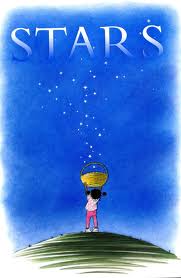
    1. Stars by Mary Lyn Ray, with illustrations by Marla Frazee
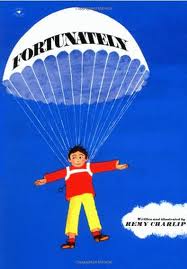
    2. Fortunately by Remy Charlip
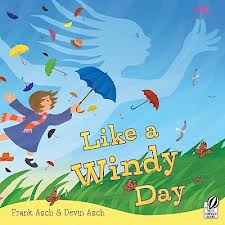
    3. Like a Windy Day by Frank Asch and Devin Asch
    Unknown
    As the teacher, I had pre-selected a stack of books that "lend themselves to movement." Use this blog to help create a stack of 12-20 books.

    Over the course of several weeks, the students worked hard on the choreography. We played with imagery, choosing whether to recite the text within the dances or not, music, and costumes.

    When teaching middle school students, and working towards culminating performances, it is always important to consider the set up for the students. How can they do their best work? How can you support them to perform, feel comfortable, and take a chance? Performing for younger students still gave them the opportunity to perform in front of an audience, and it was a safe venue to perform.

    The project culminated in several mini performances for kindergarten and first grade students in our dance studio on campus. Prior to the performance, the classroom teachers read the three books to their students. 

    It was fun, joyful, and engaging for both the teenage dancers and our young audience members.

    During our Fall Dance Concert, which included all dances from the course, the students performed these dances for their parents as well. In the end, the dances "stood on their own," and the families enjoyed seeing this project.
    Images-1

  • Bones, Muscles, and Joints

    Unknown

    I got this book a few months ago, and am now actively using it in my 6th, 7th, and 8th grade dance classes. Movers and Shapers by Patricia Mcnair could also be used with 5th grade classes.

    For this dance unit, I begin each class with one of the 2-page spreads in the book. I like this book because of how it is divided up. Some days the students read the information, and some days I show it and read a little of the text. For example, today we explored the 2 pages about joints. I made color photocopies of the pages for each student. It gives the students a nice visual. We actually did a "read aloud" of these two pages. This was my introduction for the class. After this, we did a quick partner warm up related to joints. Then, as we did our first center warm up, I focused on which joints were being used.

    Movers and Shapers is simple and clear – a great introduction to anatomy for middle schoolers and upper elementary students.