Dancing Words: Arts Integration with Literature and Dance in K-8 Schools
By Jill Randall
Curriculum that bridges the studio and classroom – arts integration – provides rich and varied
ways to experience and explore subject matter in K-8 schools. In particular, books and dance
classes can work together, uniting dance teaching artists, classroom teachers, science
teachers, reading specialists, and librarians around multifaceted content. The more opportunities
and perspectives we can offer young people to get excited about literature, the better our
chances are to lay solid groundwork for a lifelong love and curiosity with words, story, and text.
● How can language inspire movement and how can movement inspire language?
● How can we deepen experiences for students by adding books to the “dance curriculum”
before, during, and after movement lessons?
● How can we encourage classroom teachers to incorporate movement into literacy
lessons for young children?
● How can dance teachers use picture books and even textbooks as springboards for their
curriculum?
● How can books become a common link to bring together the work of dance teaching
artists, classroom teachers, reading specialists, and librarians at a school?
Some of the books we will discuss are specifically about the subject of dance, while others “lend
themselves to movement” (such as a book about prepositions or a story related to the water
cycle).
Before Dance Classes (In Classrooms)
Bringing dance teaching artists and classroom teachers into conversation and joint lesson
planning around a particular topic ultimately creates a deeper experience for the students. The
classroom teachers can provide the foundation for a dance project: reading with the students,
emphasizing vocabulary, and touching upon key concepts that will then be put into movement.
A well-prepared dance teacher can work with other teachers prior to a dance project’s start. If
students are using poetry for an 8th grade choreography project, the language arts teacher and
dance teacher can plan for some collaborative lessons prior to the dance project about lines,
stanzas, similes, metaphors, and the rhythm of poetry. This work is happening before the
students start dancing and choreographing.
With 2nd graders, a dance teaching artist and the classroom teacher can jointly launch a project
about a particular picture book (e.g. Stars by Mary Lyn Ray and Marla Frazee). The classroom
teacher reads it before your dance class with his/her students, as part of a classroom unit on
verbs and sentence construction. Then the students discuss the structure of the story, the
beginning/middle/end of the book, and make a list of all of the action words (verbs) from the
story. Have the class bring that list into the dance room, so that you can start to create a dance
based on that word list.
During Dance Classes (In the Studio)
In early elementary classes, dance teaching artists can integrate picture books while teaching
the lesson. The teaching artist reads a book aloud that leads to an improvisational warm up; the
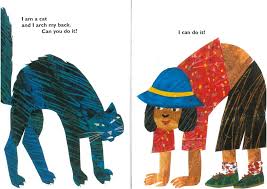
words and text inspire movement. Some successful warmup books include From Head to Toe
(Eric Carle), Move! (Steve Jenkins), and Star Climbing (Lou Fancher). Activities like these begin
to show the fluid interplay of movement and text.
A class can create a group dance based upon a picture book. With the completed dance, the
dance teaching artist, or a strong student reader, may narrate the book alongside the students
as the students perform. The text was the inspiration for the choreography and also now serves
as the “cue” for each part of the dance. Swirl by Swirl (Joyce Sidman) is a great example of a
book to use in this way.
After Dance Classes (Back in Classrooms)
During teacher collaboration time, the dance teaching artist can share with her/his colleagues
themes emerging in the dance classes. For example, students in a 4th grade dance class might
be working on duets and “movement conversations.” Back in the 4th grade classrooms, teachers
could continue this theme by exploring I Am a Phoenix: Poems for Two Voices (Paul Fleischman
and Ken Nutt). Another example would be a science teacher extending a thematic exploration of
the actions of water in a dance class, by reading books such as This is the Rain, All the Water in
the World, or Water Dance.
Exploring a concept in more than one realm offers students multiple angles and opportunities for
learning and comprehension. Experiencing a concept visually, aurally, and kinesthetically
provides students with a broad range of ways to grasp subject matter. Contextual learning of
vocabulary across disciplines also allows for deeper understanding. Exploring a concept with
multiple teachers the dance teacher, the classroom teacher, the science teacher also offers
numerous perspectives and engagements within and across the curriculum.
Books and Performances
Another effective connection for elementary classroom teachers is reading books aloud in their
classrooms related to upcoming assemblies and field trips. This is another opportunity for
classroom teachers, dance teaching artists, and librarians to converse and work together.
Sharing books with classes about The Nutcracker or other ballets, choreographer Alvin Ailey, or
a particular kind of dance (African dance, flamenco, physically integrated dance, or Irish dance)
provides students with great background information and deepens and extends their experience
of the performance.
Book Bins
Many classrooms have great collections of book bins divided by themes. I encourage teachers to
create a dance specific book bin as well. You can work with your dance teaching artist to select
812 books, or reference my January 2013 Horn Book Magazine article on this particular subject
for a compiled list of dance books (What Makes a Good Book about Dance?). Book bins are one
of the easiest ways to “bring dance back into the classroom” and continue making connections
between the various programs at your school.
Inspiration/Language of Childhood
Dance teaching artists are always on the lookout for inspiration for themes and projects.
Classroom teachers, reading specialists, and librarians can share ideas with these dance
teaching artists. These books serve as inspiration but also help dance teaching artists find
agespecific themes and the “language of childhood.” Sharing a stack of books is not only a
great conversation starter amongst colleagues, but also helps give insight into the focus and
priorities for a school’s curriculum. The dance teaching artist might not use these books explicitly
in a future project, but reviewing and reading the books can lead to more connections as he/she
develops future lesson plans and units of study.
———
All ideas explored here provide for multimodal learning and exploring literacy with and through the
body. Students hear, see, and embody a concept; there are many opportunities to interact with
printed materials, language, and pictures. Considering all of the intersections of movement and
text creates a back and forth between the dance studio and the classroom. Ultimately, the
curriculum is alive, creative, playful and reaches more students, especially those students who
learn best by moving and kinesthetically exploring.
Download JillRandall-artsintegrationarticle
This article is copyright of Jill Randall 2014.
————————-
Jill Homan Randall is a dancer and teaching artist in Berkeley, CA. She teaches full-time at The
Hamlin School in San Francisco. Her blog about children’s books on dance and books that
inspire dancing, Dancing Words, can be viewed at www.dancingwords.typepad.com. Jill also
wrote a chapter on the subject of language, literacy, and movement in the book Moving Ideas:
Multimodality and Embodied Learning in Communities and Schools (2013), edited by Mira-Lisa
Katz.
———————————————
 Dancing Words Blog