Category: Animals

  • Alphabet Series: The Letter M

    When you and your students explore the letter M, these books can be springboards and inspiration for improvisations and dance projects. 

    M is for MOVING

    Move! – Numbers on the Move – Alphabet Movers 
    Images

    Float….swing….leap! Join the animals moving in Steve Jenkins's book Move!, available in hardback and board book formats. Move! inspires you and your students to do a wide variety of locomotor actions.

    Teresa Benzwie has written two movement-related books, exploring the alphabet and numbers. Both are great for warm ups and getting students to move in various ways:

    Numbers on the Move

    Alphabet Movers

    M is for MOM

    6a015431f12312970c01538e47ece6970b-800wi

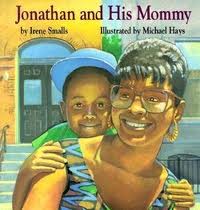
    There are great books with mothers and children dancing together, My Mama Had a Dancing Heart and Jonathan and His Mommy. I especially love Jonathan and His Mommy, as it is a beautiful springboard to explore walking and pathways with students.

    M is for MABEL
    6a015431f12312970c0154329b464f970c-800wi

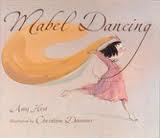
    Mabel Dancing is a playful book to share in a preschool setting or at home with parents and child. It is a “classic story” in some ways of a little girl who dreams of dancing and naturally wants to move and dance at home. 

    Mabel’s parents dress up to have a dance party downstairs in their large house. Mabel is tucked into bed for the night while the party takes place. She cannot resist, and ends up sneaking downstairs to have her short moment dancing too.

    M is for the MOON
    Images-1

    Eric Carle's 1986 book Papa, Please Get the Moon for Me is a gentle story between a girl and her father. The daughter so wants the moon, and the father "catches" it for her. But, as we know, the moon "appears" and "disappears" in our lives each month. The story is a playful way to explore the phases of the moon. And, like the images in the book, students can also dance with a crescent moon if you make a prop for the class. Play one of the those classic jazz tunes – like "It's Only a Paper Moon" – as you and your students dance. 

    M is for MERMAIDS
    6a015431f12312970c015432e0bb16970c-800wi

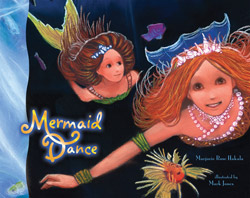
    Last, have you had students who have requested to dance a "mermaid dance?" This book – literally titled Mermaid Dance - can be translated into a dance for your students. 

    —-

    Search for these great "M books" at the school library, public library, or online. Many are reasonably priced (used) on amazon.com.

    Exploring letters and the alphabet through reading, movement, and dancemaking creates powerful connections for young learners.

    ——————-
  • Flora and the Penguin

    Imgres-1

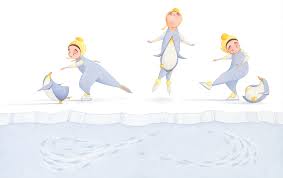
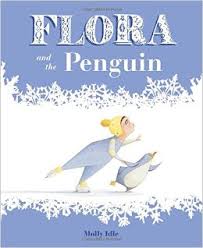
    Fun, play, skating, gliding, and conversation. This is the beautiful "dance" of Flora with a penguin in Molly Idle's latest wordless picture book, Flora and the Penguin. If you loved Flora and the Flamingo, check out this new book! 

    The artwork literally dances off the page. The book is a great springboard for preschool, kindergarten, and first grade classes as you explore partner work, working together, mirroring, and shaping. 

    You can use the book for inspiration, the images for actual movement ideas, or the storyline to create a group dance. The book is also a fun addition to your "winter" book collection.

    As for music, the classical skating piece "Les Patineurs" is a great option!

    Imgres-2

    ————————–

  • Rupert Can Dance

    Imgres-1

    For me, it is always a tough sell to use books about dance with animal characters. Some dance teachers love this….I am more of a skeptic.

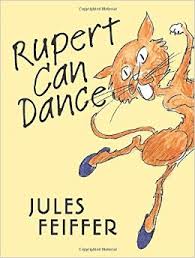
    This week, the imaginative cartoonist and author Jules Feiffer has won me over! This is now one of my favorite children's books for 2014 – a book entitled Rupert Can Dance.

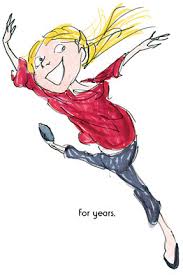
    Let me begin by describing the illustrations – excellent capturing of movement and the energy of dancing. This is seen in both characters – the young girl and the cat.

    Second, the storyline is just fun, and with a great message. Mandy is a girl who loves to dance, and her cat Rupert eagerly watches her. While Mandy sleeps, Rupert secretly dances. One day this secret is discovered. Mandy, excited, wants to teach Rupert about dancing. He does not want to be pushed into learning from her — a common feeling of many young students who want to do something on their own terms. With some "reverse psychology," Mandy gets Rupert to show her some moves, and then he opens up to experiencing dancing together. 

    Check out Rupert Can Dance for the artwork and the positive message of the story.

    Images

    ——————————-

  • Deer Dancer

    Imgres

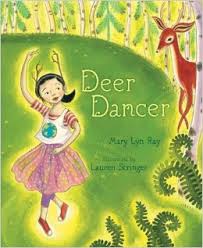
    Deer Dancer is a playful and sweet addition to our dance book collections.

    The book brings together an author and illustrator I love. Mary Lyn Ray also wrote the book Stars, which is a beautiful story to explore in dance classes with 3rd-5th graders. (My 7th and 8th graders even made a dance based on the story.) Lauren Stringer  also illustrated the unique and informative book When Stravinsky Met Nijinsky.

    In Deer Dancer, a hesitant and awkward young dancer finds a quiet place outside to dance, explore, and build confidence. She meets up with a deer, and a playful dance dialogue ensues. The story actually captures many wonderful ideas around confidence, being a dance student, and finding a place in our lives to “try ideas on.”

    For schools that use the social-emotional curriculum called the Toolbox Project, I think this book can be a nice addition to your program and conversations with students.

    ———————

  • Guest Post: Wiggle by Taro Gomi

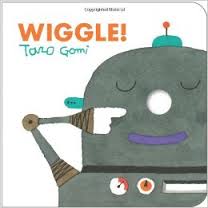
    Today's post was written by my friend and colleague Juliana Monin. Wiggle is a great new addition to your dance book collection and can be enjoyed at home, in a parent/child dance class, and in preschool classes.

    —————

    DownloadedFile

    Last week I came across Wiggle! by Taro Gomi and had to get it to try with the preschoolers I teach in Berkeley. They love impersonating animals, and I thought this might be a great way to get them to move from simply imitating animal movements into translating those movements into other parts of their bodies.

    The book has eight board pages, each naming an animal and describing the type of movement it is doing with a particular body part. For example:

    The elephant swings her trunk.

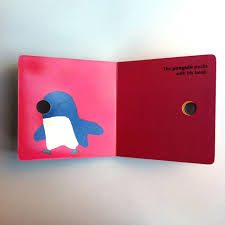
    The twist on this book is that there is a hole for the trunk (or fang, tail, wing, etc). 

    DownloadedFile-1

    Just reading the book has an active component as it requires one to use his or her own fingers to fill in the blanks of the story. A teacher or parent reading the book can allow the children to fill in the blanks as to what body part is missing by omitting the word while reading, thus encouraging body part identification.

    What I did was have one child come up for each page and place his or her finger through the hole to complete the action. The rest of the class followed along by imagining and simulating with their own body parts. I would ask the student at the front of the class to vary the way he/she was performing the action, and the rest would follow along. “Can you peck your beak slowly? How about quickly? Please shake your rattle up and down, now side to side.”

    Once we completed the book, students selected their own body parts and came up with a movement for that body part. The older students were able to name their body parts and name their movements. With the younger students, I had them point to a body part that we named and make up a movement that we also named. Movement names varied from the conventional “twirl” to the imaginative “super duper ninja jump.” Once a child demonstrated his or her movement, we all tried to do it the way he/she did it and then came up with ways of changing it. “Let’s make it move backwards. Do it in slow motion.”

    As a third part to this study, we returned to the original action words from the book, and instead of imitating the animals, we explored our own ways of wiggling or pecking or flapping.  “How do you flap your feet? Can you peck with your belly button?”

    This book was a wonderful way for me to introduce a concept and to develop it into further explorations. The kids loved it and so did I!

    ——-

    Juliana Monin began teaching creative movement in 2008 under the guidance and mentorship of Jill Randall. She has enjoyed teaching dance to diverse groups of people as a dancer with AXIS Dance Company (2011-2014) and is passionate about making dance accessible and relevant to all bodies. She is currently on faculty at Shawl-Anderson Dance Center and is creating a progressive and inclusive dance program at Bentley Upper School. 

    —————


  • For Parent/Child Dance Classes: Flip, Flap, Fly!

    DownloadedFile

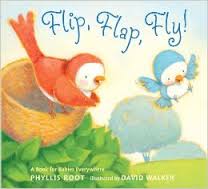
    I was thrilled to stumble upon Phyllis Root's book Flip, Flap, Fly! at the library this week. This book is perfect for a parent/child dance class with children ages 1-4. 

    The story explores numerous pairings – of a baby animal and its mother (fish, snake, bird, otter, etc). Each spread shares a different animal, and how the two move together. 

    The text can easily lead to an improvisational warm up or dance. 

    "Wiggle!"  hisses baby snake.

    "Wiggle with a squiggle!"

    So the mama helps the baby snake

        ziggle    zaggle    wiggle

    Have fun dancing together in a variety of ways. Let's flip, flap, fly…..let's splish, splash, swim.

    ———————-


  • Stomp, Dinosaur, Stomp!

    DownloadedFile

    I was excited to find this picture book at the library today – full of playful action words to use with preschool, kindergarten, and first grade dancers. 

    "Mighty Tyrannosaurus loved stomp, stomp, stomping, gigantic legs striding, enormous jaws opening…."

    The book explores 11 different dinosaurs and a wonderful list of action words, including:

    • Stomping
    • Swishing
    • Gliding
    • Swooping
    • Soaring
    • Hunting
    • Pouncing
    • Zooming

    Dance artists can use the book in a variety of ways to inspire improvisational activities, a "dino dance," or little vignettes about each animal in small groups.

    Get your own copy of Margaret Mayo's Stomp, Dinosaur, Stomp for only $10 at Powell's Books

    ———————

  • Cat and Fish

    Unknown-2

    This week I stumbled upon a quirky picture book, Cat and Fish, by Joan Grant and illustrator Neil Curtis. Use this book as inspiration in preschool, kindergarten, 1st, and 2nd grade classes.

    What I like about the book is the unusual pairing of the characters – a cat and a fish. They come from different worlds but become friends and explore together both the land and sea. From a movement perspective, this book can lead to interesting partner work as well as exploring contrasting ideas – land/ocean, above/below, up/down, swimming/climbing, etc. The actions in the story are also interesting to use for improvisation in a class – playing in a maze, lurking, prowling, hiding, rowing, floating, etc.

    Unknown-3


  • Verbs

    As I was speaking with the librarian at my school today about a new book, I thought that today would be a perfect day to highlight some great books to use in conjunction with teaching VERBS in 1st or 2nd grade classrooms.

    Images-1
    These action rich books can introduce students to a wide range of verbs as well as get them up on their feet – improvising, moving in a variety of ways, or making a dance based on a book.

    Images-2
    Check out:

    1. Move! – Steve Jenkins

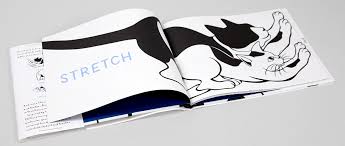
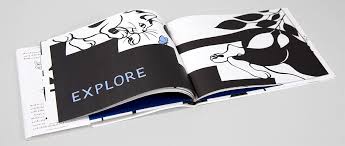
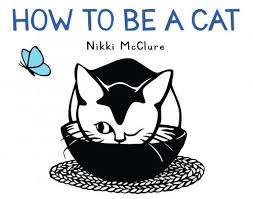
    2. How to Be a Cat – Nikki McClure

    3. Off We Go! – Jane Yolen

    4. A Child's Day: An Alphabet of Play – Ida Pearle

    5. Alphabet Movers – Theresa Benzwie

    6. Into the A, B, Sea – Steve Jenkins and Deborah Rose

    7. In the Tall, Tall Grass – Denise Fleming

    8. In the Small, Small Pond – Denise Fleming

    9. Star Climbing – Lou Fancher and Steve Johnson

    Unknown
    —————————-


  • Alphabet Series: The Letter H

    When you and your students explore the letter H, some of these books can be springboards and inspiration for improvisations and dance projects. 

    ——————

    H is for Head (to Toe)

    Unknown-2

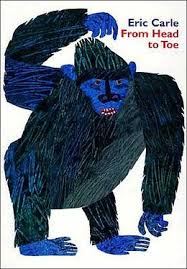
    Eric Carle's From Head to Toe is one of my favorite books to explore in parent/child, preschool, and kindergarten classes. The words literally lead a warm up for you….moving our heads, shoulders, hips, and toes. Purchase a used copy of this book here

    H is for Hopping

    Unknown-6
    Hopping is one of the building blocks of dance – moving on one foot. I am always on the lookout for books that involve the basic locomotor steps of: walking, running, hopping, jumping, skipping, galloping, and leaping.

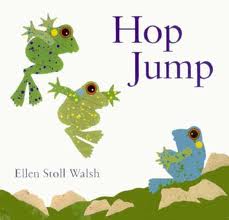
    Check out Ellen Stoll Walsh's Hop Jump as a springboard for exploring the concepts of hopping, jumping, and "dancing."

    H is for Hummingbirds

    Unknown-3
    As mentioned in several prior posts, Keith Baker's Little Green is a whimsical picture book for dancing like a fast moving hummingbird as well as moving through different pathways in space (zig zag lines, curly cue lines, etc). 

    H is for Haring (Artist Keith Haring)

    Unknown-4
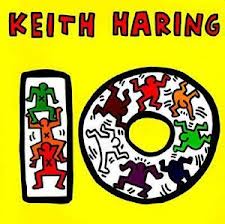
    Keith Haring's classic drawings inspire kids to move and make shapes. Find a used copy of the board book Ten. Students can view the images and try out the positions (shapes) in their own bodies, or as a group. 

    Unknown-5
    ————-

    P.S. Exploring "hands" and "high/low" are also good subjects with the letter H, but I don't have specific book recommendations today. 

    ————————————————–