Category: Animals

  • Sets of Books, with Lots of Options

    As dance educators, we have our favorite themes for classes and projects – the seasons, Halloween, locomotor steps, prepositions, and animals (to name a few). This week I was revisiting my bookshelf and thinking about some prolific children's authors, and how these sets of books would be great to explore in preschool, kindergarten, and first grade classes. The commonalities between the books will be fun to explore with the kids and a playful link from week to week.
    Images

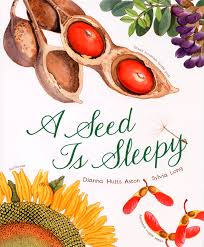
    The excellent duo of author Dianna Hutts Aston and illustrator Sylvia Long now have SIX titles in their series. Titles include A Butterfly is Patient and An Egg is Quiet. The complete list is:

    A Nest is Noisy

    An Egg is Quiet

    A Seed is Sleepy

    A Rock is Lively

    A Butterfly is Patient

    A Beetle is Shy

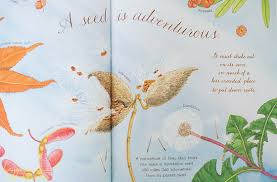
    Each book has a similar feel in terms of illustrations and the structure of each page; each page has one large sentence in cursive and then more scientific details in smaller print on each page.
    Images-1

    The cursive sentences are written in such a way to inspire movement for each new idea. The books can be used for structured improvisation with the students or as a basic structure to create a dance.

    Some text from A Butterfly is Patient:

    A butterfly is patient.

    A butterfly is creative.

    A butterfly is helpful.

    A butterfly is protective.

    A butterfly is poisonous.

    A butterfly is spectacular!

    The images and descriptions on each page will provide further inspiration for dancers to express the ideas. See the images, hear the descriptions, and explore in our own bodies…..
    51XqfmkM38L._SX331_BO1 204 203 200_
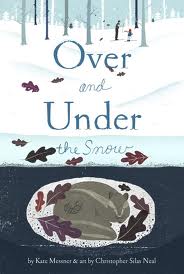
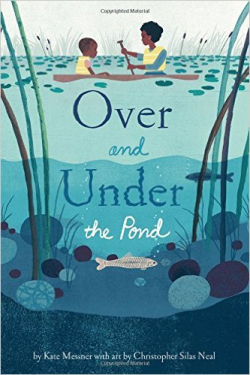
    In a similar way, author Kate Messner and illustrator Christopher Silas Neal now have 3 titles to their names – which explore up and down and above and below in a garden, a pond, and in snow. The titles are:

    Over and Under in the Snow

    Over and Under the Pond

    Up in the Garden and Down in the Dirt

    Prepositions – and relationality – are favorite concepts within creative dance. I love these books to explore high/low, up/down, and over/under. The books explore animals, birds, bugs, and weather. From Over and Under the Pond:

    Over the pond, the wind gives us a push and stirs the light-dappled leaves on shore. There on a branch, a new goldfinch teeters, finally ready to fly.

    Under the pond, tadpoles are changing, learning to hop. They're losing tails, growing legs, growing up.

    Over the pond, there at the shore, tall and silent and still, a great blue heron stares down into the deep. It tenses….takes one long-legged step…..

    and strikes! It catches a wiggling, quicksilver minnow from where it was hiding, under the pond.
     

  • Flowers are Calling

    Download

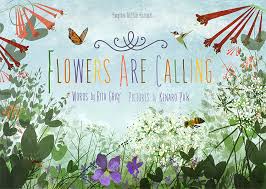
    Attention seasoned dance teaching artists! Flowers are Calling, by Rita Gray and illustrator Kenard Pak, offers some magical inspiration — leading towards a group dance with many "parts" for your whole class. Preschoolers, kindergarteners, and first graders will love the many roles to play as animals, insects, and beautiful flowers. 

    The recurring structure of the book is that a "flower is calling" to an animal. The animal emerges – such as a bear, frog, porcupine, or blue jay – but then something else is really interested in the flower, such as a honeybee. 

    Flowers are calling a little black bear

    No, not a bear! He doesn't care.

    They're calling a butterfly 

    to dip from the air.

    Flowers are calling a wet green frog.

    No, not a frog! She likes her soggy bogy.

    They're calling a bumblebee

    to look near their log.

    Ten different animals/birds appear in the story as well as 9 different bugs and birds that go to the flowers. The book also highlights a variety of flowers in different shapes and sizes.

    Begin your exploration by reading the whole book to the group. Then, try out different body shapes/poses inspired by the numerous flower illustrations.

    Next, you can choreograph the dance with the students having one or more roles in the dance as an animal, insect, or flower. 

    Possible extensions to the lesson include:

    Images

    —————-


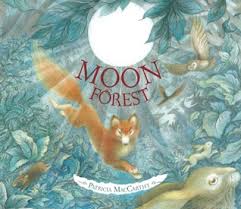
  • Animal Action: Moon Forest by Patricia MacCarthy

    Imgres

    Moon Forest was a great find recently at the public library. For teaching artists working with 2nd-5th graders – and larger sized classes of 10 or more – this story has lots of action and lots of "roles."

    A fox is traveling through a forest looking for food. Many animals interact and respond to the fox. The story so naturally lends itself to a dance, especially in a school setting with 20-35 children in a class. Develop the dance, and you can read the story aloud on stage. Your words and pacing can naturally cue the students.

    The story begins with:

    The great white eye of the moon looks into the forest. What can it see?

    A flitter of bats.

    A twist of briars.

    A dusting of moths.

    A coil of ferns.

    A red fox running through a blue forest…..

    An owl gliding between shadows.

    A warm breeze ruffling fur; a hunter's nose

    sniffing the sweet night air, 

    something stirring,

    a rat scuttling.

    Teaching artists can easily explore this book for several weeks in class, taking time to try out the many actions in the book. The story lends itself to exploring level changes, tempo, and a wide variety of locomotor and axial movements.

    Patricia MacCarthy's magical illustrations evoke traveling, swirling, dodging, and hiding within the forest. 

    Music ideas include songs from the album Chamber Music, a collaboration with a cellist and kora player (Ballaké Sissoko and Vincent Segal). Try out "Halinkata Djoubé."

    —————

  • Animal Inspiration: Group Dances

    Imgres

    In recent years not only 1 – but actually 3 – picture books have come out with the theme of collective nouns to describe groups of animals. What are these words and phrases? Examples include:

    • A leap of leopards
    • A parcel of penguins
    • A knot of frogs

    For students in grades 2-5, these books can be curious springboards for a group project. Divide the students into small groups of 3-6 students. Have them each select an animal and read up in that book about that animal. 

    Then, each group can create a section of the dance for their animal. For example,

    1. Have the students choreograph a way to enter into the space
    2. Students then freeze in a group shape/tableaux
    3. Then, based on their reading, have the students create a dance with 4-8 actions of their animal (example – reaching, swinging, grabbing, rolling, etc). Based on the age of your students, you can further explore level changes, tempo, direction, and pathway.
    4. Have the students choreograph a way to exit as well

    The three books of collective nouns are:

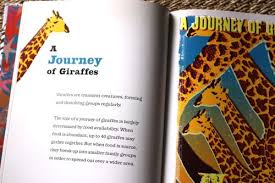
    A Tower of Giraffes: Animals in Groups by Anna Wright

    Have You Ever Seen a Smack of Jellyfish? An Alphabet Book by Sarah Asper-Smith

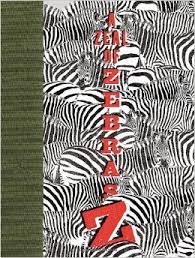
    A Zeal of Zebras by Woop Studios

    Imgres-1

    Image from A Zeal of Zebras

    Music ideas include:

    "Cirrus" by Bonobo

    "Thum Nyatiti" by Ayub Ogada

    "Rumble in the Jungle" by Max Roach

    ———————————

  • Alphabet Series: The Letter S

    When you and your students explore the letter S, these books can be springboards and inspiration for improvisation and dance projects.

    S is for Stomping

    DownloadedFile

    Stomp, Dinosaur, Stomp is full of playful action words to use with preschool, kindergarten, and first grade dancers. 

    "Mighty Tyrannosaurus loved stomp, stomp, stomping, gigantic legs striding, enormous jaws opening…."

    The book explores 11 different dinosaurs and a wonderful list of action words, including:

    • Stomping
    • Swishing
    • Gliding
    • Swooping
    • Soaring
    • Hunting
    • Pouncing
    • Zooming

    Use the book in a variety of ways to inspire improvisational activities, a "dino dance," or little vignettes about each animal in small groups.

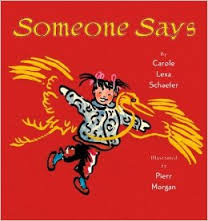
    S is for "Someone Says"

    Imgres
    I am a big fan of author Carole Lexa Schaefer and artist Pierr Morgan (listing two of their books here in this post). Someone Says is a delightful version of the simple game Simon Says. I like to read the book to the class and then make my own improv – a blend of freeze dance and Simon Says. I call it "Someone Says." We start to dance around the space to music. When the music stops, I call out a student's name and he/she decides how we will move next. "Olivia says, let's……" I give each student an opportunity to select a movement idea.

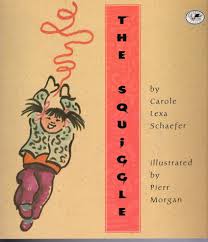
    S is for Squiggle

    Imgres-1

    Carole Lexa Schaefer and Pierr Morgan also created the book The Squiggle. In The Squiggle a red ribbon becomes many different things – ripples in water, a snake, and exploding fireworks. The book is easy inspiration for a dance with ribbons or scarves. How many different ways can we move? Can we move like _______? What animals and objects in our world can inspire us?

    S is for Skipping

    Imgres

    Skipping is one of the essential locomotor steps. Step hop, step hop, step hop….

    In Ready, Set, Skip! (by Jane O'Connor and illustrator Ann James), a girl shares all of the actions she can do, but skipping is currently not one of them. Then, her mother teaches her, and she is excited with this new action.

    Use the book as a lesson starter as you embark on skipping with your students.

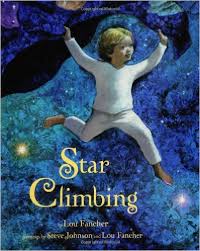
    S is for Star Climbing

    Imgres-1

    Over the years, Star Climbing (Lou Fancher and Steve Johnson) is one of the picture books I have used most in dance classes. The words literally dance off the page and inspire a magical, whimsical project. A little boy dances amongst the stars:

    Tiptoe over low-lung clouds

    Leap from star to shining star

    Skip across bright silver stones.


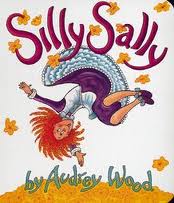
    S is for "Silly Sally"

    DownloadedFile
    "Silly Sally went to town, walking backwards, upside down." So begins this playful picture book by well-known children's author Audrey Wood. 

    The main character encounters different animals, and does a certain action with each one (a jig with a pig and leapfrog with a dog).

    One idea would be to create a whole dance using the entire text; another idea would be to read the book to your students and then play with some of the key concepts, especially ways of moving backwards and upside down. Use the book as a starting to point to explore many ways of moving backwards and upside down (or the concept of "direction" in general).

    S is for Seasons – Spring and Summer

    6a015431f12312970c019aff8b629e970c-800wi

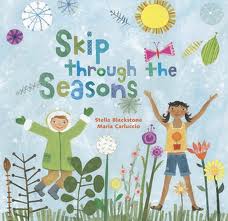
    I love books and poetry that explore the seasons. Over the years, I have written about numerous books with a seasonal theme. Check them out here.

    S is for Snow

    DownloadedFile
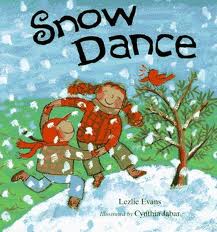
    Snow Dance, by Lezlie Evans with illustrations by Cynthia Jabar, is a great book for children in preschool through second grade. Can our dancing make it snow? What are all of the wonderful actions we do outside on cold days and snowy days?

    This book is simply a fun book to read during the winter months. You might also use this book as a springboard for a wintery dance. 

    Purchase a copy here.

    S is for Slow

    Imgres-2

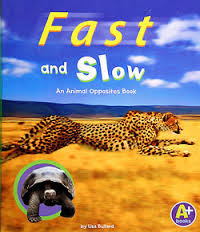
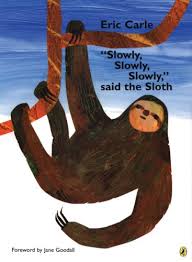
    The concept of fast and slow is always a source of play and joy with young ones. These two books can be read before you explore fast and slow with students. How can animals inspire us? 

    Fast and Slow: An Animal Opposites Book - Lisa Bullard

    "Slowly, Slowly, Slowly," said the Sloth - Eric Carle

    Imgres-3

    ——————–

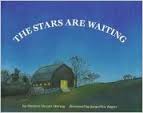
  • The Stars are Waiting

    Imgres-1

    While the book The Stars are Waiting is about 15 years old, the story is new inspiration to me. I recently stumbled upon it at the library. The text will inspire an improvisation or a dance project with students ranging in age from preschool through 2nd grade. I think the text beautifully pairs with exploring stopping and moving – dancing and freezing – with young students. It also lends itself to exploring shape, pathway, and entrances/exits.

    Over the hill, behind the moon, the stars are waiting…

    Waiting for wrens to quietly gather,

    Waiting for squirrels to cease their chatter. 

    Waiting for sparrows to end their flight,

    Waiting for day to fade to night.

    I feel that you could easily use the entire text for a project. Use the text to inspire solos, small group sections, or whole group dancing. The Stars are Waiting is being added to my list of "magic and whimsy" books to use with students in Prek-5. 

    The Stars are Waiting is by Marjorie Dennis Murray with illustrations by Jacqueline Rogers. Purchase a used copy here.

    ——————

  • Alphabet Series: The Letter Q

    When you and your students explore the letter Q, these books can be springboards and inspiration for improvisations and dance projects. 

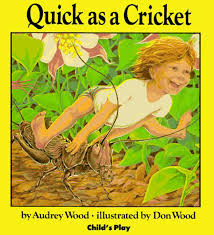
    Q is for Quick as a Cricket 

    Imgres

    Audrey and Don Wood's classic book Quick as a Cricket is a book of similes and a springboard for many ways of moving – quick as a cricket, slow as a snail, etc.

    You can explore the entire text with your students, and then hone in on "quick movements" as you focus on the letter Q. Brainstorm together all of the animals, vehicles, and machines in our world that move quickly. Also explore our body and body parts – how can you move your hands quickly….arms…hips….feet?

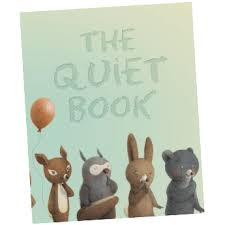
    Q is for Quiet

    Url

    The ALA Notable book The Quiet Book (Deborah Underwood and Renata Liwska) is a quirky picture book describing the many times in our life that we are quiet. Examples include:

    Hide-and-seek quiet

    Others telling secrets quiet

    Lollipop quiet

    Looking at the entire text – I don't feel that the whole book from beginning to end can work for a dance. But, you can definitely pull out several phrases as inspiration for movement exploration.

    You can also read the whole book, and then as a class come up with 6-10 different times that you are quiet, specifically honing in on ideas that can be conveyed through dancing.

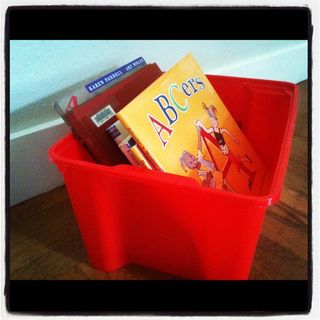
    Using Your Book Bin of Alphabet Books

    6a015431f12312970c01901e687323970b-320wi

    As I suggested in the first post of this alphabet series, creating a book bin of alphabet books is a great idea. For example with the letter Q, look at all of the "Q pages" in your bin. Have students pair up, and give each pair one alphabet book. Ask them to find the Q page. What movement or shape can they create related to that page? Give each pair a chance to share in front of the class. Again, you can string all of the ideas together to create a "Q Dance."

    —————-

  • New Poems for Wintery Days

    Imgres-2

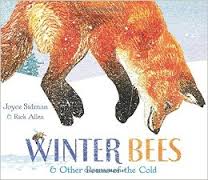
    I am always searching for books about the seasons. Winter Bees and Other Poems of the Cold is a great new addition with poems by Joyce Sidman and gorgeous illustrations by Rick Allen.

    The poems are suitable for students in grades 1-4. Sidman writes about the animals of winter, with unique poems about moose, tundra swans, and bees that can inspire dances in your classes. And, the poem "Snowflake Wakes" is a new favorite of mine – filled with moving words such as drifting down, settling, whirling, and "a pinwheel gathering glitter."

    Images

    ———————-

  • Alphabet Series: The Letter P

    When you and your students explore the letter P, these books can be springboards and inspiration for improvisations and dance projects. 

    P is for Prepositions

    I am always on the lookout for picture books with prepositions. Prepositions are so fun to explore in movement with students in preschool, kindergarten, and 1st grades. You can explore relationships – over, under, around, and through – whether it is students dancing with a prop (hula hoop), students dancing together, or using imagery to inspire movement (ex. crawling through a tunnel). 

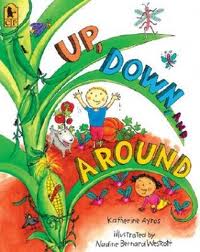
    Tana Hoban's classic picture book Over, Under, and Through is a great starting off point. Up, Down, and Around (Katherine Ayres and illustrator Nadine Bernard Westcott) is also a great exploration of prepositions as well as plants. 

    DownloadedFile-5

    You might play with different parts, dividing the class into two to explore the "above ground" and "under the ground" ideas (such as in Over and Under the Snow by Kate Messner). 

     Images

    P is for Penguin

    Imgres-1

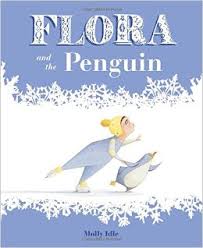
    Fun, play, skating, gliding, and conversation. This is the beautiful "dance" of Flora with a penguin in Molly Idle's latest wordless picture book, Flora and the Penguin. If you loved Flora and the Flamingo, check out this new book! 

    The artwork literally dances off the page. The book is a great springboard as you explore partner work, working together, mirroring, and shaping. 

    You can use the book for inspiration, the images for actual movement ideas, or the storyline to create a group dance. As for music, the classical skating piece "Les Patineurs" is a great option.

    P is for Pond

    Imgres-3

    Denise Fleming's book In the Small, Small Pond explores the actions of creatures in a pond – diving, swimming, wiggling, etc. Students will love improvising the various movements or having their own "part" as you read the entire book and make a group dance.

    P is for Pathway

    7f224844013211e3b1ed22000ae801e7_7
    Here are four books to inspire moving in straight lines, zig zags, curving pathways, and much more.

    1. Little Green by Keith Baker 

    A hummingbird – making various pathways in space (zig zag, curlycue, etc)

    2. Jonathan and His Mommy by Irene Smalls and Michael Hays

    A son and mother taking a walk and exploring all different ways to walk – big steps, small steps, zig zag pathways

    3. Lines that Wiggle by Candace Whitman and Steve Wilson

    An artistic exploration of lines that wiggle, bend, spiral, curve, etc.

    4. Harold and the Purple Crayon by Crockett Johnson

    An imaginative tale of a little boy drawing his world around him – the path he takes, the moon in the air, and much more to create an adventure

    P is for Purple

    Unknown

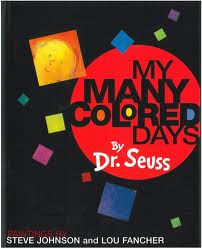
    To explore the color purple, you can pull out all of your books about colors. Four examples include: My Many Colored DaysColourLiving Color, and The Rainbow Book. What are our associations with purple? How can we translate these ideas into movement? Ideally, see if you can pull out 3-5 books on color. Look at the purple pages, and then explore movement ideas related to these pages. You can even string the 3-5 ideas together.

    Using Your Book Bin of Alphabet Books

    6a015431f12312970c01901e687323970b-320wi

    As I suggested in the first post of this alphabet series, creating a book bin of alphabet books is a great idea. For example with the letter P, look at all of the "P pages" in your bin. Have students pair up, and give each pair one alphabet book. Ask them to find the P page. What movement or shape can they create related to that page? Give each pair a chance to share in front of the class. Again, you can string all of the ideas together to create a "P Dance."

    —————-


  • Alphabet Series: The Letter N

    When you and your students explore the letter N, these books can be springboards and inspiration for improvisations and dance projects. 

    N is for Numbers

    6a015431f12312970c017ee497763f970d-800wi

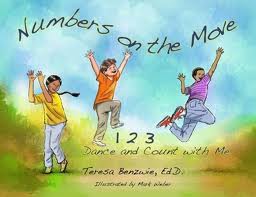
    I very much enjoy Theresa Benzwie's Alphabet Movers, and now I also love her 2011 publication Numbers on the Move. I was excited to stumble upon this book, as I have a similar number based warm up I love to do with young ones.

    Mark Weber's illustrations of a diverse group of children are joyful and playful. I very much appreciate children's books that show a variety of young boys and girls dancing. 

    The simple premise of the book will lead to a fun warm up in an parent/child, preschool, or kindergarten dance class.  

    As we begin to count, there is a movement idea with each number:

    One stretch

    Two slides

    Three jumps

    The book goes up to number 10, and counts down again.

    N is for Nursery Rhymes

    Unknown-8

    I am a strong believer in the use of nursery rhymes within dance classes. This teaches these important cultural references and classic rhymes/rhythms that we continue to use today. You can find a wide range of nursery rhyme books to use as a teaching springboard; I love making warm ups with various rhymes.

    Two favorite books of mine include:

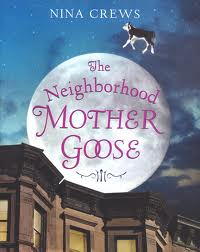
    The Neighborhood Mother Goose by Nina Crews

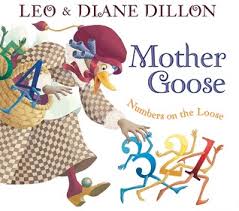
    Mother Goose Numbers on the Loose by Leo and Diane Dillon

    Unknown-7

    N is for Nutcracker

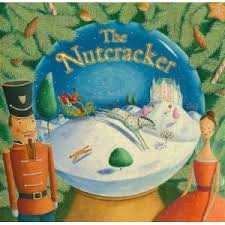
    Numerous versions now exist of this classic tale. I frequently recommend The Nutcracker by Alison Jay.

    Unknown-6

    N is for Night

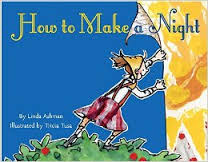
    How to Make a Night is a story of magic and whimsy that will inspire a unique group dance. Filled with action words – catch, find, pull, peel, and shake – a little girl "makes a night" by taking away the sun and blue sky, splattering gold, and building a moon. 

    Unknown-1

    N is for Nocturnal Animals

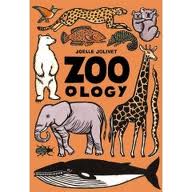
    The extra large picture book Zoo-ology by Joelle Jolivet can be used in many ways throughout a year. For the letter N, look at pages 24 and 25 that illustrate and name 32 different nocturnal animals. Students can select a creature; lead an improv with the class related to levels, speed, and different ways of locomoting. 

    Unknown

    —-