Author: Jill Randall

  • “To Be an Artist”

    Unknown
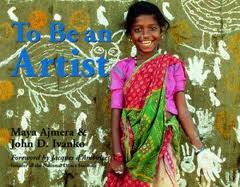
    I was just re-reading a wonderful book from 2004, To Be an Artist by Maya Ajmera and John D. Ivanko. This picture book will be a great conversation starter in 1st-4th grade classrooms. 

    The book includes photographs of young artists from all over the globe. The book includes dance, but really covers all art forms. Dancer Jacques d'Ambroise wrote a wonderful, one page foreward for the book. 

    "To be an artist means expressing yourself in many different ways….To be an artist means sharing your artistic flair for others to appreciate…"

    The text is simple but lovely. How can you not get inspired by a children's book that uses the language of "to be an artist?" 

    I suggest reading it to a class and then discussing how each student expresses himself/herself artistically – in your classroom, arts classes, family and community activities, and more.

    Unknown-1
    George Ancona's book Let's Dance! is a nice companion book to To Be an Artist. It also uses photographs and shares a global perspective on dance and the many ways dance is a part of our lives, cultures, and traditions. Let's Dance is great to share with students in kindergarten and 1st grades.
     

  • Bouncing with 1-3 Year Olds

    DownloadedFile
    Today I would like to suggest two fun books to explore in parent/child dance classes or at home with a little one. The action of bouncing is a favorite with preschoolers. How many ways can we bounce – in place, around the room, and with different body parts?

    Both Bouncing Time (Patricia Hubbell with Melissa Sweet) and Bounce (Doreen Cronin and Scott Menchin) are great starting points. Read a book with the kids, and then improvise. 

    There are many ways to use a book in a dance class. With these two books, I suggest sitting down and reading them first, to inspire movement exploration. Then, see how many ways you can bounce. Use the text for ideas, and maybe pull word phrases from the actual text as prompts.

    Have fun!

    Images

  • Poetry Series: Water Sings Blue

    Images-1
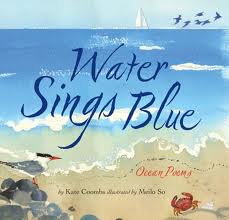
    For many of us, we are heading into winter and a time of cold, dark, and snow. But, I still want to suggest this beautiful book to remind us of warmth, summer, and the ocean. 

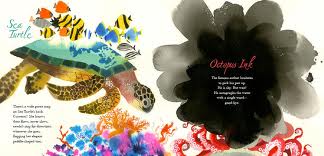
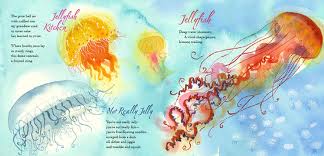
    I have eagerly awaited a copy of this book in our local library system, and I finally checked it out today. To my delight, Water Sings Blue: Ocean Poems, might be one of my new favorite children's poetry books to use in dance classes. The poetry is by Kate Coombs, with illustrations by Meilo So. Both text and paintings are full of magic, whimsy, and imagery to inspire movement with students ages 5-10. I suggest using this within an ocean unit with students in grades 2 and 3, as well as in creative dance classes in after school settings with students in K-3. 

    Unknown-1
    From start to finish, the poems take you on a journey along the shore and in the water. Topics include: sand, tide pools, waves, jellyfish, squid, and coral. The poems lend themselves to a variety of projects for both small groups (solos and duets) and whole group vignettes. You could easily use all or most poems in the book to create a beautiful performance with your class. 

    Here is an example of one of the beautiful poems to inspire choreographing and dancing:

    Coral

    We are busy.

    We are growing.

    We don't care where

    you are going.


    We are cousins.

    We're a throng.

    We are wide

    and we are strong.


    We are reaching, 

    stretching high.

    Pretty soon

    we'll own the sky.


    We are golden.

    We are pretty.

    We are coral.

    We are city.

    Unknown

  • Top Picks for 2012: Books on Dance

    Images

    As the year wraps up, I have looked back at all of my posts for 2012. Looking specifically at books published in this year, here are three of note:

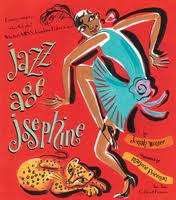
    Jazz Age Josephine

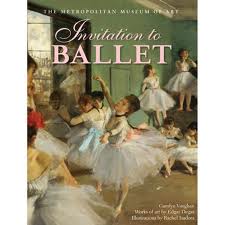
    Invitation to Ballet

    Bea at Ballet

    The links are back to the original blog posts. Jazz Age Josephine uses rhyming text to tell the story of Josephine Baker. Bea at Ballet is a joyful book for preschool and kindergarten students beginning ballet, and Invitation to Ballet is for students in K-3 interested in ballet.

    Keep adding to your book collections, as many books go out of print quickly. 


  • Invitation to Ballet: A Celebration of Dance and Degas

    Unknown
    Invitation to Ballet: A Celebration of Dance and Degas, by Carolyn Vaughn and Rachel Isadora, is a great new addition to your ballet bookshelf. This book will be enjoyed by elementary age students as well as useful for children's ballet teachers.

    Invitation to Ballet includes both Degas artwork as well as Rachel Isadora's playful images of young dancers. Like many introductory ballet books, the format of the book includes two-page spreads on various topics, such as: The Five Positions, At the Barre, Making the Leap, Toe Shoes and Tutus, and Famous Ballets. The layout of the book is clear and beautiful with a nice balance of text, images, and text boxes called "A Good Point."

    Enthusiastic young students will enjoy reading the book on their own. I also encourage children's ballet teachers to consider reading the book over the course of a semester with your class – reading a two-page spread (ie one topic) each week as a nice introduction and calming activity for the class. 

    Purchase the book through Powell's Books or through the Metropolitan Museum of Art Online Store

  • Winter Themes for Dance Classes

    DownloadedFile
    In this time of the holidays, and also a time to wrap up our school year, I frequently turn to the themes of: winter, night time, light, wishes, and dreams.

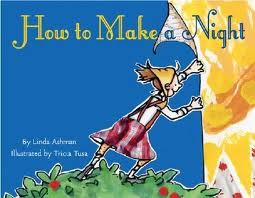
    How to Make a Night by Linda Ashman, with illustrations by Tricia Tusa, is a playful book to explore with K-3 students. A family is having a rough day, and they are ready for the night to come. A little girl magically makes this happen. "Catch the sun. Pull it down. Find a safe, dark place. Peel the blue from the sky…" 

    The story is whimsical and imaginative, and full of actions words to inspire movement (shake, splatter, lift, throw, fling). 

  • Magic and Whimsy Series: Butterfly Tree

    Images
    A friend and colleague at work recommended this book to me. Butterfly Tree, by Sandra Markle with illustrations by Leslie Wu, is a magical and true story about monarch butterfly migration.

    The story begins with a little girl seeing "orange" in the sky. Eventually the girl, her mother, and her dog journey through the woods in search of an answer to the mystery. Along the way, they find other orange objects around them but not quite what they are looking for. In the end, they find a magical swarm of monarch butterflies, stopping briefly beforing heading out for the wintertime.

    The whole concept and whole story could become a beautiful class dance. Or, you could simply explore the idea of your group of students being butterflies and moving together.

    Based on the size of the project and depth of exploration, this book could be used within a wide range of grades – kindergarten through fifth grade.

    The author's note at the end of the book provides some more details about monarchs for interested readers.


  • When a Line Bends…A Shape Begins

    When-line-bends-shape-begins-rhonda-gowler-greene-paperback-cover-art

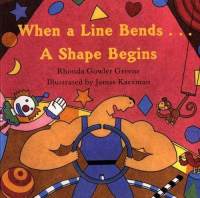
    I remember first seeing the book When a Line Bends…A Shape Begins, by Rhonda Gowler Greene, in a kindergarten classroom. I am always on the lookout for books about lines.

    This picture book, in poetic verse, talks about how lines form to create many different shapes. Each vignette about a particiular shape – circle, square, diamond, heart, etc – also describes the various images we think of with each shape. For example, a square is hopscotch, a patch on the knee, a present.

    When a Line Bends can be a springboard and opening conversation about various shapes and images seen in our world. Students can select one particular shape from the book and create a movement phrase. You also could use a prop – fabric, elastic, or ribbon – so that students could create shapes in space. 

    The shapes described in the book include:

    • square
    • rectangle
    • triangle
    • diamond
    • circle
    • oval
    • star
    • heart
    • crescent
    • octagon

    I recommend exploring this book with students in PreK-2nd grade. Have fun!


  • Bones, Muscles, and Joints

    Unknown

    I got this book a few months ago, and am now actively using it in my 6th, 7th, and 8th grade dance classes. Movers and Shapers by Patricia Mcnair could also be used with 5th grade classes.

    For this dance unit, I begin each class with one of the 2-page spreads in the book. I like this book because of how it is divided up. Some days the students read the information, and some days I show it and read a little of the text. For example, today we explored the 2 pages about joints. I made color photocopies of the pages for each student. It gives the students a nice visual. We actually did a "read aloud" of these two pages. This was my introduction for the class. After this, we did a quick partner warm up related to joints. Then, as we did our first center warm up, I focused on which joints were being used.

    Movers and Shapers is simple and clear – a great introduction to anatomy for middle schoolers and upper elementary students.


  • Guest Post: Dancers Among Us

    Images
    Today's post is from dance teaching artist Sheena Jeffers.

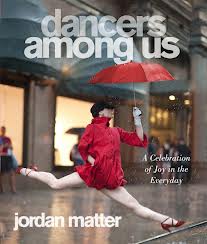
    Dancers Among Us, which has landed itself on the New York Times Best-Seller List, began as a project when photographer Jordan Matter observed his son playing with a toy bus. “I was trying to keep pace with this three-year-old mind as he got deeper and deeper into a fantasy involving nothing more than a yellow plastic box and armless figurines. At least that’s what I saw. He saw frantic commuters rushing to catch the 77 local bus to Australia.” 

    The book captures movement, dance technique and creativity and exhibits how those three qualities interact with our regular daily activity. 

    The book of photography, from photo shoots with professional dancers, is broken down into seven sections: Dreaming, Loving, Playing, Exploring, Grieving, Working, and Living. Each section contains quotes, stories and photographs of dancers interacting with the non-dancing world around them. 

    The book is a great conversation starter for young dance students because: 

    -The students can identify technique through the photograph: Are the legs extended? Toes pointed? What is their body placement? 
    -The students can discuss the visual representation of dance with the larger theme and idea: What atmosphere were they photographed in? What is going on? What is the connection to real life? What is the photographer trying to say?
    -The students can formulate their own opinions: What do they think of the image and the story? How does this relate to their personal lives? 

    There is a quote used in the book, that captures the energy running through each page: “I am a verb,” said by Ulysses S. Grant. The 229 page book, which also runs the reader through the development of each photograph, is fun and lighthearted even when tackling serious issues during the grief section. 

    Students, grades 6-12, will appreciate the photography, quotes and short stories as they see dance leap from the pages and into their personal lives. 

    Images-1

    Sheena Jeffers is a dance educator throughout Virginia. She is currently pursuing her Masters in Dance Education. She runs Ballet Shoes & Bobby Pins, a blog focused on initiating dance conversation and awareness for students, parents and dance admirers of all ages. Join the conversation; follow on Twitter: @BalletBobbyPins