Author: Jill Randall

  • Dancing Words: Arts Integration with Literature and Dance in K-­8 Schools


    Dancing Words: Arts Integration with Literature and Dance in K-­8 Schools 

    By Jill Randall 


    Curriculum that bridges the studio and classroom – arts integration – provides rich and varied 

    ways to experience and explore subject matter in K-­8 schools. In particular, books and dance 

    classes can work together, uniting dance teaching artists, classroom teachers, science 

    teachers, reading specialists, and librarians around multifaceted content. The more opportunities 

    and perspectives we can offer young people to get excited about literature, the better our 

    chances are to lay solid groundwork for a lifelong love and curiosity with words, story, and text. 


     ● How can language inspire movement and how can movement inspire language? 

     ● How can we deepen experiences for students by adding books to the “dance curriculum” 

    ­­­ before, during, and after movement lessons? 

    How can we encourage classroom teachers to incorporate movement into literacy 

    lessons for young children? 

    How can dance teachers use picture books and even textbooks as springboards for their 

    curriculum? 

    How can books become a common link to bring together the work of dance teaching 

    artists, classroom teachers, reading specialists, and librarians at a school? 


    Some of the books we will discuss are specifically about the subject of dance, while others “lend 

    themselves to movement” (such as a book about prepositions or a story related to the water 

    cycle). 


    Before Dance Classes (In Classrooms) 

    Bringing dance teaching artists and classroom teachers into conversation and joint lesson 

    planning around a particular topic ultimately creates a deeper experience for the students. The 

    classroom teachers can provide the foundation for a dance project: reading with the students, 

    emphasizing vocabulary, and touching upon key concepts that will then be put into movement. 


    A well-­prepared dance teacher can work with other teachers prior to a dance project’s start. If 

    students are using poetry for an 8th grade choreography project, the language arts teacher and 

    dance teacher can plan for some collaborative lessons prior to the dance project about lines, 

    stanzas, similes, metaphors, and the rhythm of poetry. This work is happening before the 

    students start dancing and choreographing. 


    With 2nd graders, a dance teaching artist and the classroom teacher can jointly launch a project 

    about a particular picture book (e.g. Stars by Mary Lyn Ray and Marla Frazee). The classroom 

    teacher reads it before your dance class with his/her students, as part of a classroom unit on 

    verbs and sentence construction. Then the students discuss the structure of the story, the 

    beginning/middle/end of the book, and make a list of all of the action words (verbs) from the 

    story. Have the class bring that list into the dance room, so that you can start to create a dance 

    based on that word list.


    During Dance Classes (In the Studio) 

    In early elementary classes, dance teaching artists can integrate picture books while teaching 

    the lesson. The teaching artist reads a book aloud that leads to an improvisational warm up; the 

    words and text inspire movement. Some successful warm­up books include From Head to Toe 

    (Eric Carle), Move! (Steve Jenkins), and Star Climbing (Lou Fancher). Activities like these begin 

    to show the fluid interplay of movement and text. 


    A class can create a group dance based upon a picture book. With the completed dance, the 

    dance teaching artist, or a strong student reader, may narrate the book alongside the students 

    as the students perform. The text was the inspiration for the choreography and also now serves 

    as the “cue” for each part of the dance. Swirl by Swirl (Joyce Sidman) is a great example of a 

    book to use in this way. 


    After Dance Classes (Back in Classrooms) 

    During teacher collaboration time, the dance teaching artist can share with her/his colleagues 

    themes emerging in the dance classes. For example, students in a 4th grade dance class might 

    be working on duets and “movement conversations.” Back in the 4th grade classrooms, teachers 

    could continue this theme by exploring I Am a Phoenix: Poems for Two Voices (Paul Fleischman 

    and Ken Nutt)Another example would be a science teacher extending a thematic exploration of 

    the actions of water in a dance class, by reading books such as This is the Rain, All the Water in 

    the World, or Water Dance


    Exploring a concept in more than one realm offers students multiple angles and opportunities for 

    learning and comprehension. Experiencing a concept visually, aurally, and kinesthetically 

    provides students with a broad range of ways to grasp subject matter. Contextual learning of 

    vocabulary across disciplines also allows for deeper understanding. Exploring a concept with 

    multiple teachers ­ the dance teacher, the classroom teacher, the science teacher ­ also offers 

    numerous perspectives and engagements within and across the curriculum. 


    Books and Performances 

    Another effective connection for elementary classroom teachers is reading books aloud in their 

    classrooms related to upcoming assemblies and field trips. This is another opportunity for 

    classroom teachers, dance teaching artists, and librarians to converse and work together. 

    Sharing books with classes about The Nutcracker or other ballets, choreographer Alvin Ailey, or 

    a particular kind of dance (African dance, flamenco, physically integrated dance, or Irish dance) 

    provides students with great background information and deepens and extends their experience 

    of the performance. 


    Book Bins 

    Many classrooms have great collections of book bins divided by themes. I encourage teachers to 

    create a dance specific book bin as well. You can work with your dance teaching artist to select 

    8­12 books, or reference my January 2013 Horn Book Magazine article on this particular subject

    for a compiled list of dance books (What Makes a Good Book about Dance?). Book bins are one 

    of the easiest ways to “bring dance back into the classroom” and continue making connections 

    between the various programs at your school. 


    Inspiration/Language of Childhood 

    Dance teaching artists are always on the lookout for inspiration for themes and projects. 

    Classroom teachers, reading specialists, and librarians can share ideas with these dance 

    teaching artists. These books serve as inspiration but also help dance teaching artists find 

    age­specific themes and the “language of childhood.” Sharing a stack of books is not only a 

    great conversation starter amongst colleagues, but also helps give insight into the focus and 

    priorities for a school’s curriculum. The dance teaching artist might not use these books explicitly 

    in a future project, but reviewing and reading the books can lead to more connections as he/she 

    develops future lesson plans and units of study. 

    ——— 

    All ideas explored here provide for multimodal learning and exploring literacy with and through the 

    body. Students hear, see, and embody a concept; there are many opportunities to interact with 

    printed materials, language, and pictures. Considering all of the intersections of movement and 

    text creates a back and forth between the dance studio and the classroom. Ultimately, the 

    curriculum is alive, creative, playful and reaches more students, especially those students who 

    learn best by moving and kinesthetically exploring. 

      Download JillRandall-artsintegrationarticle

    This article is copyright of Jill Randall 2014. 

    ————————- 

    Jill Homan Randall is a dancer and teaching artist in Berkeley, CA. She teaches full-­time at The 

    Hamlin School in San Francisco. Her blog about children’s books on dance and books that 

    inspire dancing, Dancing Words, can be viewed at www.dancingwords.typepad.com. Jill also 

    wrote a chapter on the subject of language, literacy, and movement in the book Moving Ideas: 

    Multimodality and Embodied Learning in Communities and Schools (2013), edited by Mira-­Lisa 

    Katz.

    ———————————————
  • Stomp, Dinosaur, Stomp!

    DownloadedFile

    I was excited to find this picture book at the library today – full of playful action words to use with preschool, kindergarten, and first grade dancers. 

    "Mighty Tyrannosaurus loved stomp, stomp, stomping, gigantic legs striding, enormous jaws opening…."

    The book explores 11 different dinosaurs and a wonderful list of action words, including:

    • Stomping
    • Swishing
    • Gliding
    • Swooping
    • Soaring
    • Hunting
    • Pouncing
    • Zooming

    Dance artists can use the book in a variety of ways to inspire improvisational activities, a "dino dance," or little vignettes about each animal in small groups.

    Get your own copy of Margaret Mayo's Stomp, Dinosaur, Stomp for only $10 at Powell's Books

    ———————

  • Magic and Whimsy Series: Snowflakes Fall

    Unknown-4

    "After the flowers are gone

    Snowflakes fall.

    Flake

    After flake

    After flake

    Each one a pattern

    All its own –

    No two the same - 

    All beautiful."

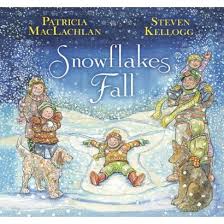
    So begins the new picture book by a stellar duo, author Patricia MacLachlan and illustrator Steven Kellogg. If you are still seeking a magical picture book for a project in the coming weeks in PreK-5 dance classes, check out Snowflakes Fall

    Whether you use the actual text as a springboard for a dance project, or simply read the book for the start of a idea, Snowflakes Fall will lead you to some great Winter dancing. The words in the book talk about the actions of snow – falling, drifting, and swirling. The book ends talking about the water cycle – snow melting, streams flowing, evaporating, and raining.

    The overarching idea of the book expresses the uniqueness of us all. Even in times of sorrow and loss there is still hope. Snowflakes Fall definitely inspires us to find beauty and to find hope. 


  • Cat and Fish

    Unknown-2

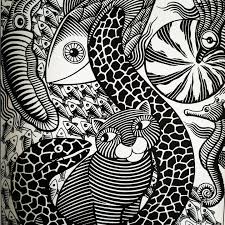
    This week I stumbled upon a quirky picture book, Cat and Fish, by Joan Grant and illustrator Neil Curtis. Use this book as inspiration in preschool, kindergarten, 1st, and 2nd grade classes.

    What I like about the book is the unusual pairing of the characters – a cat and a fish. They come from different worlds but become friends and explore together both the land and sea. From a movement perspective, this book can lead to interesting partner work as well as exploring contrasting ideas – land/ocean, above/below, up/down, swimming/climbing, etc. The actions in the story are also interesting to use for improvisation in a class – playing in a maze, lurking, prowling, hiding, rowing, floating, etc.

    Unknown-3


  • Verbs

    As I was speaking with the librarian at my school today about a new book, I thought that today would be a perfect day to highlight some great books to use in conjunction with teaching VERBS in 1st or 2nd grade classrooms.

    Images-1
    These action rich books can introduce students to a wide range of verbs as well as get them up on their feet – improvising, moving in a variety of ways, or making a dance based on a book.

    Images-2
    Check out:

    1. Move! – Steve Jenkins

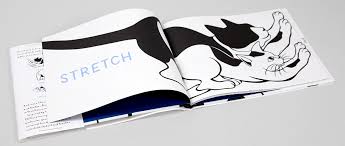
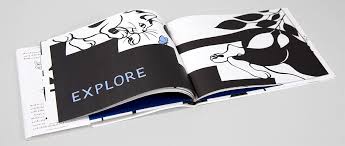
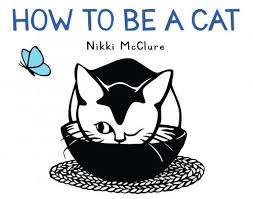
    2. How to Be a Cat – Nikki McClure

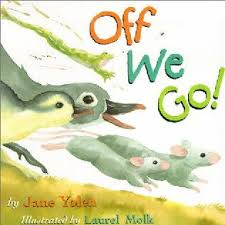
    3. Off We Go! – Jane Yolen

    4. A Child's Day: An Alphabet of Play – Ida Pearle

    5. Alphabet Movers – Theresa Benzwie

    6. Into the A, B, Sea – Steve Jenkins and Deborah Rose

    7. In the Tall, Tall Grass – Denise Fleming

    8. In the Small, Small Pond – Denise Fleming

    9. Star Climbing – Lou Fancher and Steve Johnson

    Unknown
    —————————-


  • Alphabet Series: The Letter J

    J is for….jumping, Josephine, and Jonathan!

    J is for Jumping

    Unknown
    Learning how to jump is a key movement milestone in childhood. Jumping is launching off of two feet and landing on two feet (hopping is on one foot). Create a jumping dance with your class – big jumps, small jumps, turning jumps, etc.

    There are three books to read alongside your exploration:

    Jumping Day - Barbara Esbensen and Maryann Cocca-Leffler

    Jump Frog Jump - Robert Kalan and Byron Barton

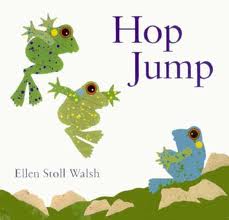
    Hop Jump - Ellen Stoll Walsh

    J is for Jonathan

    Unknown-1
    I love the book Jonathan and His Mommy for many reasons. It is a sweet tale of a mother and son dancing and moving around town – big steps, small steps, zigzag steps. The text will easily lead to an activity about pathway.

    J is for Josephine

    Images-1
    Explore the life and story of dancer Josephine Baker in the picture book Jazz Age Josephine by author Jonah Winter and illustrator Marjorie Pricemen. Read the story to your class, and then get them up on their feet, using Priceman's kinesthetic illustrations as inspiration for body shapes.

    ———————————

  • Alphabet Series: The Letter I

    I is for Island

    6a015431f12312970c017ee7a9fddc970d-800wi
    I am always on the lookout for books about islands. Exploring the concept and imagery of islands, within a dance class, is a great way to talk about self-space and general space. It also goes hand in hand with the concepts of stationary/axial movement and traveling/locomotor movement. 

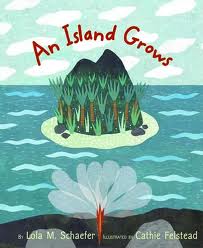
    An Island Grows, by Lola M. Schaefer with illustrations by Cathie Felstead, is a picture book telling the story of how volcanic islands form. The book begins "beneath the sea," and ends with an island inhabited by people. 

    You might not make a dance about the story, per se, but the book can be a nice introduction to a lesson for students in K-2 classes.

    Pull out your hula hoops to give each student in class an "island" to explore – dancing on the island, off the island, and around the island.

    I – "I am a Dancer"

    Unknown-8

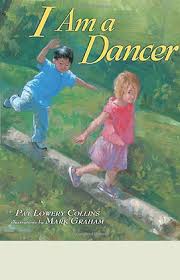
    While studying "I," share the book I am a Dancer. This picture book is a great introductory book for PreK-1 students about dance.

    I is for Isadora

    Unknown-7
    Rachel Isadora wrote a book about one of the icons and founders of modern dance, Isadora Duncan. Check out this biographical picture book.  

    ———————-


  • The Artwork of Keith Haring

    Unknown-4

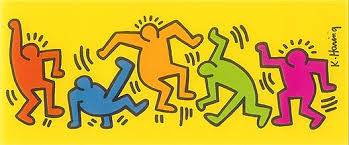
    As I was just writing the post for the letter H, I was reminded of the various books I have used over the years in PreK-5 dance classes with the artwork of Keith Haring.

    This post is a great example of simply using books (and their images) as inspiration for a warm up or dance study. You don't always have to read the story of a book; books can serve as quick visuals for an activity.

    Keith Haring's artwork inspires students from preschool all the way up to 5th grade to explore shapes, body positions, and actions such as jumps, kicks, and balances.

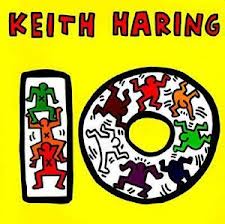
    For many years, I have used the simple board book Ten as our visual inspiration. There is no real story in this book. 

    Explore the artwork of Keith Haring in preschool dance classes as well as K-5 classes. 

    Unknown-5


  • Alphabet Series: The Letter H

    When you and your students explore the letter H, some of these books can be springboards and inspiration for improvisations and dance projects. 

    ——————

    H is for Head (to Toe)

    Unknown-2

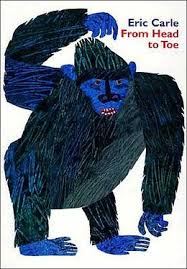
    Eric Carle's From Head to Toe is one of my favorite books to explore in parent/child, preschool, and kindergarten classes. The words literally lead a warm up for you….moving our heads, shoulders, hips, and toes. Purchase a used copy of this book here

    H is for Hopping

    Unknown-6
    Hopping is one of the building blocks of dance – moving on one foot. I am always on the lookout for books that involve the basic locomotor steps of: walking, running, hopping, jumping, skipping, galloping, and leaping.

    Check out Ellen Stoll Walsh's Hop Jump as a springboard for exploring the concepts of hopping, jumping, and "dancing."

    H is for Hummingbirds

    Unknown-3
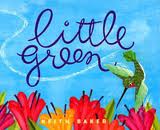
    As mentioned in several prior posts, Keith Baker's Little Green is a whimsical picture book for dancing like a fast moving hummingbird as well as moving through different pathways in space (zig zag lines, curly cue lines, etc). 

    H is for Haring (Artist Keith Haring)

    Unknown-4
    Keith Haring's classic drawings inspire kids to move and make shapes. Find a used copy of the board book Ten. Students can view the images and try out the positions (shapes) in their own bodies, or as a group. 

    Unknown-5
    ————-

    P.S. Exploring "hands" and "high/low" are also good subjects with the letter H, but I don't have specific book recommendations today. 

    ————————————————–

  • Alphabet Series: The Letter G

    When you and your students explore the letter G, some of these books can be springboards and inspiration for improvisations and dance projects. 

    G is for Green

    6a015431f12312970c0154338d968b970c-800wi
    Explore the color green and green creatures like a hummingbird. Use Green by Laura Vaccaro Seeger as a springboard for a dance about animals and environments that are green. (See previous blog post). Also check out one of my favorite picture books to study the concept of pathway, Little Green by Keith Baker, with a dancing green hummingbird (previous blog post). 

    G is for Grass

    6a015431f12312970c01538ef97044970b-800wi
    Denise Fleming's book In the Tall, Tall Grass inspires us to move like a variety of creatures (caterpillars, ants, snakes, and hummingbirds).

    G is for Gingerbread

    Unknown
    The letter G is the perfect time to read a variety of versions of The Gingerbread Man. These tales naturally get us running, skipping, and dancing. For years I have loved using Richard Egielski's version, The Gingerbread Boy. I also love the variation with a female character, The Gingerbread Girl by Lisa Campbell Ernst.

    G is for Go

    6a015431f12312970c019b0026f27e970b-800wi
    Like In the Tall, Tall Grass,  Off We Go! is a super easy and accessible book for movement inspiration. The various animals in the book tiptoe, hop, dig, and slither. Laurel Molk's illustrations evoke a calm and joyful energy. 

    Dance teachers can use the text as inspiration for an improvisational activity, or teachers can easily create a dance based on the text.

    Young dancers always love animal inspiration. Students will love exploring the movement of spiders, ducks, snakes, and mice.

    G is for Giant (Carrot)

    6a015431f12312970c019b0027e185970b-800wi
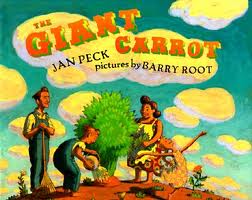
    Carrots and dance? Yes, indeed. Jan Peck wrote an amazing variation on the folktale The Giant Turnip. Sweet little Isabelle'sdancing is what makes a giant carrot grow. This book is simply wonderful to read to students, to hear about dancing in a magical way. I also have a dance related to this story. Many years ago I made a giant carrot with fabric, about 5 feet high. My students' dancing makes this carrot "grow" as they circle around me and take turns dancing. Check out The Giant Carrot by Jan Peck and illustrator Barry Root.